
Oman Declares No Transit Fees for Strait of Hormuz Under International Agreements
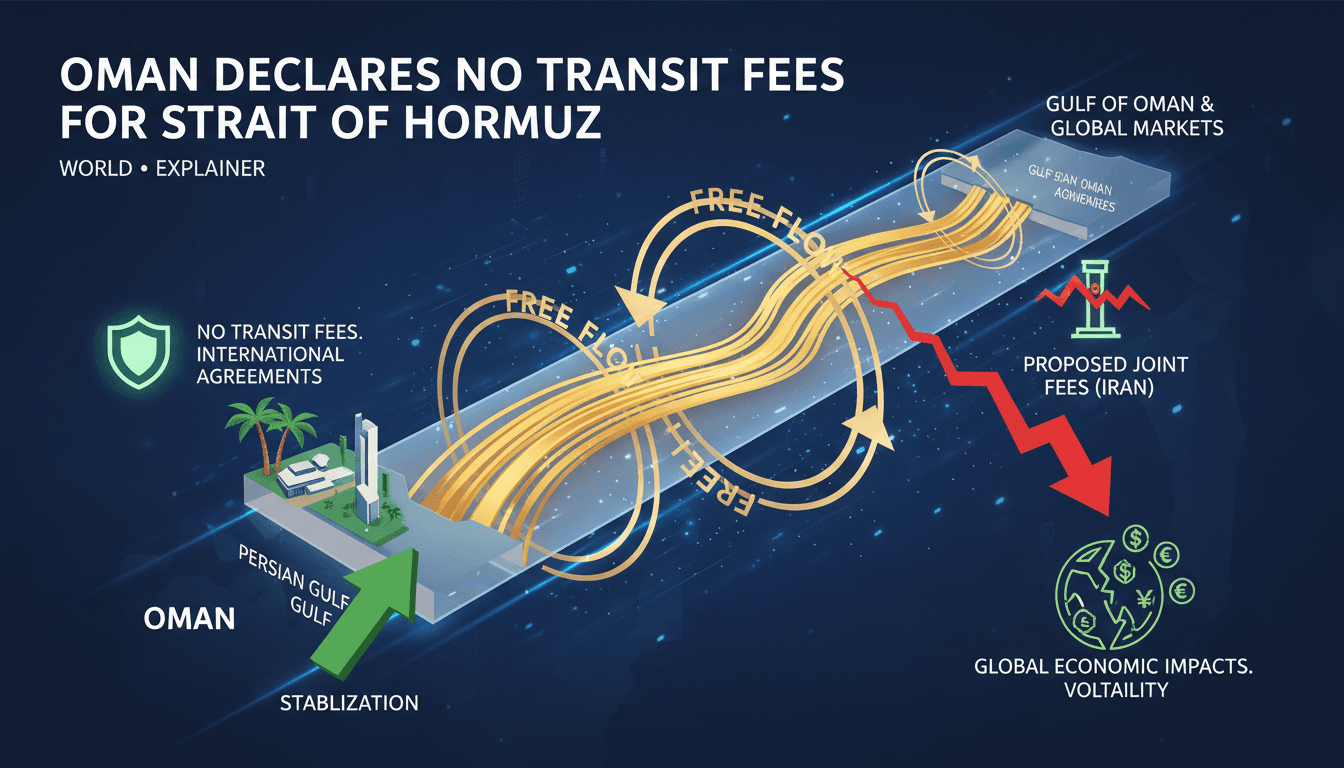
Here's what it means for you.
The stability of oil prices and supply chains in the Gulf region directly impacts global markets and your cost of living.
Why it matters
This declaration by Oman reinforces free navigation in a critical chokepoint for global oil shipments, influencing energy prices worldwide.
What happened (in 30 seconds)
- Oman's Transport Minister announced on April 8, 2026, that no transit fees can be imposed on vessels in the Strait of Hormuz.
- This statement counters an Iranian proposal for joint fees during a ceasefire in the ongoing US-Iran conflict.
- Oman’s position is backed by international maritime agreements, asserting the strait as a natural passage exempt from tolls.
The context you actually need
- Strait of Hormuz: This narrow waterway is vital, channeling approximately 20% of global oil shipments, averaging 20.9 million barrels per day in early 2025.
- Recent Conflict: The US-Israeli offensive against Iran on February 28, 2026, escalated tensions, leading to restrictions on strait transit and a subsequent spike in oil prices.
- Economic Impact: The potential for transit fees raised fears of increased shipping costs, which could ripple through global supply chains and consumer prices.
What's really happening
Oman's firm stance against transit fees in the Strait of Hormuz is a strategic move to uphold international maritime agreements that designate the strait as a natural passage free from tolls. This declaration comes in the wake of heightened tensions following a US-Israeli military offensive against Iran, which has significantly impacted regional stability and global oil markets.
The Strait of Hormuz is a critical artery for global oil transport, with around 20% of the world's oil passing through it daily. In early 2025, oil flows through the strait averaged 20.9 million barrels per day, underscoring its importance to energy security. The recent conflict, which resulted in over 1,400 casualties, including Iran's Supreme Leader, has created a precarious environment for shipping in the region. As tensions escalated, Iran proposed implementing joint transit fees with Oman to fund reconstruction efforts during a US-brokered ceasefire.
Oman's Transport Minister, Saeed bin Hamoud al-Mawali, rejected this proposal during a Shura Council session, emphasizing that such fees would violate existing international agreements. He pointed out a "legal gap" created by the non-signatories of these agreements, which include Iran and the United States. This rejection not only reinforces Oman's commitment to free navigation but also alleviates fears of increased shipping costs that could have resulted from the Iranian proposal.
The aftermath of this declaration has seen oil prices decline by up to 15%, settling around $95 per barrel, as markets reacted positively to the news. This drop is a reflection of cautious optimism regarding the stability of oil supply routes. The UAE and other Gulf states have expressed support for secure transit through the strait, while Oman continues to engage in deputy-level talks with Iran to ensure seamless passage for vessels.
In essence, Oman's rejection of transit fees is a crucial move to maintain the integrity of international maritime law in a region fraught with geopolitical tensions. It highlights the delicate balance of power and the importance of diplomatic negotiations in ensuring the free flow of goods and energy.
Who feels it first (and how)
- Oil Companies: They benefit from stable shipping routes and lower operational costs.
- Consumers: Households may see less volatility in fuel and food prices, protecting their budgets.
- Investors: Market stability in oil prices can lead to improved equity performance in energy sectors.
- Shipping Firms: They avoid additional costs associated with transit fees, ensuring competitive pricing for their services.
What to watch next
- Iran-Oman Negotiations: Continued discussions may reveal further developments in regional maritime agreements, impacting shipping stability.
- Global Oil Prices: Watch for fluctuations as geopolitical tensions evolve, particularly in response to any changes in US-Iran relations.
- Market Reactions: Monitor how equity markets respond to oil price changes, as they can indicate broader economic sentiment.
Oman has officially rejected the imposition of transit fees in the Strait of Hormuz.
Continued diplomatic engagements between Oman and Iran will shape future maritime policies.
The long-term impact of the US-Iran conflict on regional stability and global oil prices remains uncertain.
Frequently Asked Questions
- Why it matters?
- This declaration by Oman reinforces free navigation in a critical chokepoint for global oil shipments, influencing energy prices worldwide.
- What happened (in 30 seconds)?
- Oman's Transport Minister announced on April 8, 2026, that no transit fees can be imposed on vessels in the Strait of Hormuz. This statement counters an Iranian proposal for joint fees during a ceasefire in the ongoing US-Iran conflict. Oman’s position is backed by international maritime agreements, asserting the strait as a natural passage exempt from tolls.
- What's really happening?
- Oman's firm stance against transit fees in the Strait of Hormuz is a strategic move to uphold international maritime agreements that designate the strait as a natural passage free from tolls. This declaration comes in the wake of heightened tensions following a US-Israeli military offensive against Iran, which has significantly impacted regional stability and global oil markets. The Strait of Hormuz is a critical artery for global oil transport, with around 20% of the world's oil passing throug
- Who feels it first (and how)?
- Oil Companies: They benefit from stable shipping routes and lower operational costs. Consumers: Households may see less volatility in fuel and food prices, protecting their budgets. Investors: Market stability in oil prices can lead to improved equity performance in energy sectors. Shipping Firms: They avoid additional costs associated with transit fees, ensuring competitive pricing for their services.
- What to watch next?
- Iran-Oman Negotiations: Continued discussions may reveal further developments in regional maritime agreements, impacting shipping stability. Global Oil Prices: Watch for fluctuations as geopolitical tensions evolve, particularly in response to any changes in US-Iran relations. Market Reactions: Monitor how equity markets respond to oil price changes, as they can indicate broader economic sentiment.
English-language reporting on Saudi politics, policy, and society.
"Saudi Gazette reflects mainstream Saudi institutional perspectives."
— A47 Editor
Oman says no transit fees can be imposed in Strait of Hormuz
Oman’s Transport Minister Said Al-Maawali stated that no transit fees can be imposed on ships passing through the Strait of Hormuz, citing international maritime agreements signed by the sultanate. This declaration was made during a Shura Council ses...
Pan-Arab news coverage spanning politics, business, sports, and regional affairs.
"Asharq Al-Awsat reflects a broad Arab editorial perspective with strong attention to regional geopolitics."
— A47 Editor
وزير النقل العماني: وقعنا جميع الاتفاقيات التي تقضي بعدم فرض «رسوم عبور» على السفن
Oman's Minister of Transport, Engineer Said bin Hamoud Al-Maawali, announced that the Sultanate has signed international agreements prohibiting the imposition of transit fees on ships passing through the Strait of Hormuz. This decision underscores Om...
Arabic-language political and world news coverage for UAE readers.
"Emarat Al Youm world coverage usually presents international developments through a UAE and Arab audience lens."
— A47 Editor
وزير النقل العماني: لا يمكن فرض رسوم على مضيق هرمز وزير النقل العماني: لا يمكن فرض رسوم على مضيق هرمز
Oman's Minister of Transport and Communications, Engineer Said Al-Maawali, stated that the Sultanate's position regarding the Strait of Hormuz is clear, emphasizing that imposing fees on this vital waterway is not feasible.