
Macron and Starmer Lead International Summit to Secure Strait of Hormuz Navigation
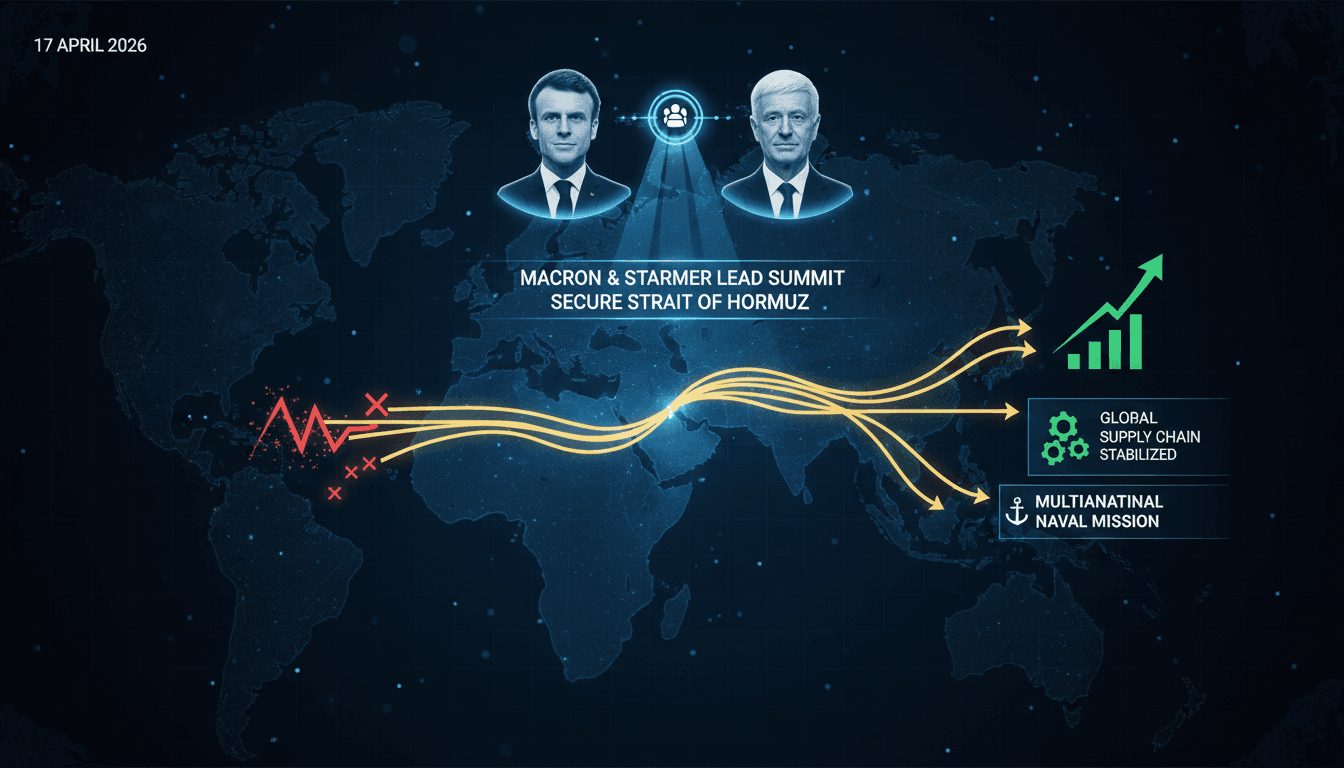
Here's what it means for you.
The international summit on the Strait of Hormuz could stabilize global supply chains, impacting energy prices and trade routes that affect your daily costs.
Why it matters
The Strait of Hormuz is a critical chokepoint for global oil supply, influencing energy prices and economic stability worldwide.
What happened (in 30 seconds)
- On April 17, 2026, French President Emmanuel Macron and British Prime Minister Keir Starmer co-hosted a virtual summit to restore navigation through the Strait of Hormuz.
- 51 countries participated, including key European leaders, to discuss a multinational naval mission aimed at protecting commercial shipping and clearing mines.
- Iran announced the strait open to commercial traffic during the ceasefire, coinciding with the summit, leading to an 11% drop in oil prices.
The context you actually need
- The Strait of Hormuz handles about 20 million barrels per day, representing approximately 20% of global petroleum consumption, making it vital for energy markets.
- Recent conflicts in the region, particularly the Iran-US tensions, had blocked the strait since February 2026, causing significant disruptions in energy supply and price surges.
- The summit followed a series of ceasefires and diplomatic efforts, including UK Prime Minister Starmer's visit to the UAE, aimed at addressing Iranian threats to regional stability.
What's really happening
The April 17 summit marks a significant diplomatic effort to restore stability in a region critical to global energy supply. The Strait of Hormuz, which facilitates the transit of approximately 20 million barrels of oil daily, has been a focal point of geopolitical tensions, particularly following the Iran-US ceasefire that began in early April 2026. The recent blockade by Iran, triggered by military actions against US and Israeli interests, had severe implications for global energy prices and supply chains, leading to heightened economic pressures worldwide.
During the summit, Macron and Starmer emphasized the need for a multinational naval mission to ensure the safety of commercial shipping and the clearance of mines, which are essential for the resumption of normal maritime operations. This initiative is not merely a response to immediate threats but a proactive measure to stabilize the region and restore confidence in maritime trade routes. The commitment from 51 countries, including major European powers, signals a unified approach to addressing the challenges posed by regional conflicts.
The discussions also highlighted the importance of adhering to international law and coordinating efforts with the International Maritime Organisation (IMO). This framework aims to create a sustainable and secure maritime environment, which is crucial for economic recovery in the wake of the disruptions caused by the blockade. The summit's outcomes, including the planning of a defensive mission, are expected to lead to a more stable shipping environment, which could alleviate some of the economic pressures felt globally.
Moreover, the announcement from Iran to reopen the strait during the ceasefire period coincided with the summit, resulting in an immediate 11% drop in oil prices. This reaction underscores the market's sensitivity to geopolitical developments in the region. The commitment from Germany to provide minehunters and other assets further illustrates the collaborative effort to ensure maritime security.
As the situation evolves, the next steps will involve continued diplomatic engagement and military planning, with a follow-up meeting scheduled in London. The implications of these developments extend beyond immediate security concerns; they will shape the future of global trade and energy markets, influencing everything from fuel prices to the cost of goods.
Who feels it first (and how)
- Energy consumers: Fluctuations in oil prices directly impact fuel costs and overall living expenses.
- Logistics and shipping companies: Increased security measures and potential delays could affect shipping schedules and costs.
- UAE residents: Elevated import costs and risks to food and energy security due to Hormuz disruptions will be felt locally.
- Global markets: Investors and businesses reliant on stable energy prices will experience volatility based on developments in the Strait.
What to watch next
- Follow-up meetings in London: The outcomes of these discussions will indicate the commitment level of participating nations to implement the proposed naval mission.
- Iran's compliance with the ceasefire: Continued adherence to the ceasefire will be crucial for maintaining stability in the Strait and preventing further disruptions.
- Market reactions to oil price fluctuations: Watch for how global markets respond to changes in oil prices as the situation develops, particularly in relation to supply chain costs.
The Strait of Hormuz is critical for global oil supply, handling about 20% of petroleum consumption.
The multinational naval mission will proceed, enhancing maritime security and potentially stabilizing oil prices.
The long-term effectiveness of diplomatic efforts in maintaining peace and security in the region remains uncertain.
Frequently Asked Questions
- Why it matters?
- The Strait of Hormuz is a critical chokepoint for global oil supply, influencing energy prices and economic stability worldwide.
- What happened (in 30 seconds)?
- On April 17, 2026, French President Emmanuel Macron and British Prime Minister Keir Starmer co-hosted a virtual summit to restore navigation through the Strait of Hormuz. 51 countries participated, including key European leaders, to discuss a multinational naval mission aimed at protecting commercial shipping and clearing mines. Iran announced the strait open to commercial traffic during the ceasefire, coinciding with the summit, leading to an 11% drop in oil prices.
- What's really happening?
- The April 17 summit marks a significant diplomatic effort to restore stability in a region critical to global energy supply. The Strait of Hormuz, which facilitates the transit of approximately 20 million barrels of oil daily, has been a focal point of geopolitical tensions, particularly following the Iran-US ceasefire that began in early April 2026. The recent blockade by Iran, triggered by military actions against US and Israeli interests, had severe implications for global energy prices and s
- Who feels it first (and how)?
- Energy consumers: Fluctuations in oil prices directly impact fuel costs and overall living expenses. Logistics and shipping companies: Increased security measures and potential delays could affect shipping schedules and costs. UAE residents: Elevated import costs and risks to food and energy security due to Hormuz disruptions will be felt locally. Global markets: Investors and businesses reliant on stable energy prices will experience volatility based on developments in the Strait.
- What to watch next?
- Follow-up meetings in London: The outcomes of these discussions will indicate the commitment level of participating nations to implement the proposed naval mission. Iran's compliance with the ceasefire: Continued adherence to the ceasefire will be crucial for maintaining stability in the Strait and preventing further disruptions. Market reactions to oil price fluctuations: Watch for how global markets respond to changes in oil prices as the situation develops, particularly in relation to sup
UAE-based English-language newspaper covering regional politics, economics, and global affairs.
"The National reflects Emirati policy perspectives while maintaining international editorial standards."
— A47 Editor
Macron and Starmer host Hormuz conference on restoring critical supply chains
French President Emmanuel Macron and UK Prime Minister Keir Starmer co-hosted a conference focused on restoring critical supply chains in the Strait of Hormuz, a vital maritime route for global oil transport. This meeting aims to address the rising t...
Pan-Arab news coverage spanning politics, business, sports, and regional affairs.
"Asharq Al-Awsat reflects a broad Arab editorial perspective with strong attention to regional geopolitics."
— A47 Editor
مؤتمر دولي ينعقد في باريس لضمان أمن الملاحة بمضيق هرمز
French President Emmanuel Macron and British Prime Minister Keir Starmer are convening in Paris to discuss the formation of a multilateral force aimed at ensuring freedom of navigation in the Strait of Hormuz. This meeting highlights the ongoing inte...
Regional and international reporting focused on Middle Eastern politics, diplomacy, and economics.
"Asharq Al-Awsat is a Saudi-owned international newspaper reflecting mainstream Gulf political perspectives."
— A47 Editor
Over a Dozen Countries Offer to Play Role in Hormuz Mission, Starmer Says
British Prime Minister Keir Starmer announced that over a dozen countries have expressed willingness to participate in a mission aimed at securing the Strait of Hormuz, a crucial maritime route for global oil shipments. This initiative comes amid ris...
Editor-curated FT homepage stories spanning markets, business, world, and opinion.
"The Financial Times is a globally respected business publication with a centrist/center-left tone and strong markets focus."
— A47 Editor
Macron and Starmer to hold summit on plan to secure Strait of Hormuz
French President Emmanuel Macron and UK Prime Minister Keir Starmer are set to hold a summit to discuss strategies for securing the Strait of Hormuz, a vital maritime route for global oil shipments, amid rising tensions in the region. This meeting is...