
Trump Announces No Uranium Enrichment in Iran Following Ceasefire Agreement
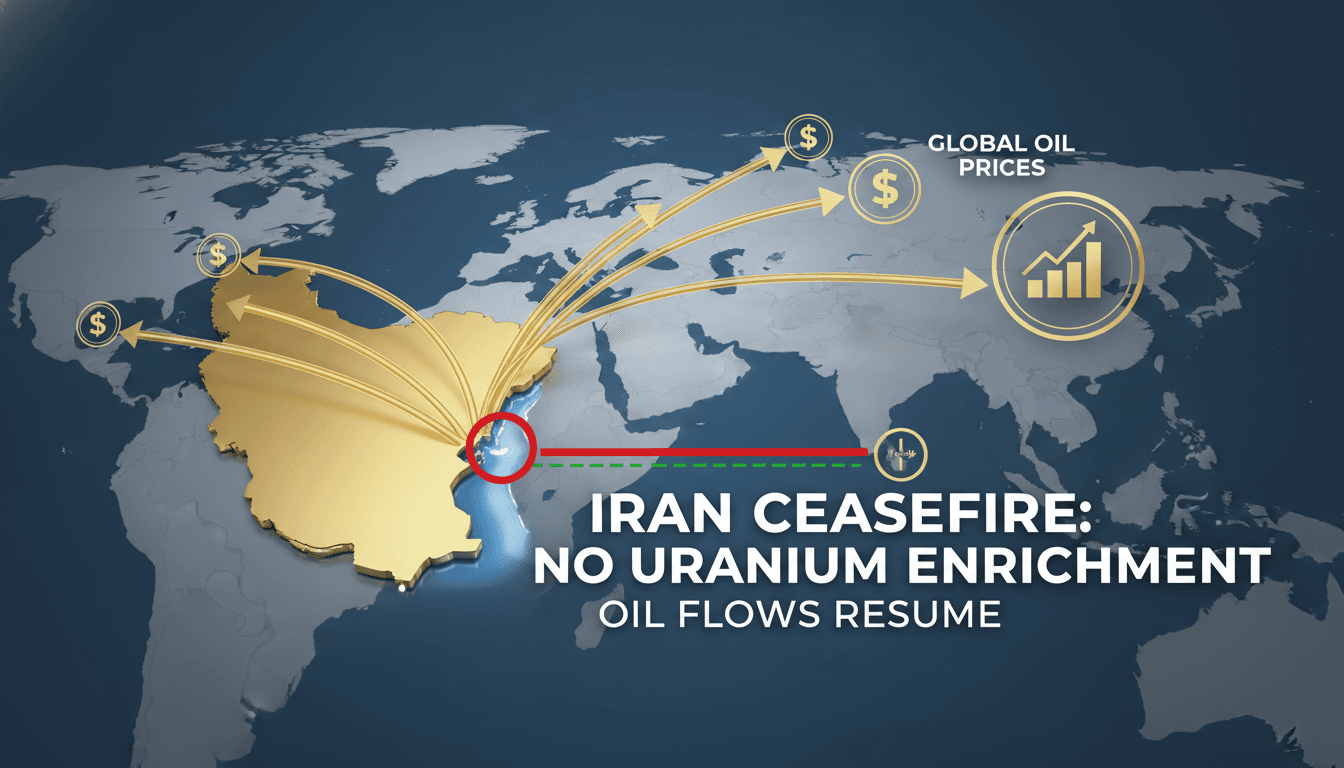
Here's what it means for you.
The recent U.S. announcement on Iran's uranium enrichment could stabilize oil prices and impact global markets.
Why it matters
This declaration marks a significant shift in U.S.-Iran relations, with potential implications for global energy markets and geopolitical stability.
What happened (in 30 seconds)
- On April 8, 2026, President Trump announced via Truth Social that there will be no uranium enrichment in Iran, following a ceasefire agreement.
- This announcement comes after a two-week U.S. pause on attacks and a claimed regime change in Iran, mediated by Pakistan.
- Negotiations are set to continue in Islamabad, focusing on the removal of nuclear materials and potential sanctions relief.
The context you actually need
- Negotiations between the U.S. and Iran began in April 2025 but collapsed due to escalating tensions and military actions, including the assassination of Iran's Supreme Leader.
- The closure of the Strait of Hormuz disrupted 20% of global oil supplies, leading to significant price increases and economic strain, particularly in Dubai.
- The recent ceasefire has opened the door for potential de-escalation in the region, with oil prices reacting positively to the announcement.
What's really happening
The announcement by President Trump signals a pivotal moment in U.S.-Iran relations, rooted in a complex backdrop of military conflict and diplomatic negotiations. Following the U.S.-Israeli strikes that initiated open warfare in February 2026, the region faced an unprecedented oil crisis due to the closure of the Strait of Hormuz. This strait is a crucial maritime passage for global oil shipments, and its closure had immediate repercussions, including soaring oil prices that surpassed $120 per barrel, severely impacting economies reliant on oil imports, such as the UAE.
The ceasefire, facilitated by Pakistan, was a strategic response to the economic fallout from the conflict. Trump’s declaration of no uranium enrichment is not merely a diplomatic gesture; it reflects a calculated move to stabilize the region and alleviate the economic pressures stemming from the oil crisis. The U.S. is leveraging this moment to negotiate the removal of Iran's enriched uranium stockpile, which was reported at 9,874.9 kg as of June 2025, and to secure a broader agreement that includes sanctions relief.
The implications of this announcement extend beyond immediate military concerns. If Iran adheres to the agreement, it could lead to a gradual normalization of relations, which may encourage foreign investments and economic recovery in the region. Conversely, failure to comply could reignite tensions and lead to further military actions. The negotiations in Islamabad will be critical in determining the future trajectory of U.S.-Iran relations and the stability of oil markets.
Moreover, the announcement has already prompted positive reactions in financial markets, indicating a collective sigh of relief among investors who had been bracing for further escalation. The potential reopening of the Strait of Hormuz and the resumption of oil shipments could stabilize prices and restore confidence in global markets.
Who feels it first (and how)
- Oil traders: Immediate fluctuations in oil prices will affect trading strategies and profit margins.
- Dubai residents: Increased costs of living due to oil price surges will impact daily expenses and economic stability.
- Global investors: Market confidence will shift based on the perceived stability of the Middle East, affecting investment strategies.
What to watch next
- Negotiation outcomes in Islamabad: The success or failure of talks will significantly influence regional stability and oil prices.
- Market reactions to oil price fluctuations: Watch for changes in oil benchmarks and how they affect global markets.
- Iran's compliance with the agreement: Monitoring Iran's actions regarding uranium enrichment will be crucial for assessing future tensions.
The U.S. has paused military actions and is engaging in negotiations with Iran.
Oil prices will stabilize if the Strait of Hormuz reopens and negotiations succeed.
The long-term compliance of Iran with the no enrichment agreement remains uncertain.
Frequently Asked Questions
- Why it matters?
- This declaration marks a significant shift in U.S.-Iran relations, with potential implications for global energy markets and geopolitical stability.
- What happened (in 30 seconds)?
- On April 8, 2026, President Trump announced via Truth Social that there will be no uranium enrichment in Iran, following a ceasefire agreement. This announcement comes after a two-week U.S. pause on attacks and a claimed regime change in Iran, mediated by Pakistan. Negotiations are set to continue in Islamabad, focusing on the removal of nuclear materials and potential sanctions relief.
- What's really happening?
- The announcement by President Trump signals a pivotal moment in U.S.-Iran relations, rooted in a complex backdrop of military conflict and diplomatic negotiations. Following the U.S.-Israeli strikes that initiated open warfare in February 2026, the region faced an unprecedented oil crisis due to the closure of the Strait of Hormuz. This strait is a crucial maritime passage for global oil shipments, and its closure had immediate repercussions, including soaring oil prices that surpassed $120 per
- Who feels it first (and how)?
- Oil traders: Immediate fluctuations in oil prices will affect trading strategies and profit margins. Dubai residents: Increased costs of living due to oil price surges will impact daily expenses and economic stability. Global investors: Market confidence will shift based on the perceived stability of the Middle East, affecting investment strategies.
- What to watch next?
- Negotiation outcomes in Islamabad: The success or failure of talks will significantly influence regional stability and oil prices. Market reactions to oil price fluctuations: Watch for changes in oil benchmarks and how they affect global markets. Iran's compliance with the agreement: Monitoring Iran's actions regarding uranium enrichment will be crucial for assessing future tensions.
Capitol Hill news, legislation, and policy insight.
"The Hill specializes in U.S. politics and policy, with a focus on Capitol Hill developments and a reputation for insider reporting."
— A47 Editor
Trump: There will be no enrichment of uranium in Iran
President Trump announced that Iran will not enrich uranium as part of a new agreement, emphasizing U.S. cooperation with Iran to recover B-2 bombers. This statement reflects ongoing negotiations aimed at stabilizing relations between the two nations...
English-language reporting on Saudi politics, policy, and society.
"Saudi Gazette reflects mainstream Saudi institutional perspectives."
— A47 Editor
Trump signals US-Iran engagement after ‘regime change,’ rules out uranium enrichment
US President Donald Trump announced a two-week ceasefire with Iran, indicating a willingness to engage with Tehran following a period of heightened military tensions and threats regarding the Strait of Hormuz. The ceasefire aims to facilitate diploma...