
Ethereum Foundation's Ketman Project Exposes 100 North Korean IT Workers in Web3 Firms
Here's what it means for you.
As a participant in the Web3 ecosystem, you face increased scrutiny and potential risks from unverified remote IT hires.
Why it matters
This incident highlights the vulnerabilities in the decentralized tech sector, prompting urgent calls for enhanced security measures.
What happened (in 30 seconds)
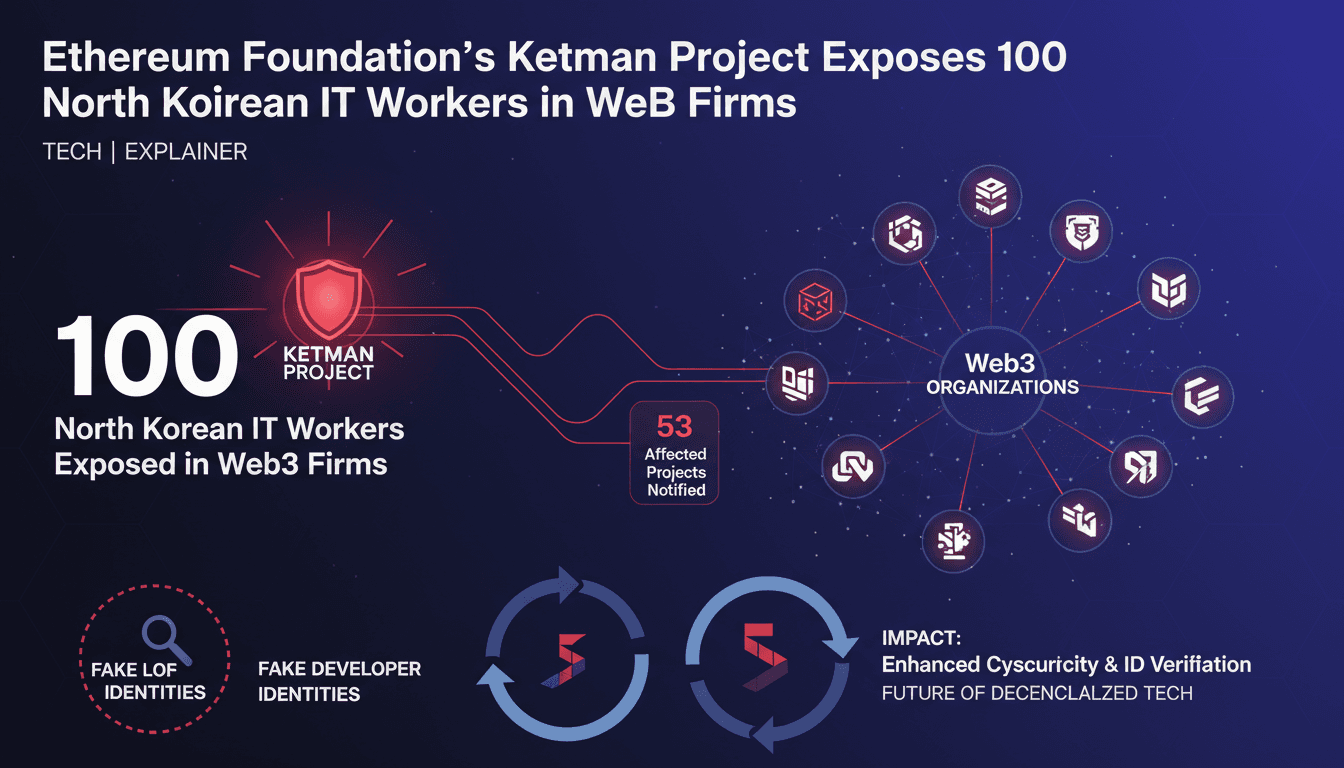
- On April 16, 2026, the Ethereum Foundation revealed that its Ketman Project identified 100 North Korean IT workers embedded in Web3 firms.
- 53 projects were notified of potential infiltration, leading to the development of open-source detection tools to combat these threats.
- The investigation contributed to freezing mid-six-figure funds linked to the operatives, addressing North Korea's ongoing cryptocurrency theft operations.
The context you actually need
- North Korea has appropriated approximately $7 billion in cryptocurrency since 2017 through hacks and the use of fabricated identities by overseas IT workers.
- The ETH Rangers program, launched in late 2024, funds security research to bolster the integrity of the Ethereum ecosystem.
- The Ketman Project utilized GitHub anomalies to trace fake developer identities, revealing systemic vulnerabilities in the hiring practices of Web3 firms.
What's really happening
The Ethereum Foundation's Ketman Project has unveiled a significant cybersecurity threat within the Web3 ecosystem, exposing the infiltration of approximately 100 North Korean IT workers. This investigation, funded by the ETH Rangers program, was initiated in response to the growing concern over state-sponsored cyber activities, particularly those linked to North Korea's Lazarus Group. The operatives, who secured remote developer roles, exploited lax vetting processes in decentralized tech sectors, generating foreign currency for the regime while posing insider threats.
The investigation lasted six months and involved meticulous analysis of GitHub profiles. Investigators identified indicators such as reused avatars, inadvertent email exposures, and mismatched language settings. These tactics allowed them to trace the operatives back to North Korea, leading to the notification of 53 affected projects. The release of open-source detection tools, including the gh-fake-analyzer, aims to empower Web3 firms to identify and mitigate similar threats in the future.
The implications of this infiltration extend beyond immediate cybersecurity concerns. The incident underscores the need for rigorous identity verification protocols, particularly in regions like Dubai, which is a key cryptocurrency hub. As remote IT hiring becomes more prevalent, the risks associated with unverified developers increase, potentially jeopardizing the integrity of projects and investments.
Moreover, the freezing of mid-six-figure funds linked to these operatives demonstrates the financial stakes involved. The cryptocurrency market is already sensitive to security breaches, and this revelation has led to increased market uncertainty. Analysts and commentators are calling for stringent developer vetting processes to safeguard against future infiltrations, reflecting a growing awareness of the persistent threats posed by state-sponsored actors.
As the Web3 ecosystem continues to evolve, the need for enhanced security measures becomes paramount. The Ketman Project's findings serve as a wake-up call for developers and organizations to prioritize cybersecurity and implement robust verification processes to protect their projects and users.
Who feels it first (and how)
- Web3 developers: Increased scrutiny and pressure to implement rigorous vetting processes.
- Cryptocurrency investors: Heightened market uncertainty may affect investment decisions and asset values.
- Regulatory bodies: Potential for new guidelines or regulations aimed at improving cybersecurity in the tech sector.
What to watch next
- Adoption of new security protocols: Watch for Web3 firms implementing stricter identity verification measures to mitigate risks.
- Market reactions: Monitor cryptocurrency market fluctuations, particularly Bitcoin's performance, as investor confidence may waver.
- Further investigations: Keep an eye on additional findings from the Ketman Project and similar initiatives that may reveal more infiltrations.
100 North Korean IT workers identified in Web3 firms.
Increased calls for stringent developer vetting and security measures across the industry.
The long-term impact on cryptocurrency market stability and investor confidence.
Frequently Asked Questions
- Why it matters?
- This incident highlights the vulnerabilities in the decentralized tech sector, prompting urgent calls for enhanced security measures.
- What happened (in 30 seconds)?
- On April 16, 2026, the Ethereum Foundation revealed that its Ketman Project identified 100 North Korean IT workers embedded in Web3 firms. 53 projects were notified of potential infiltration, leading to the development of open-source detection tools to combat these threats. The investigation contributed to freezing mid-six-figure funds linked to the operatives, addressing North Korea's ongoing cryptocurrency theft operations.
- What's really happening?
- The Ethereum Foundation's Ketman Project has unveiled a significant cybersecurity threat within the Web3 ecosystem, exposing the infiltration of approximately 100 North Korean IT workers. This investigation, funded by the ETH Rangers program, was initiated in response to the growing concern over state-sponsored cyber activities, particularly those linked to North Korea's Lazarus Group. The operatives, who secured remote developer roles, exploited lax vetting processes in decentralized tech secto
- Who feels it first (and how)?
- Web3 developers: Increased scrutiny and pressure to implement rigorous vetting processes. Cryptocurrency investors: Heightened market uncertainty may affect investment decisions and asset values. Regulatory bodies: Potential for new guidelines or regulations aimed at improving cybersecurity in the tech sector.
- What to watch next?
- Adoption of new security protocols: Watch for Web3 firms implementing stricter identity verification measures to mitigate risks. Market reactions: Monitor cryptocurrency market fluctuations, particularly Bitcoin's performance, as investor confidence may waver. Further investigations: Keep an eye on additional findings from the Ketman Project and similar initiatives that may reveal more infiltrations.
Research, news, and analysis on blockchain startups, DeFi, and regulations.
"Crypto Briefing provides research, news, and analysis on blockchain startups, DeFi, and crypto regulations with investor-focused coverage."
— A47 Editor
Ethereum-backed project uncovers 100 North Korean operatives in crypto firms
A recent investigation funded by the Ethereum Foundation has uncovered 100 North Korean operatives embedded in various cryptocurrency firms, raising significant security concerns within the sector. These operatives were reportedly working under false...
News and analysis on Bitcoin, altcoins, and blockchain innovation.
"Bitcoinist delivers news and analysis on Bitcoin, altcoins, and blockchain innovation with a focus on market trends and industry updates."
— A47 Editor
Ethereum Targets North Korea’s Secret Workforce — Are Your Favorite DeFi Protocols Compromised?
The Ethereum Foundation has identified 100 IT workers linked to North Korea's Democratic People's Republic of Korea (DPRK) embedded in approximately 53 cryptocurrency projects. This revelation comes as part of a new initiative aimed at enhancing secu...
Real-time updates, analysis, and reports on the blockchain and cryptocurrency sectors.
"Crypto News delivers real-time updates, analysis, and reports on the blockchain and cryptocurrency sectors."
— A47 Editor
Ethereum Foundation-funded project exposes 100 DPRK developers operating in crypto
A six-month investigation funded by the Ethereum Foundation has revealed that 100 North Korean developers were operating under false identities within various Web3 teams, raising significant security concerns in the cryptocurrency sector.
Covers blockchain, cryptocurrency news, project analysis, and market insights.
"Cointelegraph is a leading crypto-focused media outlet known for timely news, analysis, and educational content related to blockchain and digital assets."
— A47 Editor
Ethereum Foundation-funded program exposes 100 DPRK workers in crypto
The Ketman Project, supported by funding from the Ethereum Foundation, has uncovered 100 North Korean IT workers and identified 53 projects employing operatives from the Democratic People's Republic of Korea (DPRK). This initiative highlights the ong...