
Protesters Attack Kuwaiti Consulate in Basra Following Deadly Rocket Strike
Here's what it means for you.
In an increasingly interconnected Middle East, rising tensions can impact regional stability and security perceptions, affecting business operations and travel.
Why it matters
The escalation of violence and diplomatic breaches in Iraq can destabilize the Gulf region, influencing oil markets and international relations.
What happened (in 30 seconds)
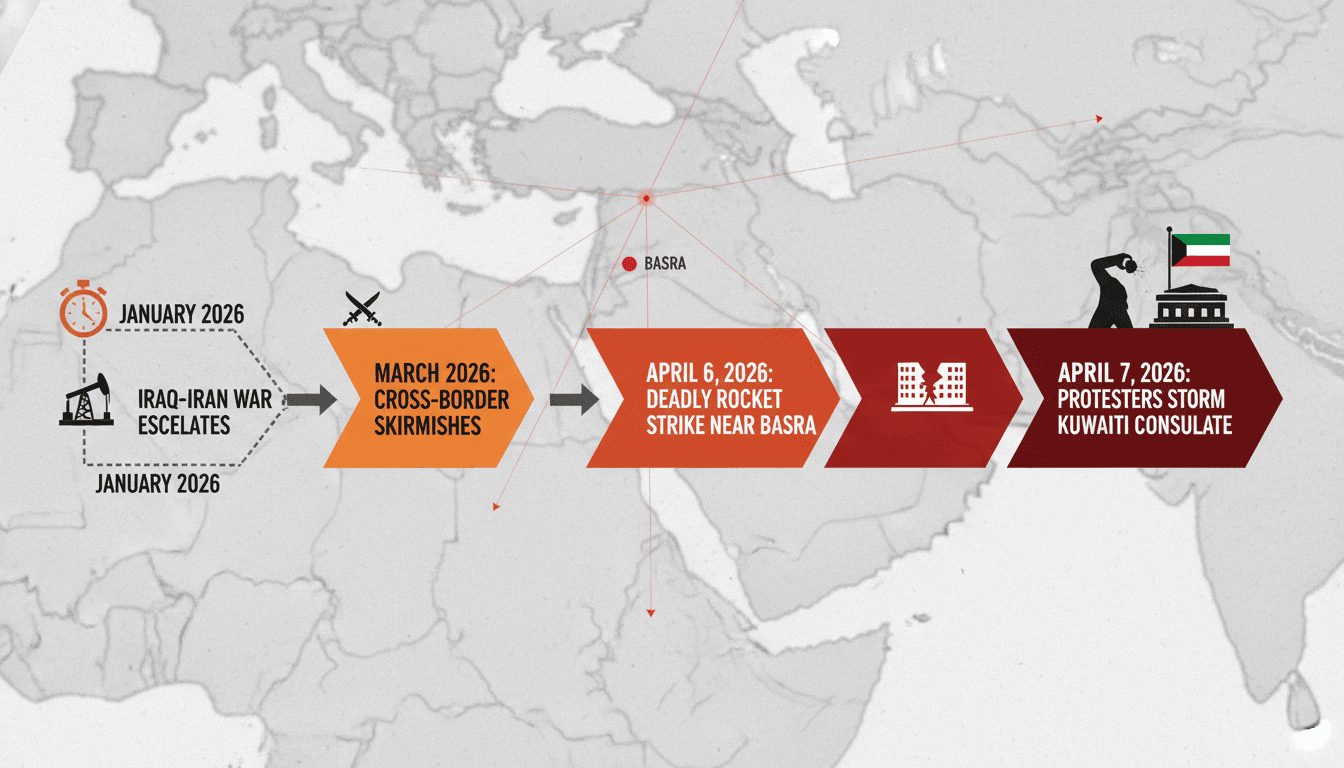
- Protesters stormed the Kuwaiti consulate in Basra on April 7, 2026, following a rocket attack from the direction of Kuwait that killed three civilians.
- Iraqi security forces used tear gas to disperse the crowd, which vandalized the consulate and removed the Kuwaiti flag.
- Kuwait condemned the attack, holding Iraq accountable for failing to protect diplomatic missions.
The context you actually need
- Escalating tensions between Iraq and Kuwait are linked to the broader Iran war, with pro-Iranian militias launching cross-border attacks.
- Khor al-Zubair, a strategic port area, is particularly vulnerable due to its proximity to Kuwait, raising concerns over security and civilian safety.
- Kuwait's denial of involvement in regional conflicts contrasts with Iraqi claims that the rockets originated from its territory, complicating diplomatic relations.
What's really happening
The incident at the Kuwaiti consulate in Basra is a manifestation of escalating tensions in the region, primarily fueled by the ongoing Iran war. This conflict has seen a rise in hostilities, with pro-Iranian militias in southern Iraq increasingly launching attacks across the border into Kuwait. The rocket strike that killed three civilians in Khor al-Zubair is indicative of the precarious security situation in the area, where the lines between military and civilian targets are becoming dangerously blurred.
The Iraqi government's inability to prevent such attacks has led to public outrage, resulting in the storming of the Kuwaiti consulate. Protesters, many of whom are supporters of pro-Iranian militias, expressed their anger not only at Kuwait but also at their own government for perceived security failures. The breach of the consulate represents a significant violation of diplomatic norms, which could have wider implications for Iraq's international relations.
Kuwait's swift condemnation of the attack and its call for Iraq to take responsibility highlights the fragility of diplomatic ties in the region. The incident has raised alarms among Gulf states, particularly the UAE, which has urged Iraq to ensure the safety of diplomatic missions. While the immediate aftermath saw no significant shifts in oil prices or Basra's export activities, the long-term implications of this incident could affect investor confidence and regional stability.
As investigations into the rocket's origins continue, the potential for further violence remains high. The situation underscores the need for robust diplomatic engagement and security measures to prevent similar incidents in the future. The interplay of local grievances, regional power dynamics, and the influence of external actors like Iran complicates the landscape, making it essential for stakeholders to navigate these tensions carefully.
Who feels it first (and how)
- Local civilians in Basra and Khor al-Zubair, who are directly affected by violence and instability.
- Iraqi government officials, facing public backlash over security failures and diplomatic relations.
- Kuwaiti diplomats and businesses, who may experience heightened security risks and operational challenges in Iraq.
- Regional investors, who could reassess their exposure to the Iraqi market due to increased geopolitical risks.
What to watch next
- Diplomatic responses from Kuwait and Iraq: Monitoring how both countries manage their diplomatic ties will be crucial in assessing future tensions.
- Security measures implemented by Iraq: Any changes in security protocols around diplomatic missions could indicate the government's response to public pressure and international expectations.
- Regional military activities: Increased military movements or retaliatory actions by pro-Iranian militias could escalate the situation further, impacting regional stability.
Three civilians were killed in the rocket attack on April 7, 2026.
Diplomatic tensions between Iraq and Kuwait will continue to escalate, affecting regional security dynamics.
The long-term impact on oil markets and international investments in Iraq remains uncertain.
Frequently Asked Questions
- Why it matters?
- The escalation of violence and diplomatic breaches in Iraq can destabilize the Gulf region, influencing oil markets and international relations.
- What happened (in 30 seconds)?
- Protesters stormed the Kuwaiti consulate in Basra on April 7, 2026, following a rocket attack from the direction of Kuwait that killed three civilians. Iraqi security forces used tear gas to disperse the crowd, which vandalized the consulate and removed the Kuwaiti flag. Kuwait condemned the attack, holding Iraq accountable for failing to protect diplomatic missions.
- What's really happening?
- The incident at the Kuwaiti consulate in Basra is a manifestation of escalating tensions in the region, primarily fueled by the ongoing Iran war. This conflict has seen a rise in hostilities, with pro-Iranian militias in southern Iraq increasingly launching attacks across the border into Kuwait. The rocket strike that killed three civilians in Khor al-Zubair is indicative of the precarious security situation in the area, where the lines between military and civilian targets are becoming dangerou
- Who feels it first (and how)?
- Local civilians in Basra and Khor al-Zubair, who are directly affected by violence and instability. Iraqi government officials, facing public backlash over security failures and diplomatic relations. Kuwaiti diplomats and businesses, who may experience heightened security risks and operational challenges in Iraq. Regional investors, who could reassess their exposure to the Iraqi market due to increased geopolitical risks.
- What to watch next?
- Diplomatic responses from Kuwait and Iraq: Monitoring how both countries manage their diplomatic ties will be crucial in assessing future tensions. Security measures implemented by Iraq: Any changes in security protocols around diplomatic missions could indicate the government's response to public pressure and international expectations. Regional military activities: Increased military movements or retaliatory actions by pro-Iranian militias could escalate the situation further, impacting re
English-language reporting on Saudi politics, policy, and society.
"Saudi Gazette reflects mainstream Saudi institutional perspectives."
— A47 Editor
Protesters storm Kuwaiti consulate in Iraq’s Basra after rocket kills three
Protests erupted in Basra, Iraq, following a deadly rocket strike near Khor al-Zubair that killed at least three people and injured five others. The rockets, reportedly fired from Kuwait, struck a residential area, prompting rescue teams to search fo...
UAE-based newspaper covering Gulf politics, society, and international developments.
"Gulf News is one of the UAE’s most prominent English-language publications."
— A47 Editor
UAE condemns attack on Kuwait consulate in Iraq’s Basra
The United Arab Emirates (UAE) has condemned the recent attack on the Kuwaiti consulate in Basra, Iraq, which was stormed by protesters following a deadly rocket attack. This incident has heightened tensions in the region, reflecting ongoing unrest l...
A curated Gulf News feed featuring major stories across news, business, opinion, and lifestyle.
"Gulf News is a major UAE newspaper whose featured stories feed reflects a broad editorial mix shaped for a Gulf audience."
— A47 Editor
UAE condemns attack on Kuwait consulate in Iraq’s Basra
The United Arab Emirates (UAE) has condemned the recent attack on the Kuwaiti consulate in Basra, Iraq, which was stormed by protesters following a deadly rocket attack. This incident has heightened tensions in the region, reflecting ongoing unrest l...