
United States and Iran Agree to Two-Week Ceasefire Amid Escalating Tensions
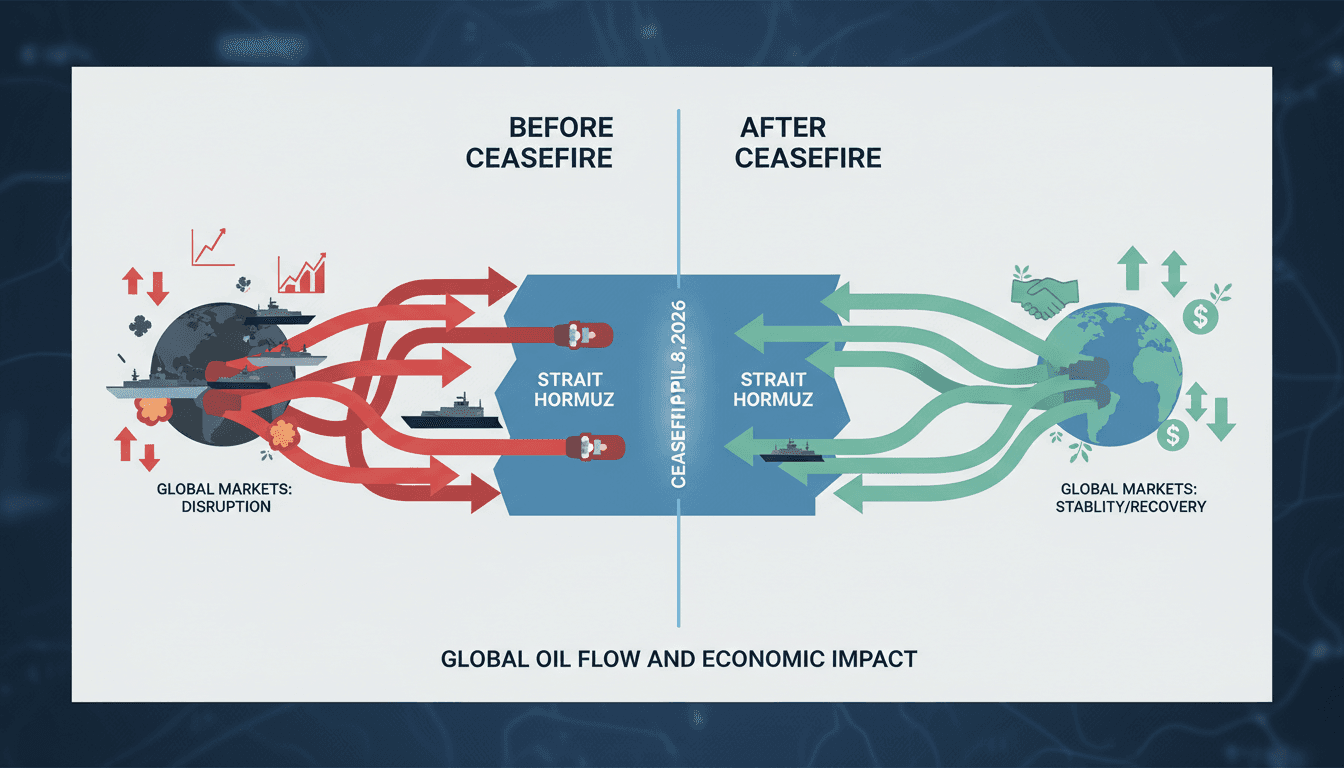
Here's what it means for you.
If you rely on global energy markets, the recent ceasefire could stabilize prices and enhance trade security.
Why it matters
This ceasefire directly impacts global energy supply chains and geopolitical stability in the Middle East.
What happened (in 30 seconds)
- A two-week ceasefire was announced on April 8, 2026, between the United States and Iran, mediated by Pakistan, Egypt, and Turkey.
- Military operations were suspended following a conflict that began on February 28, 2026, when US and Israeli strikes led to Iran closing the Strait of Hormuz.
- Global endorsement of the ceasefire has been widespread, with oil prices dropping below $100 per barrel and stock markets reacting positively.
The context you actually need
- The Strait of Hormuz is a critical maritime passage, with approximately 20% of the world's oil transiting through it.
- Tensions escalated after US and Israeli military operations against Iranian targets, prompting Iran to retaliate by mining and closing the Strait, resulting in a 95% drop in shipping operations.
- Diplomatic efforts intensified as mediators engaged with Iran's 10-point proposal, which addressed nuclear issues and regional security, culminating in the ceasefire agreement.
What's really happening
The ceasefire agreement between the United States and Iran marks a significant turning point in a conflict that has escalated dramatically since February 2026. The initial military operations, which included US and Israeli strikes against Iranian targets, prompted Iran to retaliate by closing the Strait of Hormuz. This closure had immediate global implications, leading to a staggering 95% decline in shipping operations through this vital waterway, which is crucial for the transportation of oil and gas.
The ceasefire, facilitated by mediators from Pakistan, Egypt, and Turkey, is based on a 10-point proposal from Iran that addresses not only nuclear issues but also regional security and maritime access. The endorsement of this proposal by President Trump just hours before the ceasefire took effect indicates a willingness to engage in diplomacy rather than further military escalation. The agreement aims to stabilize the region and reopen critical shipping lanes, which had been disrupted during the conflict.
The economic ramifications of this ceasefire are already being felt. Oil prices have plunged below $100 per barrel, a significant decrease that reflects the market's optimism regarding the resumption of normal shipping operations through the Strait of Hormuz. This stabilization is crucial for global energy markets, as fluctuations in oil prices can have widespread effects on economies around the world. Additionally, the positive reaction in US stock futures suggests that investors are hopeful for a more stable geopolitical landscape.
However, the ceasefire remains fragile. Isolated violations have occurred, including missile strikes from Hezbollah and alerts from Gulf states, indicating that while the ceasefire is in effect, tensions still simmer beneath the surface. The international community, including leaders from Saudi Arabia, the UK, France, and the UN, has welcomed the truce and urged for its permanence, recognizing that a lasting resolution is essential for regional stability.
As the situation evolves, the dynamics of US-Iran relations will be closely monitored, particularly as both sides navigate the complexities of their respective domestic and international pressures. The ceasefire represents a critical moment for diplomacy in the region, with the potential to reshape not only US-Iran relations but also the broader geopolitical landscape.
Who feels it first (and how)
- Energy sector professionals: Oil and gas companies will see immediate impacts on pricing and supply chains.
- Investors: Stock market fluctuations will affect portfolios, particularly in energy and defense sectors.
- Consumers: Households may experience changes in energy costs and overall economic stability.
- Shipping companies: Reopened shipping lanes will enhance trade security and operational efficiency.
- Regional governments: Nations reliant on stable energy supplies will benefit from decreased tensions.
What to watch next
- Compliance with the ceasefire: Monitoring any violations will be crucial to assessing the agreement's durability and its implications for regional stability.
- Oil price fluctuations: Continued observation of oil prices will indicate market confidence in the ceasefire and broader geopolitical stability.
- Diplomatic developments: Watch for further negotiations regarding Iran's nuclear program and regional security, as these will shape future US-Iran relations.
The ceasefire is currently in effect, and oil prices have dropped below $100 per barrel.
Continued diplomatic efforts will emerge to solidify the ceasefire and address underlying issues.
The long-term sustainability of the ceasefire and its impact on US-Iran relations remains uncertain.
Frequently Asked Questions
- Why it matters?
- This ceasefire directly impacts global energy supply chains and geopolitical stability in the Middle East.
- What happened (in 30 seconds)?
- A two-week ceasefire was announced on April 8, 2026, between the United States and Iran, mediated by Pakistan, Egypt, and Turkey. Military operations were suspended following a conflict that began on February 28, 2026, when US and Israeli strikes led to Iran closing the Strait of Hormuz. Global endorsement of the ceasefire has been widespread, with oil prices dropping below $100 per barrel and stock markets reacting positively.
- What's really happening?
- The ceasefire agreement between the United States and Iran marks a significant turning point in a conflict that has escalated dramatically since February 2026. The initial military operations, which included US and Israeli strikes against Iranian targets, prompted Iran to retaliate by closing the Strait of Hormuz. This closure had immediate global implications, leading to a staggering 95% decline in shipping operations through this vital waterway, which is crucial for the transportation of oil a
- Who feels it first (and how)?
- Energy sector professionals: Oil and gas companies will see immediate impacts on pricing and supply chains. Investors: Stock market fluctuations will affect portfolios, particularly in energy and defense sectors. Consumers: Households may experience changes in energy costs and overall economic stability. Shipping companies: Reopened shipping lanes will enhance trade security and operational efficiency. Regional governments: Nations reliant on stable energy supplies will benefit from decr
- What to watch next?
- Compliance with the ceasefire: Monitoring any violations will be crucial to assessing the agreement's durability and its implications for regional stability. Oil price fluctuations: Continued observation of oil prices will indicate market confidence in the ceasefire and broader geopolitical stability. Diplomatic developments: Watch for further negotiations regarding Iran's nuclear program and regional security, as these will shape future US-Iran relations.
Pan-Arab news coverage spanning politics, business, sports, and regional affairs.
"Asharq Al-Awsat reflects a broad Arab editorial perspective with strong attention to regional geopolitics."
— A47 Editor
ترحيب واسع باتفاق وقف إطلاق النار بين واشنطن وطهران
Several countries have welcomed the two-week ceasefire agreement between the United States and Iran, marking a significant step towards reducing tensions in the region. This development comes amid ongoing concerns regarding military conflicts and dip...
Arabic-language coverage of international news and geopolitics.
"RT Arabic is a Russian state-funded outlet often criticized for promoting Kremlin-aligned narratives."
— A47 Editor
غوتيريش يرحب بالهدنة بين إيران والولايات المتحدة
UN Secretary-General António Guterres welcomed the announcement of a ceasefire between the United States and Iran, urging all parties to comply with international law and uphold the truce. This development marks a significant step towards reducing te...
Arabic-language UAE newspaper coverage focused on domestic affairs, public institutions, business, society, and regional developments.
"Al Khaleej coverage generally reflects a mainstream UAE editorial lens with strong attention to public affairs, institutions, and regional developments."
— A47 Editor
أمين عام للأمم المتحدة يدعو الأطراف إلى التقيد بشروط وقف إطلاق النار
UN Secretary-General António Guterres welcomed a two-week ceasefire between the United States and Iran, as announced by his spokesperson, Stéphane Dujarric. He urged all parties involved to adhere to the terms of the ceasefire to ensure lasting peace...