
US-Iran Negotiations Begin in Islamabad Amid Lebanon Ceasefire Dispute
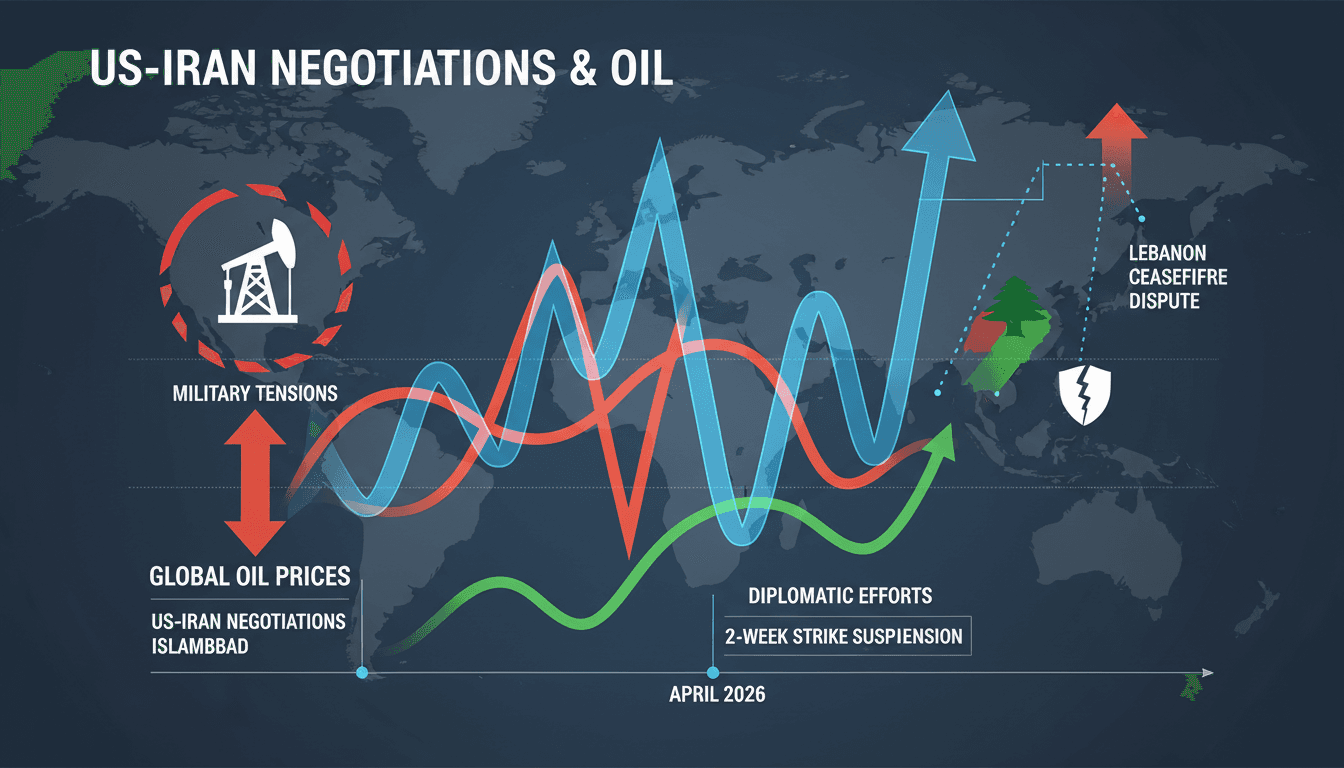
Here's what it means for you.
The outcome of these negotiations could significantly impact global oil prices and regional stability, affecting your daily commuting costs and business operations.
Why it matters
The negotiations are pivotal in determining the future of Middle Eastern geopolitics and global energy markets.
What happened (in 30 seconds)
- US-Iran negotiations began in Islamabad on April 10, 2026, following a two-week ceasefire mediated by Pakistan.
- Central disagreement revolves around whether the ceasefire includes Israeli operations in Lebanon, which Iran insists upon.
- Ongoing tensions threaten the stability of the talks, as Israel continues military actions in Lebanon, complicating the diplomatic landscape.
The context you actually need
- Conflict escalation began in late February 2026 with U.S. and Israeli strikes on Iran, leading to Hezbollah's retaliation and significant casualties.
- Casualties and displacements have exceeded 1,500 deaths and 1.2 million displacements, exacerbating humanitarian crises in the region.
- Global energy tensions are heightened by the closure of the Strait of Hormuz, which is critical for oil shipping, affecting prices worldwide.
What's really happening
The negotiations in Islamabad are a response to a rapidly deteriorating security situation in the Middle East, which has seen a significant uptick in violence since late February 2026. The U.S. and Israel initiated military strikes against Iran, which prompted Hezbollah to launch retaliatory rocket attacks from Lebanon. This cycle of violence has led to Israeli ground incursions into Lebanon, resulting in over 1,500 fatalities and displacing more than 1.2 million people.
The U.S. administration, under President Trump, brokered a two-week ceasefire, which was announced on April 8, 2026, to create a conducive environment for dialogue. Pakistan, under Prime Minister Shahbaz Sharif, has played a crucial mediating role, inviting both U.S. and Iranian delegations to Islamabad. However, the talks are complicated by Israel's insistence that any ceasefire does not extend to its operations in Lebanon, a point that Iran has made a condition for its participation in the negotiations.
The stakes are high. The ongoing conflict has already led to significant disruptions in global oil markets, with Brent crude prices hovering around $96.59 per barrel as of April 10, 2026. The closure of the Strait of Hormuz has further exacerbated these tensions, as it is a vital shipping route for oil exports. The potential for fuel price hikes looms large, which could impact economies reliant on stable energy prices, including the UAE, where Dubai residents are already feeling the pinch.
As the negotiations unfold, the dynamics between the U.S., Iran, and Israel will be crucial in determining the future of the region. If the talks fail, the likelihood of renewed military action increases, which could further destabilize the region and lead to more humanitarian crises. Conversely, a successful negotiation could pave the way for a more stable Middle East, but it requires significant concessions from all parties involved.
Who feels it first (and how)
- Energy sector professionals: Fluctuations in oil prices will directly impact their operations and profitability.
- Middle Eastern residents: Those in conflict zones face immediate threats to their safety and livelihoods.
- Global businesses: Companies relying on stable energy prices for logistics and operations will experience cost pressures.
What to watch next
- Negotiation outcomes: The success or failure of the Islamabad talks will directly influence regional stability and oil prices.
- Israeli military actions: Continued strikes in Lebanon could derail the ceasefire and escalate the conflict further.
- Global oil prices: Watch for fluctuations in Brent crude prices, which will reflect the ongoing geopolitical tensions and their impact on the market.
The negotiations are ongoing and involve significant geopolitical players.
Continued tensions between Israel and Hezbollah will complicate the negotiations.
The long-term implications of these negotiations on regional stability and global oil markets remain uncertain.
Frequently Asked Questions
- Why it matters?
- The negotiations are pivotal in determining the future of Middle Eastern geopolitics and global energy markets.
- What happened (in 30 seconds)?
- US-Iran negotiations began in Islamabad on April 10, 2026, following a two-week ceasefire mediated by Pakistan. Central disagreement revolves around whether the ceasefire includes Israeli operations in Lebanon, which Iran insists upon. Ongoing tensions threaten the stability of the talks, as Israel continues military actions in Lebanon, complicating the diplomatic landscape.
- What's really happening?
- The negotiations in Islamabad are a response to a rapidly deteriorating security situation in the Middle East, which has seen a significant uptick in violence since late February 2026. The U.S. and Israel initiated military strikes against Iran, which prompted Hezbollah to launch retaliatory rocket attacks from Lebanon. This cycle of violence has led to Israeli ground incursions into Lebanon, resulting in over 1,500 fatalities and displacing more than 1.2 million people. The U.S. administration
- Who feels it first (and how)?
- Energy sector professionals: Fluctuations in oil prices will directly impact their operations and profitability. Middle Eastern residents: Those in conflict zones face immediate threats to their safety and livelihoods. Global businesses: Companies relying on stable energy prices for logistics and operations will experience cost pressures.
- What to watch next?
- Negotiation outcomes: The success or failure of the Islamabad talks will directly influence regional stability and oil prices. Israeli military actions: Continued strikes in Lebanon could derail the ceasefire and escalate the conflict further. Global oil prices: Watch for fluctuations in Brent crude prices, which will reflect the ongoing geopolitical tensions and their impact on the market.
Arabic-language coverage of political affairs and current events.
"Okaz political coverage typically follows mainstream Saudi framing on national and regional affairs."
— A47 Editor
مفاوضات أمريكية-إيرانية في إسلام أباد الجمعة.. وخلاف حول شمول لبنان
Israel has expressed support for U.S. President Donald Trump's decision to suspend military strikes against Iran for two weeks, aiming to reduce tensions and facilitate diplomatic negotiations. However, Israel's Prime Minister Benjamin Netanyahu emph...
Regional and international reporting focused on Middle Eastern politics, diplomacy, and economics.
"Asharq Al-Awsat is a Saudi-owned international newspaper reflecting mainstream Gulf political perspectives."
— A47 Editor
Israel Backs Trump's 2-week Pause on Iran Strikes, Says Lebanon Excluded
Israel has expressed support for former President Trump's two-week pause on military strikes against Iran, while clarifying that Lebanon is not included in this ceasefire arrangement. This development comes amid escalating tensions in the region, par...
Arabic-language UAE newspaper coverage focused on domestic affairs, public institutions, business, society, and regional developments.
"Al Khaleej coverage generally reflects a mainstream UAE editorial lens with strong attention to public affairs, institutions, and regional developments."
— A47 Editor
مكتب نتنياهو: وقف إطلاق النار لا يشمل لبنان
Israel announced its support for U.S. President Donald Trump's decision to suspend strikes on Iran for two weeks under a ceasefire agreement, contingent upon Tehran reopening the Strait of Hormuz. However, this ceasefire does not extend to Lebanon.