
IEA Proposes Basra-Ceyhan Oil Pipeline to Enhance Energy Security Amid Strait of Hormuz Crisis
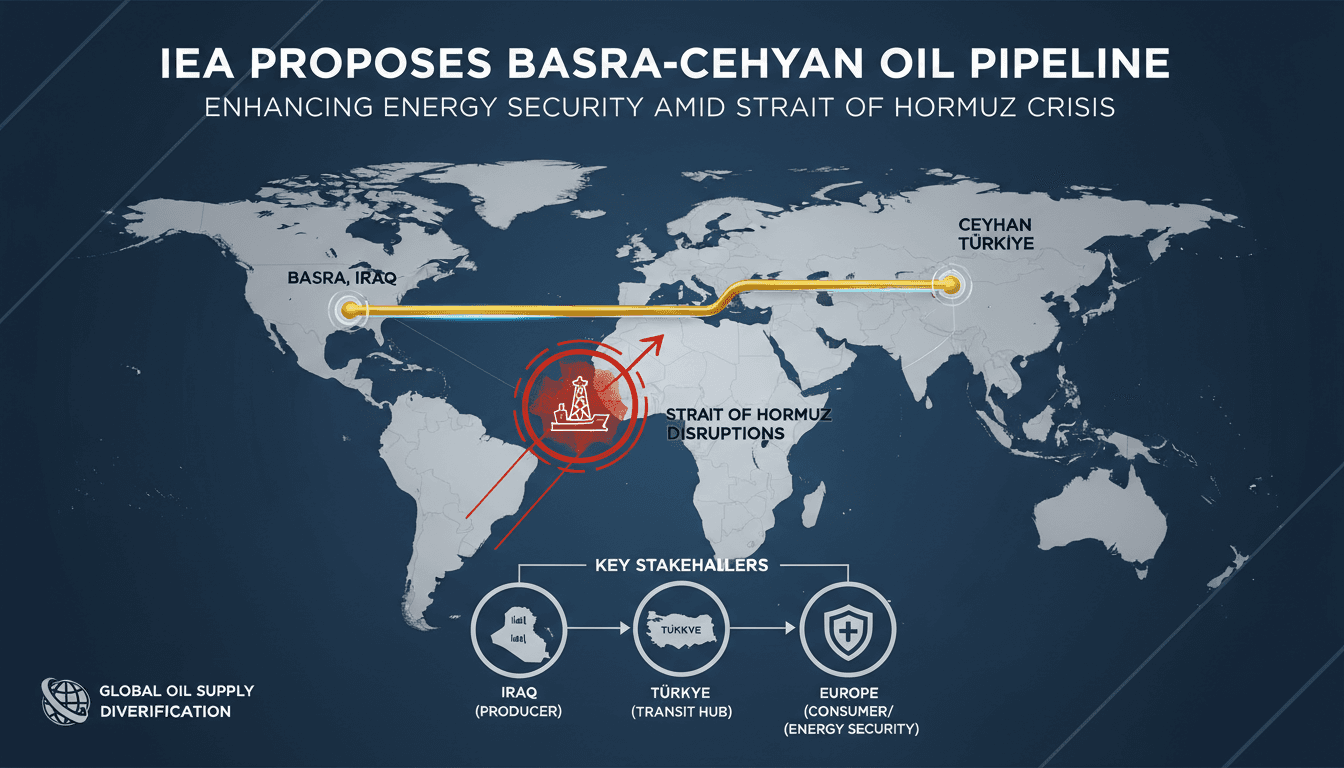
Here's what it means for you.
If you rely on stable energy prices, this pipeline could influence your costs and economic stability.
Why it matters
The proposed pipeline aims to enhance energy security for Europe while reducing Iraq's dependency on the volatile Strait of Hormuz.
What happened (in 30 seconds)
- On April 19, 2026, IEA Executive Director Fatih Birol proposed a new oil pipeline from Iraq's Basra fields to Türkiye's Ceyhan terminal.
- The initiative seeks to bypass the Strait of Hormuz, which has faced disruptions due to regional conflicts, particularly involving Iran.
- Iraq's oil exports have plummeted by 81.3% in March 2026, highlighting the urgent need for alternative routes.
The context you actually need
- The Strait of Hormuz is critical for global oil supply, with approximately 20% of it transiting through this narrow waterway.
- Iraq relies heavily on this strait for nearly 90% of its oil exports, making it vulnerable to geopolitical tensions.
- Regional instability, including attacks on energy infrastructure and conflicts involving Iran, has exacerbated the urgency for alternative export routes.
What's really happening
The proposal for the Basra-Ceyhan pipeline emerges from a backdrop of escalating tensions in the Middle East, particularly the ongoing 2026 Strait of Hormuz crisis. This crisis began on February 28, 2026, when Iran reimposed restrictions on maritime traffic, leading to significant shipping disruptions. The Strait of Hormuz is a vital artery for global oil, with about 20% of the world's supply passing through it. For Iraq, the stakes are even higher, as nearly 90% of its oil exports depend on this route. The recent geopolitical climate has resulted in an 81.3% drop in Iraqi oil exports in March 2026, underscoring the urgent need for alternative export solutions.
The Basra-Ceyhan pipeline proposal is not just a response to immediate disruptions; it represents a strategic pivot for Iraq and Türkiye. The existing Kirkuk-Ceyhan pipeline, operational since 1976, serves as a precedent for this new initiative. Birol emphasized that the timing is optimal, suggesting that political agreements between Iraq and Türkiye are achievable, especially with potential European financial backing. This pipeline could significantly enhance Iraq's export capacity while providing Türkiye with a critical energy transit route.
Moreover, the proposal aligns with Iraq's broader efforts to rehabilitate its northern export routes and address ongoing export shortfalls. Türkiye's earlier suggestion to extend the Kirkuk-Ceyhan pipeline southward to Basra indicates a collaborative approach to energy security in the region. The strategic framing of this project highlights its potential to neutralize Iranian leverage over the Strait of Hormuz, thereby bolstering European energy stability.
However, the proposal is not without challenges. Financing remains a critical hurdle, and the political landscape in both Iraq and Türkiye will play a significant role in determining the project's feasibility. As of now, there have been no official responses from either government, but social media discourse reflects a growing recognition of the proposal's strategic value. The oil markets have already shown volatility, with a 7% price surge following Iran's reclosure of the strait, indicating that any developments regarding the pipeline will have immediate repercussions on global oil prices.
Who feels it first (and how)
- Energy consumers: Households and businesses in regions reliant on oil will experience fluctuations in energy prices.
- Oil companies: Firms involved in extraction and transportation will be directly impacted by changes in export routes and pricing.
- European governments: Nations dependent on Iraqi oil will monitor developments closely for implications on energy security.
What to watch next
- Political agreements: Watch for any formal agreements between Iraq and Türkiye regarding the pipeline, as this will be crucial for moving forward.
- Financing developments: Keep an eye on European financial commitments to the project, which will determine its viability.
- Market reactions: Monitor oil price fluctuations in response to any news related to the pipeline, as this will indicate market sentiment and stability.
The Basra-Ceyhan pipeline proposal aims to enhance energy security for Europe and reduce Iraq's dependency on the Strait of Hormuz.
Political negotiations between Iraq and Türkiye will be necessary to advance the project, with European financial support being a key factor.
The timeline for construction and operationalization of the pipeline remains uncertain, as does the potential impact on global oil prices.
Frequently Asked Questions
- Why it matters?
- The proposed pipeline aims to enhance energy security for Europe while reducing Iraq's dependency on the volatile Strait of Hormuz.
- What happened (in 30 seconds)?
- On April 19, 2026, IEA Executive Director Fatih Birol proposed a new oil pipeline from Iraq's Basra fields to Türkiye's Ceyhan terminal. The initiative seeks to bypass the Strait of Hormuz, which has faced disruptions due to regional conflicts, particularly involving Iran. Iraq's oil exports have plummeted by 81.3% in March 2026, highlighting the urgent need for alternative routes.
- What's really happening?
- The proposal for the Basra-Ceyhan pipeline emerges from a backdrop of escalating tensions in the Middle East, particularly the ongoing 2026 Strait of Hormuz crisis. This crisis began on February 28, 2026, when Iran reimposed restrictions on maritime traffic, leading to significant shipping disruptions. The Strait of Hormuz is a vital artery for global oil, with about 20% of the world's supply passing through it. For Iraq, the stakes are even higher, as nearly 90% of its oil exports depend on thi
- Who feels it first (and how)?
- Energy consumers: Households and businesses in regions reliant on oil will experience fluctuations in energy prices. Oil companies: Firms involved in extraction and transportation will be directly impacted by changes in export routes and pricing. European governments: Nations dependent on Iraqi oil will monitor developments closely for implications on energy security.
- What to watch next?
- Political agreements: Watch for any formal agreements between Iraq and Türkiye regarding the pipeline, as this will be crucial for moving forward. Financing developments: Keep an eye on European financial commitments to the project, which will determine its viability. Market reactions: Monitor oil price fluctuations in response to any news related to the pipeline, as this will indicate market sentiment and stability.
Regional and international reporting focused on Middle Eastern politics, diplomacy, and economics.
"Asharq Al-Awsat is a Saudi-owned international newspaper reflecting mainstream Gulf political perspectives."
— A47 Editor
IEA Proposes Building Iraq-Türkiye Pipeline to Bypass Hormuz
The International Energy Agency (IEA) has proposed the construction of a pipeline from Iraq to Türkiye as a strategic measure to bypass the Strait of Hormuz, a vital maritime route for global oil shipments that has faced significant disruptions due t...
Arabic-language coverage of international news and geopolitics.
"RT Arabic is a Russian state-funded outlet often criticized for promoting Kremlin-aligned narratives."
— A47 Editor
رئيس وكالة الطاقة الدولية يقترح إنشاء خط أنابيب بين العراق وتركيا لتجاوز مضيق هرمز
Fatih Birol, the Director of the International Energy Agency, has proposed the construction of a new oil pipeline connecting the oil fields in Basra, Iraq, to the Turkish port of Ceyhan on the Mediterranean Sea. This initiative aims to reduce relianc...
Oil, metals, and agriculture: supply/demand headlines, OPEC chatter, inventories, and price action.
"Solid tape for energy and metals traders tracking macro and micro catalysts."
— A47 Editor
IEA’s Birol urges Iraq-Turkey pipeline as Hormuz closure persists
The International Energy Agency (IEA), led by Fatih Birol, has called for the establishment of a pipeline between Iraq and Turkey as the closure of the Strait of Hormuz continues to disrupt global oil supplies. This situation has arisen amid escalati...