
Lebanese Prime Minister Seeks Confirmation of Ceasefire Inclusion for Lebanon Following Israeli Airstrikes
Here's what it means for you.
The ongoing conflict in Lebanon could impact regional stability and global oil markets, affecting your investments and travel plans.
Why it matters
The situation in Lebanon is a critical flashpoint in Middle Eastern geopolitics, influencing energy prices and international relations.
What happened (in 30 seconds)
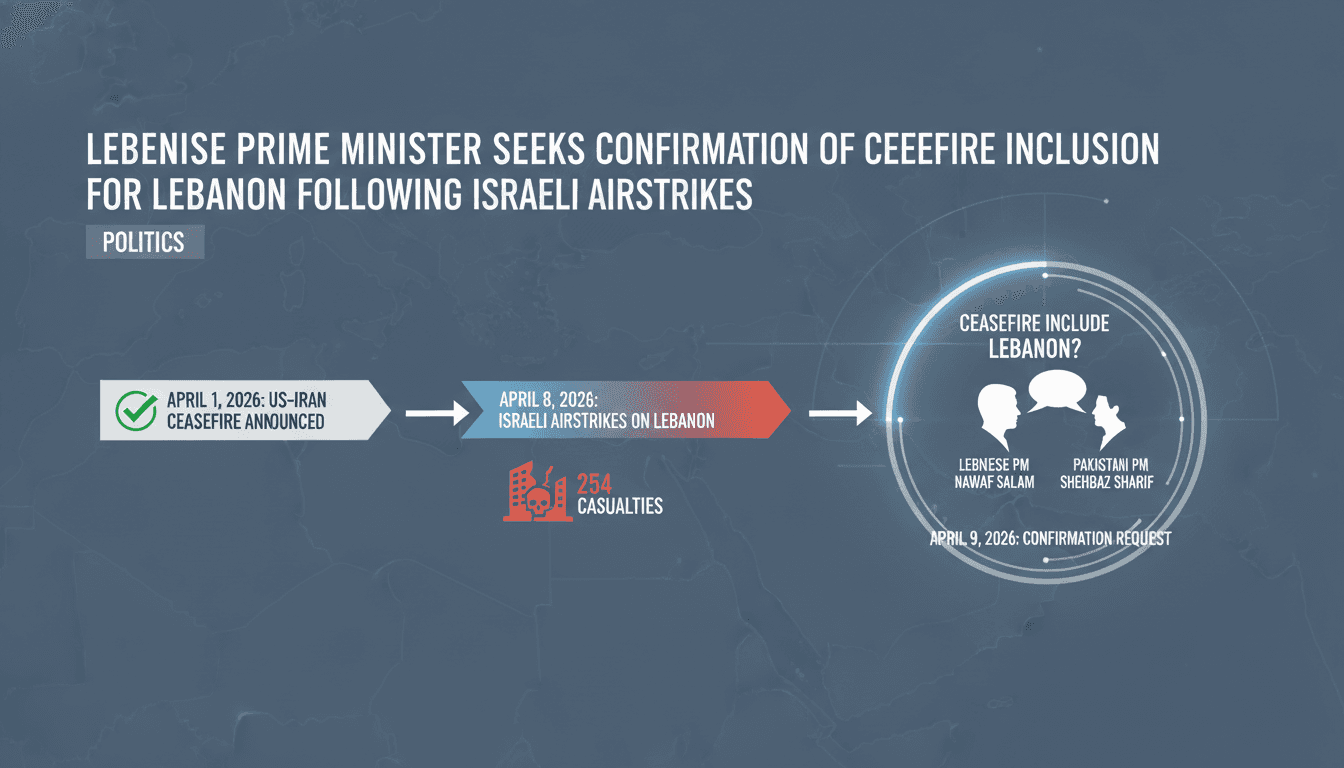
- On April 8, 2026, Israeli airstrikes across Lebanon resulted in 254 deaths and 1,165 injuries, escalating tensions in the region.
- On April 9, 2026, Lebanese Prime Minister Nawaf Salam sought confirmation from Pakistan that Lebanon is included in the US-Iran ceasefire following the strikes.
- Pakistan's Prime Minister Shehbaz Sharif condemned the Israeli actions and reaffirmed Pakistan's commitment to regional peace.
The context you actually need
- Pakistan brokered a ceasefire between the US and Iran on April 7, 2026, amid the ongoing Iran-US war, which has implications for Lebanon.
- Israeli Prime Minister Benjamin Netanyahu stated that the ceasefire does not apply to Lebanon, creating ambiguity and concern for Lebanese officials.
- Hezbollah's involvement in the conflict complicates the situation, as it aligns with Iran against Israel, heightening the risk of further violence.
What's really happening
The recent Israeli airstrikes on Lebanon have drawn international attention, particularly as they occurred just one day after a ceasefire was announced between the US and Iran, mediated by Pakistan. This ceasefire was intended to halt hostilities in the broader context of the Iran-US war, which has seen significant military actions targeting Iranian nuclear and military sites. The strikes, which killed 254 individuals and injured over 1,000, have raised urgent questions about the applicability of the ceasefire to Lebanon.
Lebanese Prime Minister Nawaf Salam's outreach to Pakistani Prime Minister Shehbaz Sharif highlights the precarious position Lebanon finds itself in. Salam's request for confirmation that Lebanon is included in the ceasefire reflects a desperate need for clarity and protection amid escalating violence. The ambiguity surrounding the ceasefire's scope is particularly concerning, as Israeli officials have explicitly stated that the truce does not extend to Lebanon, contradicting Sharif's earlier assertions.
This situation is compounded by the ongoing Israel-Hezbollah conflict, where Hezbollah, supported by Iran, has been actively engaged in hostilities against Israel. The strikes on April 8 are seen as a direct response to Hezbollah's actions, further entrenching the cycle of violence. As Lebanon grapples with the aftermath of these strikes, the potential for further military escalation remains high, particularly if Hezbollah retaliates.
The implications extend beyond Lebanon's borders. The UAE has expressed concern over the regional instability, which could affect oil prices and economic conditions in the Gulf. With over 100,000 Lebanese expatriates in Dubai, the situation is being closely monitored, as any disruption could impact travel and economic activities. Furthermore, the Lebanese government's intention to file a complaint with the UN Security Council signals a push for international intervention, which could alter the dynamics of the conflict.
In summary, the Israeli airstrikes have not only caused immediate humanitarian crises but have also thrown Lebanon into a geopolitical quagmire, where the stakes are high for both regional and global players.
Who feels it first (and how)
- Lebanese civilians: Directly affected by the violence, facing casualties and displacement.
- Investors in the Middle East: Potential fluctuations in oil prices and market instability could impact returns.
- Travelers to Lebanon and the UAE: Increased risks and possible disruptions in travel plans due to escalated tensions.
What to watch next
- International diplomatic responses: Watch for how the UN and other nations react to Lebanon's complaint and the broader implications for regional peace efforts.
- Hezbollah's military actions: Monitor any retaliatory actions from Hezbollah, which could escalate the conflict further.
- Oil market fluctuations: Keep an eye on oil prices, as instability in Lebanon could lead to increased prices, affecting global markets.
The Israeli airstrikes resulted in significant casualties and injuries in Lebanon.
Further military actions may occur if Hezbollah retaliates or if Israel continues operations.
The long-term implications of the ceasefire's ambiguity on Lebanon's stability and international relations.
Frequently Asked Questions
- Why it matters?
- The situation in Lebanon is a critical flashpoint in Middle Eastern geopolitics, influencing energy prices and international relations.
- What happened (in 30 seconds)?
- On April 8, 2026, Israeli airstrikes across Lebanon resulted in 254 deaths and 1,165 injuries, escalating tensions in the region. On April 9, 2026, Lebanese Prime Minister Nawaf Salam sought confirmation from Pakistan that Lebanon is included in the US-Iran ceasefire following the strikes. Pakistan's Prime Minister Shehbaz Sharif condemned the Israeli actions and reaffirmed Pakistan's commitment to regional peace.
- What's really happening?
- The recent Israeli airstrikes on Lebanon have drawn international attention, particularly as they occurred just one day after a ceasefire was announced between the US and Iran, mediated by Pakistan. This ceasefire was intended to halt hostilities in the broader context of the Iran-US war, which has seen significant military actions targeting Iranian nuclear and military sites. The strikes, which killed 254 individuals and injured over 1,000, have raised urgent questions about the applicability o
- Who feels it first (and how)?
- Lebanese civilians: Directly affected by the violence, facing casualties and displacement. Investors in the Middle East: Potential fluctuations in oil prices and market instability could impact returns. Travelers to Lebanon and the UAE: Increased risks and possible disruptions in travel plans due to escalated tensions.
- What to watch next?
- International diplomatic responses: Watch for how the UN and other nations react to Lebanon's complaint and the broader implications for regional peace efforts. Hezbollah's military actions: Monitor any retaliatory actions from Hezbollah, which could escalate the conflict further. Oil market fluctuations: Keep an eye on oil prices, as instability in Lebanon could lead to increased prices, affecting global markets.
Algerian and regional news coverage.
"Echorouk is a major Algerian outlet with broad national reporting."
— A47 Editor
رئيس الوزراء اللبناني يطلب من نظيره الباكستاني التأكيد على وقف إطلاق نار يشمل لبنان
Lebanese Prime Minister Nawaf Salam has requested his Pakistani counterpart, Shahbaz Sharif, to confirm that a ceasefire would include Lebanon. This request was made during a phone call on Thursday, April 9, as reported by the Lebanese government.
Arabic-language UAE newspaper coverage focused on domestic affairs, public institutions, business, society, and regional developments.
"Al Khaleej coverage generally reflects a mainstream UAE editorial lens with strong attention to public affairs, institutions, and regional developments."
— A47 Editor
باكستان تدين الهجوم على لبنان.. وتتلقى طلباً لشموله بالتهدئة
On Thursday, Lebanese Prime Minister Nawaf Salam requested confirmation from Pakistani Prime Minister Shehbaz Sharif that Lebanon would be included in the ongoing ceasefire efforts following recent attacks in the region. This request underscores the ...
Arabic-language coverage of political affairs and current events.
"Okaz political coverage typically follows mainstream Saudi framing on national and regional affairs."
— A47 Editor
باكستان: تلقينا طلباً لبنانياً بالتدخل لوقف هجمات إسرائيل
Pakistan's Prime Minister Shahbaz Sharif announced that the country received a request from Lebanon for intervention to halt Israeli attacks on Beirut. Sharif condemned the ongoing Israeli aggression and reiterated Pakistan's commitment to supporting...