
Eni Discovers 2 Trillion Cubic Feet of Gas and 130 Million Barrels of Condensates in Egypt
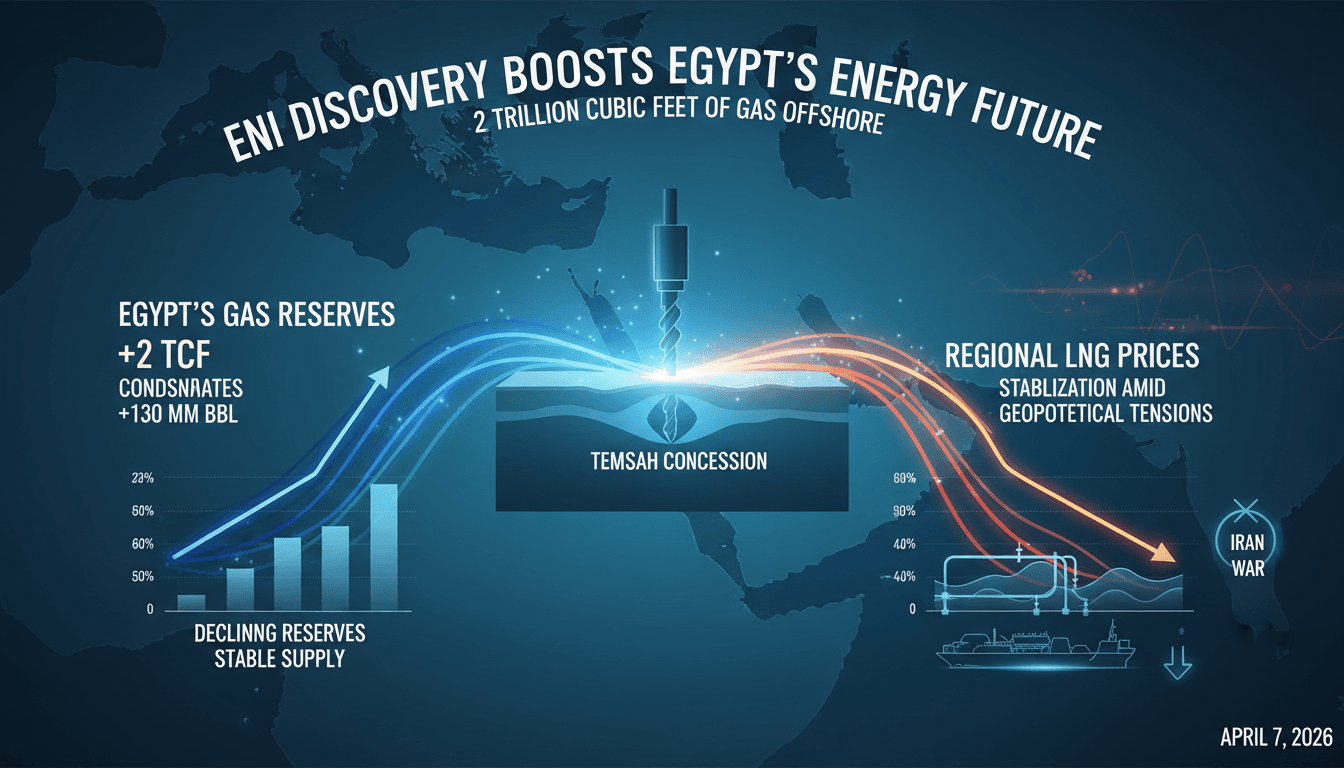
Here's what it means for you.
If you rely on energy imports, this discovery could influence regional gas prices and energy security.
Why it matters
This discovery is pivotal for Egypt's energy strategy, potentially stabilizing its gas supply and impacting regional energy markets.
What happened (in 30 seconds)
- Eni announced the discovery of approximately 2 trillion cubic feet of gas and 130 million barrels of condensates offshore Egypt on April 7, 2026.
- The Denise W-1 well was drilled in the Temsah Concession, enhancing Egypt's energy reserves amid declining domestic production.
- The find is significant as it supports Egypt's efforts to reduce energy import costs and is facilitated by a recent 20-year concession renewal.
The context you actually need
- Eni has been operating in Egypt since 1954, with a diverse portfolio that produced 242,000 barrels of oil equivalent per day in 2025.
- Egypt's gas sector faces challenges from maturing fields, leading to increased LNG imports and energy conservation measures.
- The renewed concession with EGPC and EGAS allows for fast-tracked development of the new gas reserves due to proximity to existing infrastructure.
What's really happening
Eni's recent discovery of 2 trillion cubic feet of gas and 130 million barrels of condensates in the Temsah Concession marks a significant milestone for Egypt's energy sector. The Denise W-1 exploration well, drilled in a high-quality gas-bearing sandstone reservoir, is strategically located just 70 kilometers offshore and less than 10 kilometers from existing infrastructure. This proximity allows for expedited development, which is crucial for Egypt as it grapples with declining domestic production and rising energy import costs.
The discovery comes at a time when Egypt's gas sector is under pressure due to maturing fields such as Zohr, which has necessitated increased LNG imports and energy conservation measures. The recent 20-year renewal of the Temsah Concession with the Egyptian General Petroleum Corporation (EGPC) and the Egyptian Natural Gas Holding Company (EGAS) not only secures Eni's operational foothold but also incentivizes foreign investment in the region. This is particularly important as Egypt seeks to bolster its energy reserves and reduce reliance on imports, especially amid ongoing regional conflicts that have disrupted energy supplies.
The implications of this discovery extend beyond Egypt. As the country enhances its gas reserves, it could stabilize regional LNG prices, which have been volatile due to geopolitical tensions, particularly the ongoing Iran war. This stabilization is vital for neighboring countries, including the UAE, which is heavily reliant on energy imports. If Egypt can ramp up its gas production efficiently, it may alleviate some pressure on regional energy markets, indirectly benefiting import-dependent sectors in the UAE.
Moreover, the discovery aligns with Egypt's broader strategy to attract foreign firms to boost output and exports, thus enhancing its position as a key player in the Eastern Mediterranean gas market. As the energy landscape evolves, the focus will be on how quickly and effectively Eni and its partners can develop these new reserves and what that means for energy prices and security in the region.
Who feels it first (and how)
- Energy companies: Increased competition and investment opportunities in the Eastern Mediterranean.
- Consumers in the UAE: Potential stabilization of energy prices due to increased supply from Egypt.
- Egyptian government: Opportunities for boosting exports and reducing import dependency.
- Regional energy markets: Shifts in LNG pricing dynamics based on Egypt's enhanced production capabilities.
What to watch next
- Development timelines: Monitor Eni's progress in developing the Temsah Concession and how quickly they can bring the new reserves online.
- LNG price fluctuations: Watch for changes in regional LNG prices as Egypt ramps up production, which could impact energy costs in neighboring countries.
- Foreign investment trends: Keep an eye on how this discovery influences foreign investment in Egypt's energy sector and whether it attracts more international players.
Eni's discovery of 2 trillion cubic feet of gas and 130 million barrels of condensates.
Increased foreign investment in Egypt's energy sector and potential stabilization of regional LNG prices.
The exact timeline for the development of the new reserves and its immediate impact on energy markets.
Frequently Asked Questions
- Why it matters?
- This discovery is pivotal for Egypt's energy strategy, potentially stabilizing its gas supply and impacting regional energy markets.
- What happened (in 30 seconds)?
- Eni announced the discovery of approximately 2 trillion cubic feet of gas and 130 million barrels of condensates offshore Egypt on April 7, 2026. The Denise W-1 well was drilled in the Temsah Concession, enhancing Egypt's energy reserves amid declining domestic production. The find is significant as it supports Egypt's efforts to reduce energy import costs and is facilitated by a recent 20-year concession renewal.
- What's really happening?
- Eni's recent discovery of 2 trillion cubic feet of gas and 130 million barrels of condensates in the Temsah Concession marks a significant milestone for Egypt's energy sector. The Denise W-1 exploration well, drilled in a high-quality gas-bearing sandstone reservoir, is strategically located just 70 kilometers offshore and less than 10 kilometers from existing infrastructure. This proximity allows for expedited development, which is crucial for Egypt as it grapples with declining domestic produc
- Who feels it first (and how)?
- Energy companies: Increased competition and investment opportunities in the Eastern Mediterranean. Consumers in the UAE: Potential stabilization of energy prices due to increased supply from Egypt. Egyptian government: Opportunities for boosting exports and reducing import dependency. Regional energy markets: Shifts in LNG pricing dynamics based on Egypt's enhanced production capabilities.
- What to watch next?
- Development timelines: Monitor Eni's progress in developing the Temsah Concession and how quickly they can bring the new reserves online. LNG price fluctuations: Watch for changes in regional LNG prices as Egypt ramps up production, which could impact energy costs in neighboring countries. Foreign investment trends: Keep an eye on how this discovery influences foreign investment in Egypt's energy sector and whether it attracts more international players.
Arabic-language digital news outlet covering UAE, regional, and international developments with broad general-news coverage.
"Al Ain News coverage typically blends UAE-focused reporting with wider Arab regional and international news."
— A47 Editor
إيني الإيطالية تكتشف تريليوني قدم مكعبة من الغاز قبالة سواحل مصر
The Italian energy company Eni announced a significant discovery of gas and condensates off the coast of Egypt after drilling the exploration well Dennis W-1 in the Temsah concession in the Eastern Mediterranean.
Sports reporting with a focus on Saudi and regional competitions.
"Okaz sports coverage is broad and audience-friendly, with strong attention to Saudi teams and leagues."
— A47 Editor
اكتشاف تريليوني قدم مكعب غاز قبالة سواحل مصر
An Italian company announced the discovery of significant natural gas and condensate reserves in deep waters off the Egyptian coast in the eastern Mediterranean, with the exploration well 'Dennis W1' uncovering approximately two trillion cubic feet o...
Arabic-language UAE newspaper coverage focused on domestic affairs, public institutions, business, society, and regional developments.
"Al Khaleej coverage generally reflects a mainstream UAE editorial lens with strong attention to public affairs, institutions, and regional developments."
— A47 Editor
إيني: كشف للغاز بحجم تريليوني قدم مكعبة قبالة سواحل مصر
Eni has announced the discovery of two trillion cubic feet of gas off the coast of Egypt, indicating significant potential for rapid development in the region. This discovery is expected to enhance Egypt's position in the energy market and contribute...
Pan-Arab news coverage spanning politics, business, sports, and regional affairs.
"Asharq Al-Awsat reflects a broad Arab editorial perspective with strong attention to regional geopolitics."
— A47 Editor
«إيني» تعلن عن كشف للغاز قبالة سواحل مصر بحجم تريليوني قدم مكعبة
The Italian company Eni announced a significant gas discovery off the coast of Egypt, estimated at approximately two trillion cubic feet. This discovery marks a notable development in the region's energy sector.