
European Commission Proposes Data Sharing Measures for Google under Digital Markets Act
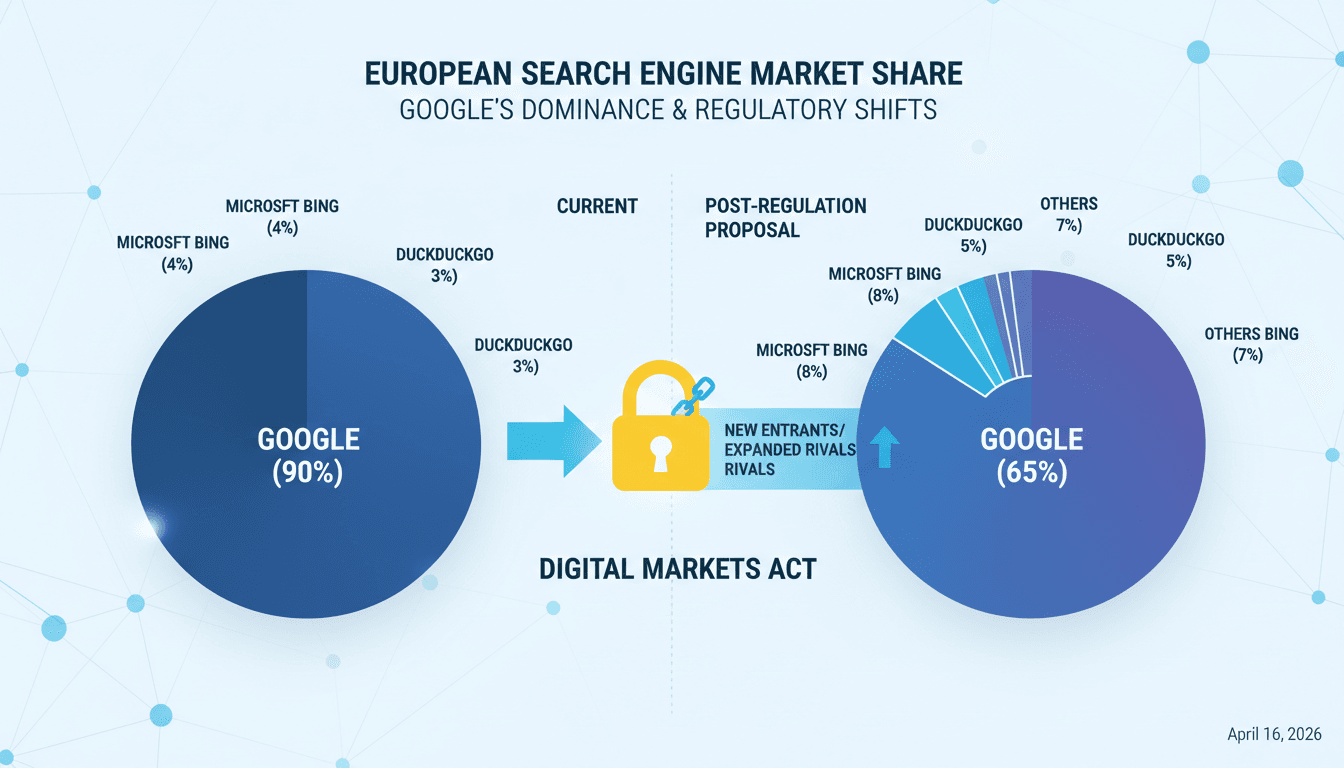
Here's what it means for you.
If you rely on search engines for business or personal use, changes in data access could reshape your online experience.
Why it matters
This proposal could redefine competition in the search engine market, impacting how you access information online.
What happened (in 30 seconds)
- On April 16, 2026, the European Commission proposed measures requiring Google to share search data with third-party engines.
- The initiative aims to foster competition by mandating access to data like rankings and queries under fair terms.
- Public consultation is open until May 1, 2026, with a final decision expected by July 27, 2026.
The context you actually need
- Google holds 89.45% of the search traffic market in Europe, indicating a significant dominance that the DMA seeks to challenge.
- The Digital Markets Act (DMA) was enforced in March 2024, targeting 'gatekeepers' like Google to ensure fair competition.
- Google has faced €9.71 billion in EU antitrust fines since 2017, highlighting ongoing regulatory scrutiny.
What's really happening
The European Commission's recent proposal is a critical step in enforcing the Digital Markets Act (DMA), which aims to dismantle monopolistic practices in the digital space. By designating Google as a "gatekeeper," the Commission is leveraging its regulatory power to ensure that dominant players like Google do not stifle competition through data control. The proposed measures require Google to share essential search data with rival search engines, including information on rankings, queries, clicks, and views. This data must be shared under fair, reasonable, and non-discriminatory (FRAND) terms, which is crucial for fostering a more competitive environment.
The rationale behind this initiative is rooted in the belief that access to data is vital for innovation, particularly in the rapidly evolving landscape of AI-integrated search services. Executive Vice-President Teresa Ribera emphasized that while data sharing is necessary, it should not hinder innovation. This reflects a balancing act: promoting competition while ensuring that the sharing of sensitive data does not compromise user privacy.
Google's response to the proposal has been one of resistance, with the company arguing that the measures could endanger user privacy, particularly concerning sensitive searches. This pushback highlights the tension between regulatory oversight and corporate interests. Google's historical dominance in the search market—holding 89.45% of search traffic in Europe—has made it a focal point for regulators aiming to level the playing field. The ongoing scrutiny and potential penalties underscore the EU's commitment to enforcing compliance with the DMA.
As the public consultation period unfolds, stakeholders—including third-party search engines and AI chatbots—are invited to weigh in on the proposed measures. The outcome of this consultation will shape the final binding decision expected by July 27, 2026. If the measures are finalized, they could significantly alter the competitive landscape of search engines, allowing smaller players to access critical data that could enhance their services and attract users.
Who feels it first (and how)
- Third-party search engines: They stand to gain access to valuable data, potentially leveling the playing field against Google.
- AI chatbot developers: Enhanced data access could improve the functionality and accuracy of AI-driven search tools.
- Consumers: You may experience more diverse search options and potentially improved search results as competition increases.
What to watch next
- Public consultation outcomes: Stakeholder feedback could influence the final measures, impacting how data sharing is structured.
- Google's compliance strategy: How Google adapts to these regulations will be crucial in determining its market position and user trust.
- Market response from competitors: Watch for any shifts in market share among search engines as new data access rules come into play.
The European Commission's proposal is officially on the table, with a public consultation period underway.
If finalized, the measures will enhance competition in the search engine market, benefiting smaller players.
The long-term impact on user privacy and data security remains to be seen as these measures are implemented.
Frequently Asked Questions
- Why it matters?
- This proposal could redefine competition in the search engine market, impacting how you access information online.
- What happened (in 30 seconds)?
- On April 16, 2026, the European Commission proposed measures requiring Google to share search data with third-party engines. The initiative aims to foster competition by mandating access to data like rankings and queries under fair terms. Public consultation is open until May 1, 2026, with a final decision expected by July 27, 2026.
- What's really happening?
- The European Commission's recent proposal is a critical step in enforcing the Digital Markets Act (DMA), which aims to dismantle monopolistic practices in the digital space. By designating Google as a "gatekeeper," the Commission is leveraging its regulatory power to ensure that dominant players like Google do not stifle competition through data control. The proposed measures require Google to share essential search data with rival search engines, including information on rankings, queries, clic
- Who feels it first (and how)?
- Third-party search engines: They stand to gain access to valuable data, potentially leveling the playing field against Google. AI chatbot developers: Enhanced data access could improve the functionality and accuracy of AI-driven search tools. Consumers: You may experience more diverse search options and potentially improved search results as competition increases.
- What to watch next?
- Public consultation outcomes: Stakeholder feedback could influence the final measures, impacting how data sharing is structured. Google's compliance strategy: How Google adapts to these regulations will be crucial in determining its market position and user trust. Market response from competitors: Watch for any shifts in market share among search engines as new data access rules come into play.
Consumer technology news with AI coverage.
"Gadget and tech site reporting on AI in products."
— A47 Editor
The European Commission wants Google to share search engine data with competitors
The European Commission has proposed new measures requiring Google to share its search engine data with competitors, aiming to enhance competition in the online search market. This initiative is part of the enforcement of the Digital Markets Act, whi...
Covers consumer technology, electronics, gadgets, and product reviews.
"Engadget is a trusted source for gadget reviews and consumer tech news, known for its hands-on analysis and industry coverage."
— A47 Editor
The European Commission wants Google to share search engine data with competitors
The European Commission has proposed new measures requiring Google to share its search engine data with competitors, aiming to enhance competition in the online search market. This initiative is part of the enforcement of the Digital Markets Act, whi...
Technology business and AI-related headlines.
"Data-driven tech newsroom with global scope."
— A47 Editor
Google Told to Share Search Data With AI Rivals in EU Proposal
The European Union has proposed new measures requiring Google to share its search data with rival search engines, including AI chatbots, as part of efforts to regulate the dominance of major US technology firms. This initiative aims to foster competi...
Technology business news, market impacts, and innovation trends.
"Bloomberg is a premier financial and tech news provider, respected for its in-depth reporting and analytical rigor."
— A47 Editor
Google Told to Share Search Data With AI Rivals in EU Proposal
The European Union has proposed new measures requiring Google to share its search data with rival search engines, including AI chatbots, as part of efforts to regulate the dominance of major US technology firms. This initiative aims to foster competi...
Opinionated AI coverage for general audiences.
"TNW’s AI vertical covering tools, ethics, and trends."
— A47 Editor
The EU has told Google what it must do to share search data with rivals
The European Commission has proposed six specific measures requiring Google to share search ranking, query, click, and view data with competing search engines, including AI chatbots, as part of its preliminary findings under the Digital Markets Act. ...