
Iraqi Hezbollah Brigades Support Nouri al-Maliki's Prime Minister Candidacy Amid Political Deadlock
Here's what it means for you.
The ongoing political turmoil in Iraq could influence regional stability and economic conditions that affect global markets, including energy prices.
Why it matters
Iraq's political deadlock has implications for oil price volatility, impacting economies reliant on energy exports, including Dubai.
What happened (in 30 seconds)
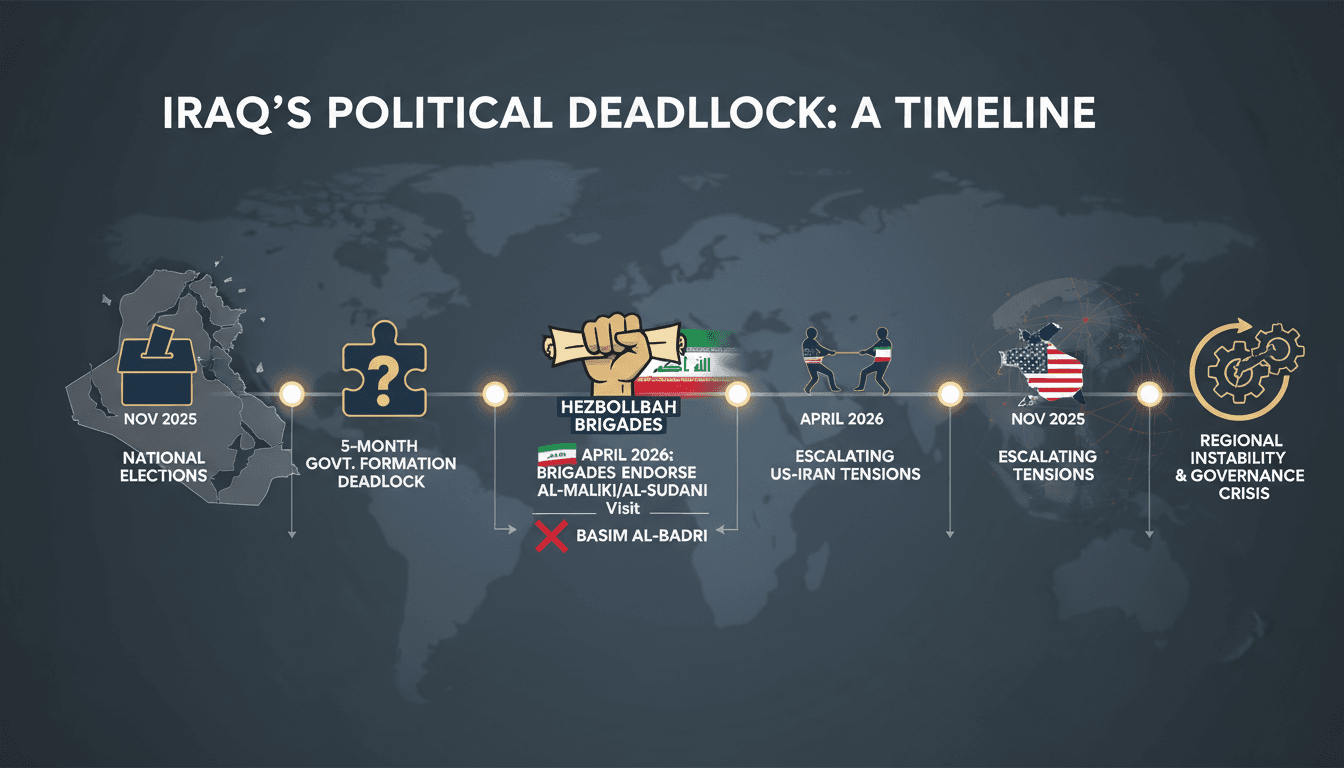
- On April 20, 2026, the Iraqi Hezbollah Brigades urged the Shiite Coordination Framework to nominate Nouri al-Maliki or Mohammed Shia' al-Sudani for prime minister, sidelining Basim al-Badri.
- This endorsement follows a visit from Iran's Quds Force commander, signaling Iran's influence in Iraq's political landscape amid U.S. opposition to al-Maliki.
- The Coordination Framework has postponed key meetings as it navigates internal divisions and external diplomatic pressures, with a looming deadline for government formation.
The context you actually need
- Iraq's November 2025 elections resulted in no outright majority, empowering the Shiite Coordination Framework, which nominated al-Maliki despite U.S. opposition.
- U.S. concerns over al-Maliki's pro-Iranian ties have led to internal splits within the Framework, complicating the government formation process.
- Iran's backing of pro-Iranian factions, including the Iraqi Hezbollah Brigades, continues to shape Iraq's political dynamics, exacerbating the deadlock.
What's really happening
The political landscape in Iraq is currently characterized by a significant deadlock following the November 2025 parliamentary elections. The Shiite Coordination Framework emerged as the largest bloc, securing approximately 184 of 329 seats. Initially, the Framework nominated Nouri al-Maliki for prime minister on January 24, 2026. However, this nomination faced immediate pushback from the U.S., which has historically opposed al-Maliki due to his close ties with Iran and his past sectarian policies. The U.S. threatened to cut support, leading to fractures within the Coordination Framework as factions began to rally around alternative candidates, including the incumbent Mohammed Shia' al-Sudani and compromise candidate Basim al-Badri.
The situation escalated when Iranian Quds Force commander Ismail Qaani visited Baghdad, signaling Iran's intent to maintain its influence over Iraqi politics. Following this visit, the Iraqi Hezbollah Brigades publicly endorsed either al-Maliki or al-Sudani, effectively reviving al-Maliki's candidacy despite U.S. preferences. This endorsement reflects a strategic maneuver by pro-Iranian factions to consolidate power and counteract U.S. influence in Iraq.
As of April 20, 2026, the Coordination Framework has postponed critical meetings, indicating ongoing internal challenges and the need for consensus. The looming constitutional deadline for government formation, set for April 26, adds urgency to the situation. Political observers note that the outcomes of Qaani's visit and the anticipated arrival of U.S. envoy Tom Barak will be pivotal in shaping the next steps for Iraq's government.
The interplay of external influences, particularly from Iran and the U.S., complicates Iraq's political landscape. The Iranian-backed factions assert that their support for al-Maliki overrides external pressures, indicating a potential standoff that could prolong the deadlock. This situation not only affects Iraq's internal stability but also has broader implications for regional dynamics, particularly in terms of energy markets and geopolitical alignments.
Who feels it first (and how)
- Iraqi citizens: Political instability may lead to economic hardships and security concerns.
- Energy sector stakeholders: Fluctuations in oil prices could impact revenues and investments.
- UAE expatriates: The Iraqi community in Dubai may experience changes in remittances and economic ties.
What to watch next
- Coordination Framework meetings: The outcomes of postponed meetings will indicate whether a consensus can be reached or if the deadlock will continue.
- U.S. diplomatic interventions: The effectiveness of Tom Barak's visit could influence the direction of Iraq's political negotiations.
- Iran's strategic moves: Observing Iran's continued support for al-Maliki or other candidates will reveal its influence on Iraq's governance.
The Iraqi political deadlock has persisted for 161 days since the elections.
Continued external pressures from the U.S. and Iran will shape the political landscape in Iraq.
The ultimate outcome of the Coordination Framework's internal negotiations and their impact on government formation.
Frequently Asked Questions
- Why it matters?
- Iraq's political deadlock has implications for oil price volatility, impacting economies reliant on energy exports, including Dubai.
- What happened (in 30 seconds)?
- On April 20, 2026, the Iraqi Hezbollah Brigades urged the Shiite Coordination Framework to nominate Nouri al-Maliki or Mohammed Shia' al-Sudani for prime minister, sidelining Basim al-Badri. This endorsement follows a visit from Iran's Quds Force commander, signaling Iran's influence in Iraq's political landscape amid U.S. opposition to al-Maliki. The Coordination Framework has postponed key meetings as it navigates internal divisions and external diplomatic pressures, with a looming deadline fo
- What's really happening?
- The political landscape in Iraq is currently characterized by a significant deadlock following the November 2025 parliamentary elections. The Shiite Coordination Framework emerged as the largest bloc, securing approximately 184 of 329 seats. Initially, the Framework nominated Nouri al-Maliki for prime minister on January 24, 2026. However, this nomination faced immediate pushback from the U.S., which has historically opposed al-Maliki due to his close ties with Iran and his past sectarian polici
- Who feels it first (and how)?
- Iraqi citizens: Political instability may lead to economic hardships and security concerns. Energy sector stakeholders: Fluctuations in oil prices could impact revenues and investments. UAE expatriates: The Iraqi community in Dubai may experience changes in remittances and economic ties.
- What to watch next?
- Coordination Framework meetings: The outcomes of postponed meetings will indicate whether a consensus can be reached or if the deadlock will continue. U.S. diplomatic interventions: The effectiveness of Tom Barak's visit could influence the direction of Iraq's political negotiations. Iran's strategic moves: Observing Iran's continued support for al-Maliki or other candidates will reveal its influence on Iraq's governance.
Pan-Arab news coverage spanning politics, business, sports, and regional affairs.
"Asharq Al-Awsat reflects a broad Arab editorial perspective with strong attention to regional geopolitics."
— A47 Editor
الفصائل «تُعيد» المالكي إلى السباق الحكومي
The attempts by the forces of the 'Coordination Framework' to name their candidate for forming the Iraqi government have returned to square one following the announcement of a visit by Iranian Quds Force commander Ismail Qaani. This visit marks a sig...
Arabic-language coverage of international news and geopolitics.
"RT Arabic is a Russian state-funded outlet often criticized for promoting Kremlin-aligned narratives."
— A47 Editor
وفد إيراني برئاسة قاآني يزور بغداد
An Iranian delegation led by Quds Force commander Ismail Qaani has arrived in Baghdad to discuss various issues, primarily focusing on the developments in the ongoing war and the positions of Iraqi factions aligned with Tehran.