
Iraqi Government Blames Israel for Airstrikes Aimed at Undermining US-Iran Ceasefire
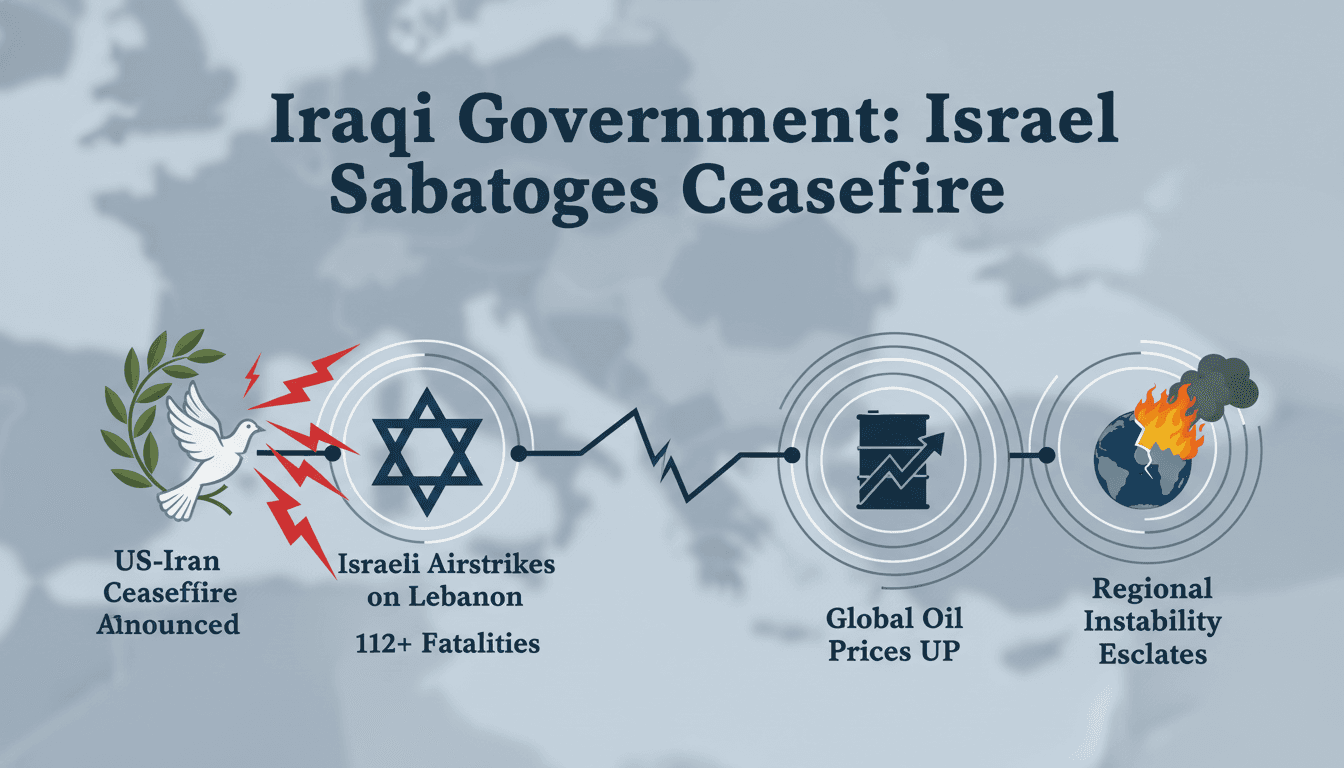
Here's what it means for you.
The ongoing conflict in the Middle East could impact global oil prices and supply chains, affecting costs for consumers and businesses worldwide.
Why it matters
The escalation of military actions in Lebanon threatens regional stability, which can lead to fluctuations in global oil markets and economic pressures in various sectors.
What happened (in 30 seconds)
- Israeli airstrikes targeted multiple sites across Lebanon on April 8, 2026, resulting in at least 112 fatalities.
- Iraq's government condemned the attacks, accusing Israel of attempting to sabotage a recently announced US-Iran ceasefire.
- Hezbollah positions were the primary focus of these strikes, raising questions about the applicability of the ceasefire to Lebanon.
The context you actually need
- The 2026 Lebanon war has intensified amid rising US-Iran tensions, with a ceasefire announced on April 7 that excluded Hezbollah operations.
- Cumulative casualties from Israeli strikes in Lebanon exceeded 1,500 by early April, displacing over 1.2 million people.
- Iraqi officials claim that Israel's actions are part of a broader strategy to undermine peace efforts in the region.
What's really happening
On April 7, 2026, a ceasefire was brokered between the US and Iran, halting direct strikes on Iran but explicitly excluding operations against Hezbollah in Lebanon. This ceasefire was seen as a crucial step towards de-escalation in a region plagued by conflict. However, just hours after the announcement, Israel launched over 100 airstrikes across Lebanon, deploying 50 jets in coordinated waves. The strikes targeted Hezbollah positions, particularly in Beirut and its southern suburbs, leading to significant casualties and overwhelming local hospitals.
The Israeli government justified these airstrikes by stating that Hezbollah's ongoing military activities posed a direct threat, and thus the ceasefire did not apply to them. This perspective highlights a critical tension: while the US and Iran may have reached a temporary truce, the situation on the ground remains volatile, particularly in Lebanon. The Iraqi government, through spokesperson Basim al-Awadi, condemned the airstrikes, framing them as a deliberate attempt by Israel to sabotage peace efforts and escalate conflict.
The implications of these airstrikes extend beyond immediate military concerns. The violence has already led to a humanitarian crisis, with hospitals in Lebanon overwhelmed and the civilian population facing dire conditions. The strikes have also caused significant disruptions in oil tanker traffic through the Strait of Hormuz, leading to price volatility and heightened fuel cost concerns, particularly for consumers in Dubai and the broader Gulf region.
As the situation unfolds, the potential for further military escalation remains high. Israel's continued operations against Hezbollah could provoke retaliatory actions, not just from Hezbollah but also from Iranian forces, complicating the already intricate dynamics of Middle Eastern geopolitics. The Iraqi government's condemnation signals a growing regional alliance against Israeli actions, which could further entrench divisions and lead to broader conflict.
Who feels it first (and how)
- Consumers in Dubai: Rising fuel costs due to oil price volatility.
- Businesses reliant on stable oil prices: Increased operational costs and potential supply chain disruptions.
- Humanitarian organizations: Heightened demand for aid as casualties and displacement rise in Lebanon.
- Regional governments: Increased pressure to respond to military actions and manage public sentiment.
What to watch next
- Oil price fluctuations: Monitor Brent crude prices for indications of market stability or instability.
- Military responses from Hezbollah: Any retaliatory actions could escalate tensions further and impact regional security.
- International diplomatic efforts: Watch for any new negotiations or peace initiatives aimed at stabilizing the situation.
Israeli airstrikes have resulted in significant casualties and condemnation from Iraq.
Continued military operations by Israel against Hezbollah, with potential for escalation.
The long-term impact on regional stability and international diplomatic relations.
Frequently Asked Questions
- Why it matters?
- The escalation of military actions in Lebanon threatens regional stability, which can lead to fluctuations in global oil markets and economic pressures in various sectors.
- What happened (in 30 seconds)?
- Israeli airstrikes targeted multiple sites across Lebanon on April 8, 2026, resulting in at least 112 fatalities. Iraq's government condemned the attacks, accusing Israel of attempting to sabotage a recently announced US-Iran ceasefire. Hezbollah positions were the primary focus of these strikes, raising questions about the applicability of the ceasefire to Lebanon.
- What's really happening?
- On April 7, 2026, a ceasefire was brokered between the US and Iran, halting direct strikes on Iran but explicitly excluding operations against Hezbollah in Lebanon. This ceasefire was seen as a crucial step towards de-escalation in a region plagued by conflict. However, just hours after the announcement, Israel launched over 100 airstrikes across Lebanon, deploying 50 jets in coordinated waves. The strikes targeted Hezbollah positions, particularly in Beirut and its southern suburbs, leading to
- Who feels it first (and how)?
- Consumers in Dubai: Rising fuel costs due to oil price volatility. Businesses reliant on stable oil prices: Increased operational costs and potential supply chain disruptions. Humanitarian organizations: Heightened demand for aid as casualties and displacement rise in Lebanon. Regional governments: Increased pressure to respond to military actions and manage public sentiment.
- What to watch next?
- Oil price fluctuations: Monitor Brent crude prices for indications of market stability or instability. Military responses from Hezbollah: Any retaliatory actions could escalate tensions further and impact regional security. International diplomatic efforts: Watch for any new negotiations or peace initiatives aimed at stabilizing the situation.
Arabic-language UAE newspaper coverage focused on domestic affairs, public institutions, business, society, and regional developments.
"Al Khaleej coverage generally reflects a mainstream UAE editorial lens with strong attention to public affairs, institutions, and regional developments."
— A47 Editor
العراق: الغارات على لبنان مخطط إسرائيلي لإفشال الهدنة
The Iraqi government condemned the recent Israeli airstrikes in Lebanon that resulted in numerous casualties, characterizing them as indicative of Israel's aggressive plans to undermine the ceasefire.
Regional and international reporting focused on Middle Eastern politics, diplomacy, and economics.
"Asharq Al-Awsat is a Saudi-owned international newspaper reflecting mainstream Gulf political perspectives."
— A47 Editor
Iraq Says Israel Strikes on Lebanon Show ‘Plan to Sabotage’ Iran Truce
Iraq has accused Israel of conducting airstrikes in Lebanon as part of a broader strategy to undermine a potential truce between Iran and its adversaries. This assertion comes amid escalating military operations, with significant casualties reported ...