
American Bankers Association Warns of $6.6 Trillion Deposit Flight Risk from Interest-Bearing Stablecoins
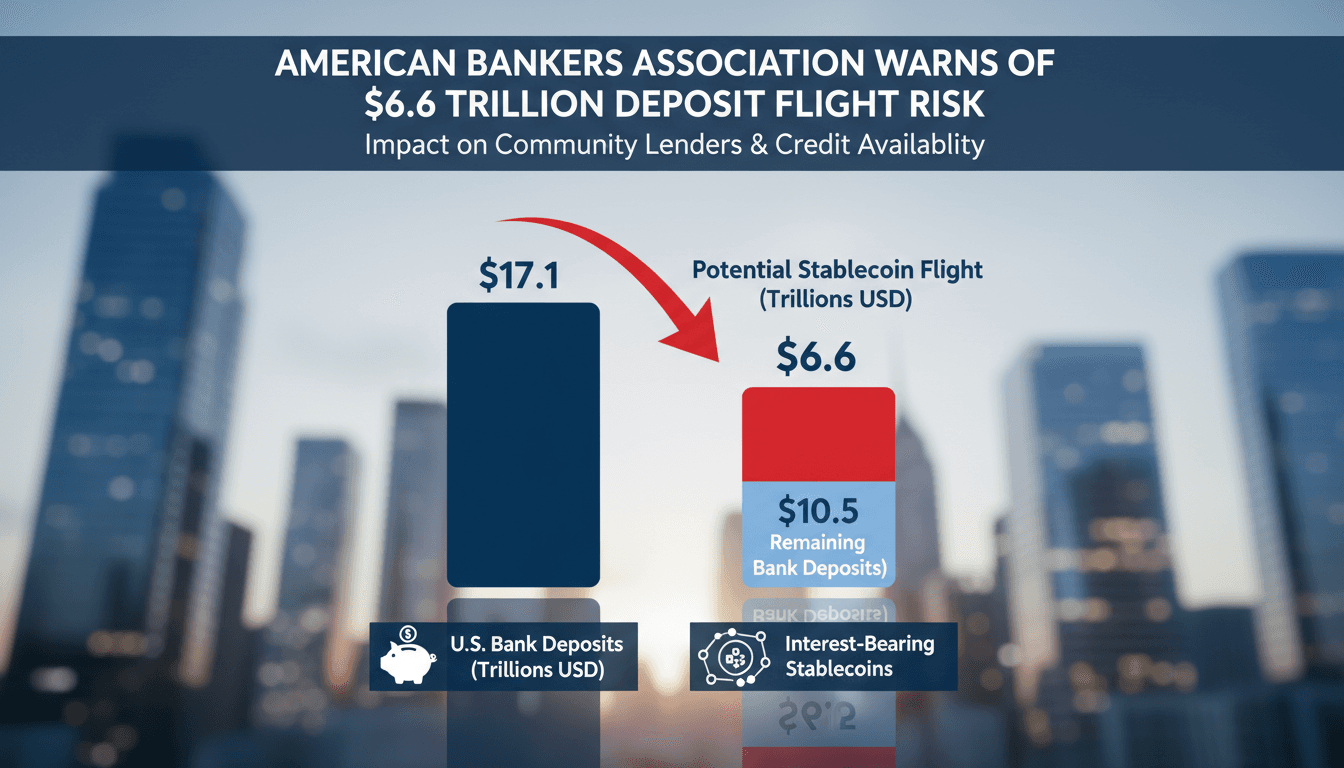
Here's what it means for you.
If you’re in finance or banking, this could reshape how you view deposit competition and stablecoin regulations.
Why it matters
The potential outflow of $6.6 trillion from U.S. banks could destabilize community lenders and reshape the banking landscape.
What happened (in 30 seconds)
- April 13, 2026: The American Bankers Association (ABA) warns that allowing interest on stablecoins could lead to a $6.6 trillion deposit flight from U.S. banks.
- April 2025: A U.S. Treasury report identifies $6.6 trillion in transactional deposits at risk of migrating to stablecoins.
- Ongoing: U.S. congressional debates on stablecoin regulations, including the GENIUS Act and proposed Clarity Act, continue amid concerns from banking lobbies.
The context you actually need
- GENIUS Act: Passed in June 2025, it prohibits payment stablecoin issuers from offering interest, aiming to position them as payment instruments rather than deposit substitutes.
- Banking Concerns: Bank of America CEO Brian Moynihan projected a $6 trillion outflow in January 2026, highlighting the urgency of the issue.
- Regulatory Pushback: The ABA's recent critique of a White House Council of Economic Advisers (CEA) report argues that the risks of deposit flight are being downplayed, particularly for community banks.
What's really happening
The American Bankers Association's (ABA) warning about a potential $6.6 trillion outflow from U.S. banks due to interest-bearing stablecoins highlights a significant tension in the financial ecosystem. The GENIUS Act, which prohibits payment stablecoin issuers from offering interest, was designed to prevent these digital currencies from acting as deposit substitutes. However, the ABA argues that this regulation may inadvertently push consumers toward stablecoins that offer yields, thereby threatening the stability of community banks.
The ABA's critique stems from a broader concern about the competitive landscape between traditional banks and emerging financial technologies. As consumers increasingly seek higher yields on their deposits, the allure of stablecoins—especially those that can offer interest—grows. The April 2025 U.S. Treasury report estimated that $6.6 trillion in transactional deposits could migrate to stablecoins, a figure echoed by Bank of America’s CEO in early 2026. This migration could elevate funding costs for banks, particularly smaller community lenders, and curtail their ability to extend credit locally.
The CEA's report, which claimed that the yield prohibition would only boost lending by $2.1 billion, has been criticized for misframing the risks involved. The ABA argues that the focus should be on the potential for deposit flight rather than the limited benefits of the yield ban. This misalignment in understanding the stakes could lead to regulatory decisions that fail to protect community banks from the competitive pressures posed by stablecoins.
As the stablecoin market continues to grow—currently valued at around $300 billion with projections reaching $2 trillion—regulatory clarity becomes increasingly critical. The ongoing debates in Congress, particularly around the Clarity Act, will determine how these digital assets are treated in the financial system. The outcome will not only affect banks but also consumers who rely on these institutions for credit and financial services.
Who feels it first (and how)
- Community Banks: Likely to experience immediate funding pressures and reduced lending capacity.
- Consumers: Those with deposits in traditional banks may find better yields in stablecoins, prompting a shift in their financial behavior.
- Regulators: Facing pressure to balance innovation in the financial sector with the stability of traditional banking systems.
What to watch next
- Congressional Debates: Watch for developments in the GENIUS and Clarity Acts, as these will shape the regulatory landscape for stablecoins.
- Market Reactions: Monitor how banks adjust their offerings in response to stablecoin competition, particularly in interest rates and services.
- Stablecoin Growth: Keep an eye on the stablecoin market's expansion, as it could signal shifts in consumer behavior and banking practices.
The GENIUS Act prohibits interest on stablecoins.
Community banks will face increased competition from stablecoins, impacting their funding and lending capabilities.
The long-term regulatory framework for stablecoins and its effects on the banking sector remain uncertain.
Frequently Asked Questions
- Why it matters?
- The potential outflow of $6.6 trillion from U.S. banks could destabilize community lenders and reshape the banking landscape.
- What happened (in 30 seconds)?
- April 13, 2026: The American Bankers Association (ABA) warns that allowing interest on stablecoins could lead to a $6.6 trillion deposit flight from U.S. banks. April 2025: A U.S. Treasury report identifies $6.6 trillion in transactional deposits at risk of migrating to stablecoins. Ongoing: U.S. congressional debates on stablecoin regulations, including the GENIUS Act and proposed Clarity Act, continue amid concerns from banking lobbies.
- What's really happening?
- The American Bankers Association's (ABA) warning about a potential $6.6 trillion outflow from U.S. banks due to interest-bearing stablecoins highlights a significant tension in the financial ecosystem. The GENIUS Act, which prohibits payment stablecoin issuers from offering interest, was designed to prevent these digital currencies from acting as deposit substitutes. However, the ABA argues that this regulation may inadvertently push consumers toward stablecoins that offer yields, thereby threat
- Who feels it first (and how)?
- Community Banks: Likely to experience immediate funding pressures and reduced lending capacity. Consumers: Those with deposits in traditional banks may find better yields in stablecoins, prompting a shift in their financial behavior. Regulators: Facing pressure to balance innovation in the financial sector with the stability of traditional banking systems.
- What to watch next?
- Congressional Debates: Watch for developments in the GENIUS and Clarity Acts, as these will shape the regulatory landscape for stablecoins. Market Reactions: Monitor how banks adjust their offerings in response to stablecoin competition, particularly in interest rates and services. Stablecoin Growth: Keep an eye on the stablecoin market's expansion, as it could signal shifts in consumer behavior and banking practices.
Real-time updates, analysis, and reports on the blockchain and cryptocurrency sectors.
"Crypto News delivers real-time updates, analysis, and reports on the blockchain and cryptocurrency sectors."
— A47 Editor
ABA warns interest-bearing stablecoins could trigger $6.6 trillion in bank deposit flight
The American Bankers Association (ABA) has issued a warning that the introduction of interest-bearing stablecoins could lead to a significant withdrawal of deposits from traditional banks, potentially amounting to $6.6 trillion. This warning counters...
Covers blockchain, cryptocurrency news, project analysis, and market insights.
"Cointelegraph is a leading crypto-focused media outlet known for timely news, analysis, and educational content related to blockchain and digital assets."
— A47 Editor
Banks challenge White House report on stablecoin yields
The American Bankers Association (ABA) has raised concerns regarding a recent White House report that downplays the potential impact of stablecoin yields on bank deposits, particularly for smaller community banks. The ABA argues that these yields cou...
Covers Bitcoin plus altcoin news, market updates, and educational resources.
"Bitcoin.com provides news, market data, and guides focused on Bitcoin and the wider crypto industry."
— A47 Editor
American Bankers Association Warns White House Is Underestimating Stablecoin Yield Risks to Lending and Deposit Stability
The American Bankers Association (ABA) has expressed concerns that the White House is underestimating the risks associated with stablecoin yields, which could impact lending and deposit stability in the banking sector. The ABA's warning comes amid on...
Covers blockchain, cryptocurrency news, project analysis, and market insights.
"CoinDesk is a well-established cryptocurrency and blockchain news provider, offering comprehensive insights, market data, and industry research."
— A47 Editor
Bankers rebuff White House claim that stablecoin yield doesn't threaten deposits
The American Bankers Association has challenged the White House's assertion that stablecoin yields do not pose a threat to bank deposits, citing a recent study that critiques the government's economic analysis.