
Trump Downplays Failed Ceasefire Talks with Iran Amid Ongoing Military Operations
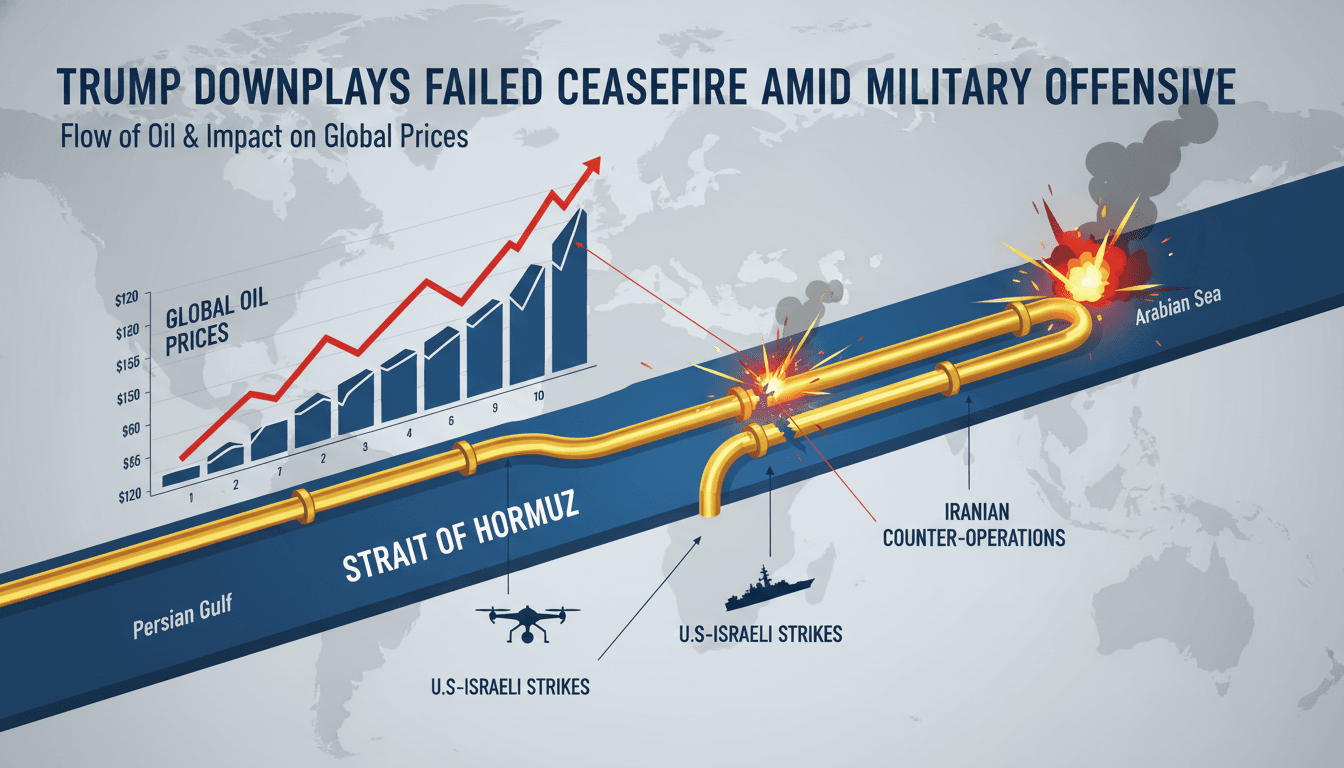
Here's what it means for you.
The ongoing tensions and military actions in the Middle East could impact global oil prices and supply chains, affecting your business costs.
Why it matters
The failure of ceasefire negotiations between the U.S. and Iran exacerbates geopolitical instability, influencing global markets and energy prices.
What happened (in 30 seconds)
- Trump downplayed the significance of failed ceasefire talks, asserting a military victory for the U.S.
- Negotiations concluded after 21 hours without agreement, with U.S. military operations continuing in the Strait of Hormuz.
- Iran's closure of the Strait has disrupted 20% of the global seaborne oil trade, escalating tensions in the region.
The context you actually need
- The 2026 Iran war escalated from decades of U.S.-Iran tensions, particularly over Iran's nuclear ambitions and military capabilities.
- A two-week ceasefire was initiated on April 8, 2026, but was marred by violations, including Israeli strikes in Lebanon.
- Global oil prices have surged above $100 per barrel due to the conflict, impacting economies worldwide.
What's really happening
The recent diplomatic efforts to negotiate a ceasefire between the U.S. and Iran highlight a complex interplay of military strategy and geopolitical maneuvering. The negotiations, led by U.S. Vice President JD Vance and Iranian Parliament Speaker Mohammad Bagher Qalibaf, were intended to stabilize a fragile truce that had been in place for just a few days. However, the talks ended without an agreement, underscoring the deep-seated mistrust and conflicting interests that characterize U.S.-Iran relations.
President Trump’s assertion of a military victory, despite the failed negotiations, reflects a broader strategy to project strength and dominance in the region. This rhetoric serves to reassure domestic audiences of U.S. military capabilities while downplaying the significance of diplomatic failures. The U.S. military's ongoing operations in the Strait of Hormuz, a critical chokepoint for global oil shipments, further illustrate the administration's commitment to maintaining a hardline stance against Iran.
The backdrop of these negotiations is a war that began with U.S.-Israeli airstrikes on Iranian nuclear and missile facilities on February 28, 2026. This operation, dubbed Operation Epic Fury, marked a significant escalation in hostilities, prompting Iran to retaliate by closing the Strait of Hormuz and launching missile strikes against U.S. bases and allied Gulf states. The closure of the strait has disrupted approximately 20% of the global seaborne oil trade, leading to increased volatility in oil prices and heightened concerns among global markets.
The failure of the ceasefire talks has immediate implications for regional stability. With the U.S. announcing a naval blockade of Iranian ports and continuing military operations, the likelihood of further escalation remains high. This situation not only affects the geopolitical landscape but also has tangible consequences for global economies, particularly those reliant on oil imports.
As the conflict continues, the potential for broader military engagement looms, with both sides entrenched in their positions. The U.S. aims to maintain pressure on Iran while Iran seeks to assert its influence in the region through proxy groups and military capabilities. This dynamic creates a precarious environment where diplomatic solutions appear increasingly elusive.
Who feels it first (and how)
- Energy sector professionals: Fluctuating oil prices directly impact profitability and operational costs.
- Global supply chain managers: Disruptions in oil trade can lead to increased shipping costs and delays.
- Middle Eastern residents: Civilians in conflict zones face immediate threats to safety and stability.
- Investors: Market volatility can affect investment strategies and portfolio performance.
What to watch next
- Oil price fluctuations: Continued military actions could drive prices higher, impacting global markets and consumer costs.
- Diplomatic efforts: Any renewed attempts at negotiations could signal shifts in U.S. foreign policy and regional dynamics.
- Military developments: Increased military engagements or escalations could lead to broader conflict, affecting international relations.
The U.S. continues military operations in the Strait of Hormuz.
Oil prices will remain volatile as tensions persist.
The potential for future diplomatic negotiations and their outcomes.
Frequently Asked Questions
- Why it matters?
- The failure of ceasefire negotiations between the U.S. and Iran exacerbates geopolitical instability, influencing global markets and energy prices.
- What happened (in 30 seconds)?
- Trump downplayed the significance of failed ceasefire talks, asserting a military victory for the U.S. Negotiations concluded after 21 hours without agreement, with U.S. military operations continuing in the Strait of Hormuz. Iran's closure of the Strait has disrupted 20% of the global seaborne oil trade, escalating tensions in the region.
- What's really happening?
- The recent diplomatic efforts to negotiate a ceasefire between the U.S. and Iran highlight a complex interplay of military strategy and geopolitical maneuvering. The negotiations, led by U.S. Vice President JD Vance and Iranian Parliament Speaker Mohammad Bagher Qalibaf, were intended to stabilize a fragile truce that had been in place for just a few days. However, the talks ended without an agreement, underscoring the deep-seated mistrust and conflicting interests that characterize U.S.-Iran re
- Who feels it first (and how)?
- Energy sector professionals: Fluctuating oil prices directly impact profitability and operational costs. Global supply chain managers: Disruptions in oil trade can lead to increased shipping costs and delays. Middle Eastern residents: Civilians in conflict zones face immediate threats to safety and stability. Investors: Market volatility can affect investment strategies and portfolio performance.
- What to watch next?
- Oil price fluctuations: Continued military actions could drive prices higher, impacting global markets and consumer costs. Diplomatic efforts: Any renewed attempts at negotiations could signal shifts in U.S. foreign policy and regional dynamics. Military developments: Increased military engagements or escalations could lead to broader conflict, affecting international relations.
Corporate leadership, finance, technology, and market trends.
"Fortune covers financial trends, leadership, and innovation with a pragmatic editorial approach."
— A47 Editor
Trump downplays talks for ceasefire deal with Iran, claiming military victory. ‘It doesn’t matter. From the standpoint of America, we win’
President Donald Trump has downplayed the significance of ongoing negotiations for a ceasefire deal with Iran, asserting that from America's perspective, the country has already achieved a military victory. He expressed uncertainty about the outcome ...
Global news coverage with extensive reporting on Middle Eastern conflicts and geopolitics.
"Al Jazeera is a Qatar-based broadcaster known for wide regional coverage and alternative perspectives."
— A47 Editor
US President Trump says US ‘wins’ regardless of how Iran talks go
U.S. President Donald Trump stated that the United States will emerge victorious regardless of the outcomes of ongoing talks with Iran, emphasizing a sense of confidence in the negotiations. This statement comes as U.S. Vice President JD Vance prepar...
Comprehensive coverage of Middle Eastern and global issues.
"Al Jazeera is a prominent voice from the Global South, especially the Middle East, with an emphasis on underreported stories."
— A47 Editor
US President Trump says US ‘wins’ regardless of how Iran talks go
U.S. President Donald Trump stated that the United States will emerge victorious regardless of the outcomes of ongoing talks with Iran, emphasizing a sense of confidence in the negotiations. This statement comes as U.S. Vice President JD Vance prepar...
Arabic-language coverage of international news and geopolitics.
"RT Arabic is a Russian state-funded outlet often criticized for promoting Kremlin-aligned narratives."
— A47 Editor
ترامب يهدد الصين ويقول: لا يهم إن تم الاتفاق مع إيران أو لا.. نحن منتصرون في كل الأحوال
U.S. President Donald Trump stated that the country might reach an agreement with Iran, but emphasized that the United States is victorious regardless of the outcome, reflecting on the ongoing negotiations between the two nations.