
U.S. Central Command Continues Naval Blockade on Iranian Ports Amid Ongoing Conflict
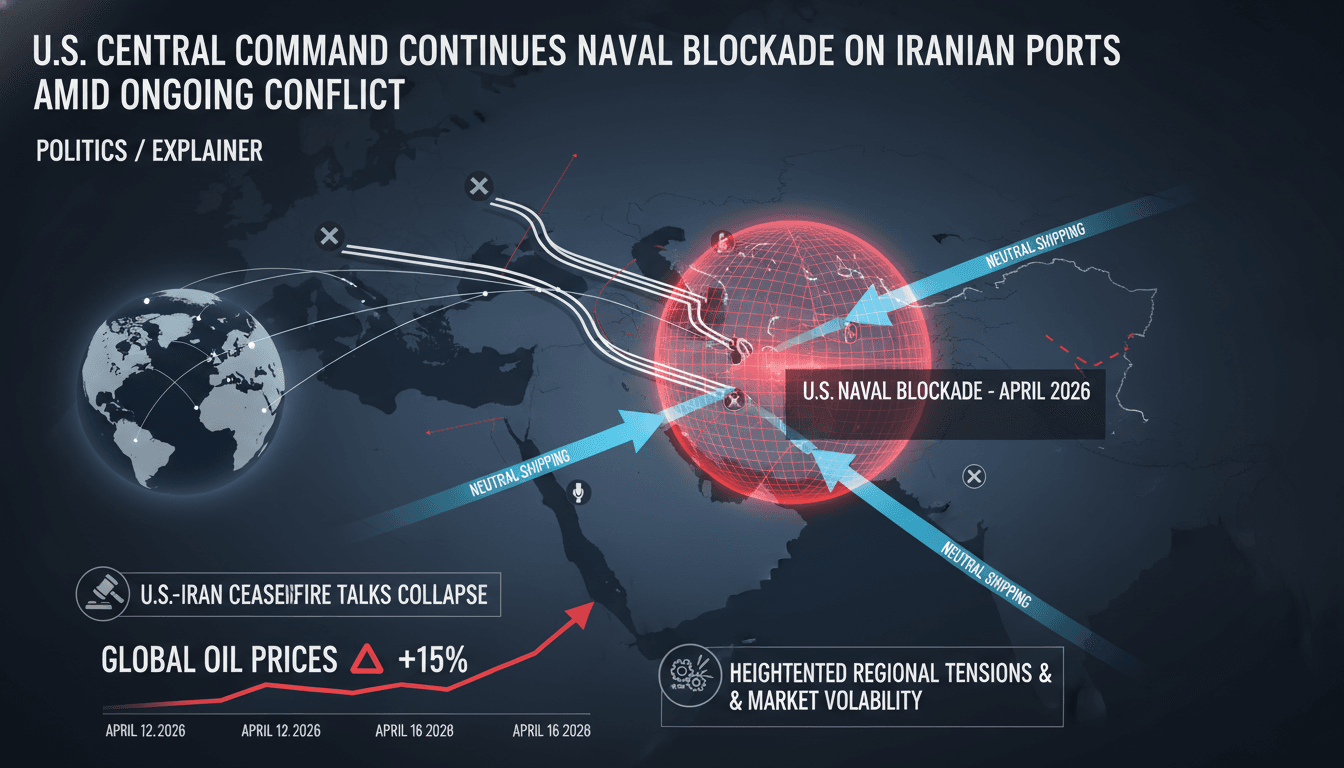
Here's what it means for you.
Rising fuel prices and supply chain disruptions could impact your daily expenses and business operations.
Why it matters
The U.S. blockade on Iranian ports is reshaping global oil markets and regional security dynamics.
What happened (in 30 seconds)
- On April 16, 2026, U.S. Central Command confirmed the continuation of a naval blockade on Iranian ports, initiated on April 13, 2026.
- The blockade aims to economically isolate Iran amid ongoing tensions and failed negotiations, while allowing neutral shipping to continue.
- As of April 16, no ships have successfully breached the blockade, with U.S. forces actively redirecting vessels in the region.
The context you actually need
- The blockade follows the collapse of U.S.-Iran ceasefire talks in early April 2026, escalating tensions that began in late February 2026.
- The Strait of Hormuz is a critical chokepoint for global oil transit, with 20% of the world's oil passing through it, making any disruptions significant.
- U.S. military assets, including over 10,000 personnel and advanced naval technology, are deployed to enforce the blockade and monitor regional waters.
What's really happening
The U.S. Central Command's (CENTCOM) enforcement of a naval blockade on Iranian ports is a strategic maneuver aimed at exerting economic pressure on Tehran following the breakdown of diplomatic negotiations. This blockade, which began on April 13, 2026, is part of a broader strategy to contain Iran's influence in the region and ensure the security of vital maritime routes, particularly the Strait of Hormuz.
The blockade is designed to target Iranian maritime trade without disrupting neutral shipping, a critical consideration given that the Strait of Hormuz is a major artery for global oil supplies. By allowing neutral vessels to pass while intercepting Iranian-flagged ships, the U.S. aims to isolate Iran economically while minimizing backlash from other nations reliant on this shipping lane.
In the first 48 hours of the blockade, CENTCOM reported that no ships breached the perimeter, indicating the effectiveness of U.S. naval capabilities, which include radar-equipped destroyers and surveillance drones. The U.S. Navy's proactive measures, such as audio warnings and the redirection of vessels, underscore the seriousness of the operation. As of April 16, a total of 10 ships had been redirected, including an Iranian cargo vessel, demonstrating the blockade's immediate impact on Iranian trade.
The implications of this blockade extend beyond military strategy; they resonate throughout global oil markets. Following the announcement, oil prices surged, reflecting market anxiety over potential disruptions in supply. Brent crude prices exceeded $100 per barrel, prompting concerns about inflation and economic stability in regions dependent on oil imports, such as Dubai. The UAE's ADNOC has already begun implementing export restrictions, further complicating the supply chain for goods reliant on oil transport through the Strait of Hormuz.
Iran's response has been one of condemnation, labeling the blockade as illegal and threatening retaliation through proxy forces in the region. This escalation could lead to increased military tensions, impacting not only regional security but also global markets. As the situation develops, the potential for conflict could disrupt shipping routes, leading to further volatility in oil prices and economic uncertainty.
Who feels it first (and how)
- Consumers in Dubai: Higher fuel prices and increased costs for goods reliant on oil transport.
- Shipping companies: Increased insurance premiums and potential delays in logistics.
- Energy sector investors: Volatility in energy stocks and market fluctuations.
- U.S. military personnel: Heightened operational tempo and risk in the region.
What to watch next
- Oil price fluctuations: Continued volatility in oil prices will indicate market reactions to the blockade and potential supply disruptions.
- Iran's military response: Any retaliatory actions from Iran could escalate tensions and impact regional security.
- Global shipping routes: Changes in shipping patterns or increased insurance costs could signal broader economic impacts.
The U.S. blockade is currently in effect, with no successful breaches reported.
Oil prices will remain volatile as markets react to ongoing tensions and potential supply disruptions.
The long-term effectiveness of the blockade in achieving U.S. strategic goals without escalating military conflict.
Frequently Asked Questions
- Why it matters?
- The U.S. blockade on Iranian ports is reshaping global oil markets and regional security dynamics.
- What happened (in 30 seconds)?
- On April 16, 2026, U.S. Central Command confirmed the continuation of a naval blockade on Iranian ports, initiated on April 13, 2026. The blockade aims to economically isolate Iran amid ongoing tensions and failed negotiations, while allowing neutral shipping to continue. As of April 16, no ships have successfully breached the blockade, with U.S. forces actively redirecting vessels in the region.
- What's really happening?
- The U.S. Central Command's (CENTCOM) enforcement of a naval blockade on Iranian ports is a strategic maneuver aimed at exerting economic pressure on Tehran following the breakdown of diplomatic negotiations. This blockade, which began on April 13, 2026, is part of a broader strategy to contain Iran's influence in the region and ensure the security of vital maritime routes, particularly the Strait of Hormuz. The blockade is designed to target Iranian maritime trade without disrupting neutral sh
- Who feels it first (and how)?
- Consumers in Dubai: Higher fuel prices and increased costs for goods reliant on oil transport. Shipping companies: Increased insurance premiums and potential delays in logistics. Energy sector investors: Volatility in energy stocks and market fluctuations. U.S. military personnel: Heightened operational tempo and risk in the region.
- What to watch next?
- Oil price fluctuations: Continued volatility in oil prices will indicate market reactions to the blockade and potential supply disruptions. Iran's military response: Any retaliatory actions from Iran could escalate tensions and impact regional security. Global shipping routes: Changes in shipping patterns or increased insurance costs could signal broader economic impacts.
Arabic-language coverage of international news and geopolitics.
"RT Arabic is a Russian state-funded outlet often criticized for promoting Kremlin-aligned narratives."
— A47 Editor
القيادة المركزية الأمريكية: نواصل فرض الحصار البحري على إيران وتسيير دوريات بالمياه الإقليمية
The U.S. Central Command has announced the continuation of its maritime blockade on ships traveling to and from Iranian ports, having redirected 10 vessels since the blockade began last Monday.
Arabic-language coverage of international news and geopolitics.
"RT Arabic is a Russian state-funded outlet often criticized for promoting Kremlin-aligned narratives."
— A47 Editor
"سينتكوم" تعلن نتائج اليوم الأول من حصار الموانئ الإيرانية: صفر خروقات وإجبار 6 سفن على التراجع
The U.S. Central Command announced that there were no violations recorded on the first day of the maritime blockade against Iran, with six vessels complying with U.S. military directives and returning to Iranian ports in the Gulf of Oman.
Pan-Arab news coverage spanning politics, business, sports, and regional affairs.
"Asharq Al-Awsat reflects a broad Arab editorial perspective with strong attention to regional geopolitics."
— A47 Editor
الجيش الأميركي: لم تتجاوز أي سفينة حصار الموانىء الإيرانية خلال 24 ساعة من المهمة
The U.S. Central Command announced that no vessels were able to breach the blockade imposed by the U.S. military on Iranian ports during the first 24 hours of the operation. This statement highlights the effectiveness of the U.S. naval presence in th...
Arabic-language political and world news coverage for UAE readers.
"Emarat Al Youm world coverage usually presents international developments through a UAE and Arab audience lens."
— A47 Editor
القيادة المركزية الأميركية: أكثر من 10000 عسكري وسفن وطائرات يشاركون في الحصار البحري لإيران القيادة المركزية الأميركية: أكثر من 10000 عسكري وسفن وطائرات يشاركون في الحصار البحري لإيران
The U.S. Central Command announced that over 10,000 American military personnel, along with more than 12 warships and numerous aircraft, are participating in a maritime blockade against Iran. This operation highlights the ongoing tensions in the regi...