
UAE Capital Market Authority Launches Comprehensive Virtual Assets Regulatory Framework
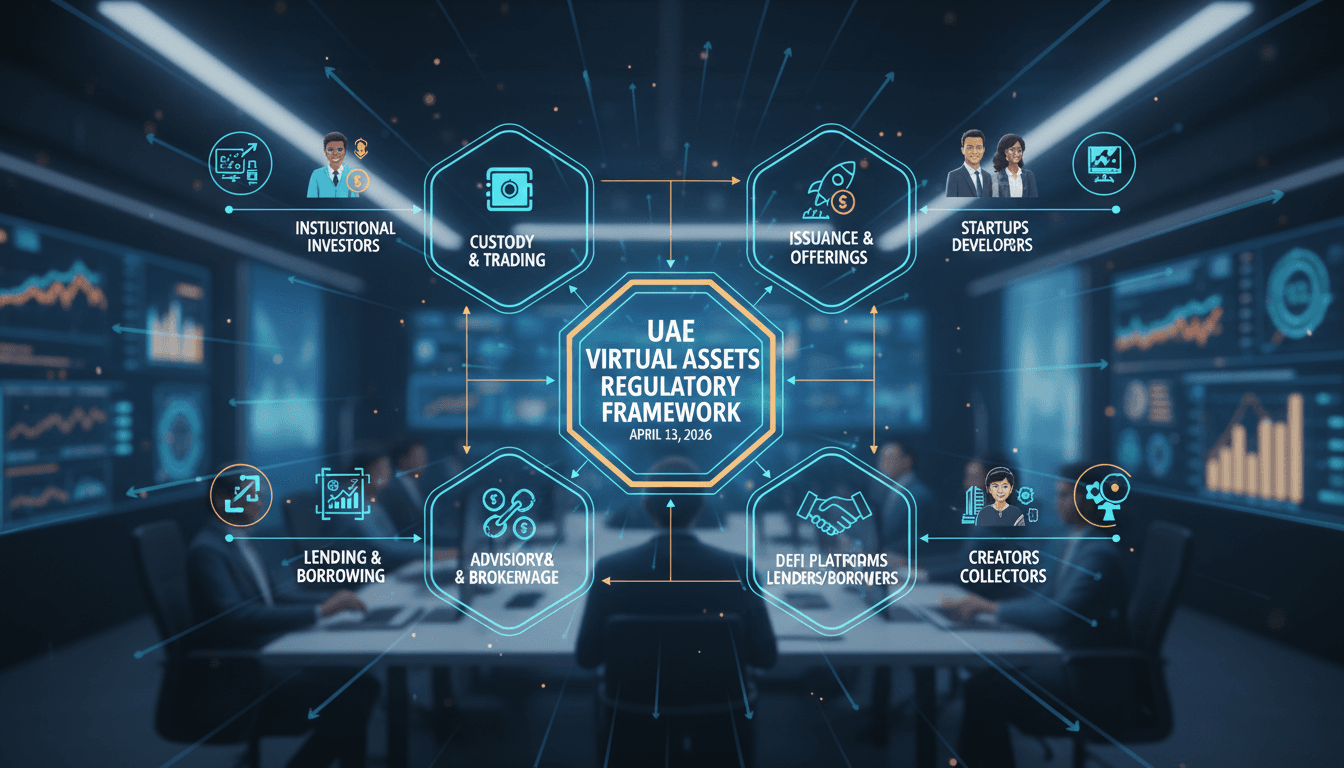
Here's what it means for you.
If you're involved in virtual assets, this new framework could redefine your operational landscape in the UAE.
Why it matters
This regulatory framework positions the UAE as a leader in global virtual asset governance, enhancing market integrity and investor protection.
What happened (in 30 seconds)
- On April 13, 2026, the Capital Market Authority (CMA) issued the Virtual Assets Framework, expanding regulated activities from three to eight.
- The framework includes five core modules: general requirements, conduct of business, trading systems, anti-money laundering, and prudential standards.
- CEO Waleed Saeed Al Awadhi emphasized that the framework balances innovation with investor protection, aligning with international standards.
The context you actually need
- The framework builds on Cabinet Resolution No. 111 of 2022, which tasked the Securities and Commodities Authority (SCA) with overseeing virtual asset service providers.
- A cooperation agreement between SCA and Dubai's Virtual Assets Regulatory Authority (VARA) in September 2024 aimed to harmonize licensing and oversight across the UAE.
- The CMA's issuance comes amid broader capital market reforms, addressing the rapid growth and evolving risks in the UAE's ambition to lead in virtual asset regulation.
What's really happening
The Capital Market Authority's (CMA) issuance of the Virtual Assets Framework on April 13, 2026, marks a significant evolution in the regulatory landscape for virtual assets in the UAE. By expanding the number of regulated activities from three to eight, the CMA is not only responding to the rapid growth of the virtual asset sector but also aiming to establish a robust framework that ensures market integrity and investor protection.
The framework introduces five core modules that cover essential aspects of virtual asset operations: general requirements, conduct of business, trading systems, anti-money laundering, and prudential standards. This comprehensive approach is designed to create a balanced environment where innovation can thrive while safeguarding investors. The CMA's CEO, Waleed Saeed Al Awadhi, highlighted that this framework enables innovation within a trusted environment, which is crucial for attracting institutional investors and fostering confidence in the market.
The regulatory clarity provided by this framework is expected to enhance the UAE's appeal as a global hub for virtual assets. By aligning with international standards set by organizations like IOSCO and FATF, the CMA is positioning the UAE as a leader in virtual asset governance. This alignment is particularly important as global regulatory scrutiny of virtual assets intensifies, and jurisdictions compete to attract businesses in this rapidly evolving sector.
Moreover, the framework's introduction comes at a time when the UAE is undergoing significant capital market reforms. The CMA's establishment and the subsequent issuance of this framework are part of a broader strategy to address the evolving risks associated with virtual assets. The UAE's ambition to lead in this space is underscored by its proactive regulatory stance, which seeks to balance innovation with necessary oversight.
The framework also complements existing regulations in Dubai, particularly those established by VARA, through the 2024 cooperation agreement with SCA. This coordination is expected to streamline operations for businesses operating across emirates, enhancing the overall efficiency of the virtual asset market in the UAE.
Who feels it first (and how)
- Virtual asset service providers: They will need to adapt to new compliance and governance requirements.
- Investors: Enhanced protections may increase confidence and participation in the market.
- Financial institutions: Banks and investment firms may see new opportunities for collaboration and investment in virtual assets.
- Regulatory bodies: Increased oversight responsibilities will require resources and training for effective implementation.
What to watch next
- Institutional inflows: Monitor the level of institutional investment in virtual assets following the framework's implementation, as increased clarity may attract more players.
- Compliance adaptations: Watch how quickly virtual asset service providers adapt to the new regulatory requirements, which could indicate the framework's effectiveness.
- Cross-emirate operations: Keep an eye on how the harmonization between CMA and VARA affects business operations across the UAE, potentially leading to a more integrated market.
The CMA has issued a comprehensive regulatory framework for virtual assets.
Increased institutional investment in the UAE's virtual asset market as regulatory clarity improves.
The long-term impact on innovation and market dynamics as businesses adapt to the new regulations.
Frequently Asked Questions
- Why it matters?
- This regulatory framework positions the UAE as a leader in global virtual asset governance, enhancing market integrity and investor protection.
- What happened (in 30 seconds)?
- On April 13, 2026, the Capital Market Authority (CMA) issued the Virtual Assets Framework, expanding regulated activities from three to eight. The framework includes five core modules: general requirements, conduct of business, trading systems, anti-money laundering, and prudential standards. CEO Waleed Saeed Al Awadhi emphasized that the framework balances innovation with investor protection, aligning with international standards.
- What's really happening?
- The Capital Market Authority's (CMA) issuance of the Virtual Assets Framework on April 13, 2026, marks a significant evolution in the regulatory landscape for virtual assets in the UAE. By expanding the number of regulated activities from three to eight, the CMA is not only responding to the rapid growth of the virtual asset sector but also aiming to establish a robust framework that ensures market integrity and investor protection. The framework introduces five core modules that cover essenti
- Who feels it first (and how)?
- Virtual asset service providers: They will need to adapt to new compliance and governance requirements. Investors: Enhanced protections may increase confidence and participation in the market. Financial institutions: Banks and investment firms may see new opportunities for collaboration and investment in virtual assets. Regulatory bodies: Increased oversight responsibilities will require resources and training for effective implementation.
- What to watch next?
- Institutional inflows: Monitor the level of institutional investment in virtual assets following the framework's implementation, as increased clarity may attract more players. Compliance adaptations: Watch how quickly virtual asset service providers adapt to the new regulatory requirements, which could indicate the framework's effectiveness. Cross-emirate operations: Keep an eye on how the harmonization between CMA and VARA affects business operations across the UAE, potentially leading to a
Arabic-language digital news outlet covering UAE, regional, and international developments with broad general-news coverage.
"Al Ain News coverage typically blends UAE-focused reporting with wider Arab regional and international news."
— A47 Editor
الإمارات.. هيئة سوق المال تصدر إطار تنظيم الأصول الافتراضية
The UAE's Securities and Commodities Authority announced the issuance of a regulatory framework for virtual assets, reflecting its commitment to developing a modern and integrated system that keeps pace with the rapid growth of the virtual asset sect...
UAE-based English-language newspaper covering regional politics, economics, and global affairs.
"The National reflects Emirati policy perspectives while maintaining international editorial standards."
— A47 Editor
UAE’s CMA issues new framework to regulate virtual assets activities
The UAE's Capital Markets Authority (CMA) has introduced a new regulatory framework aimed at overseeing virtual asset activities, marking a significant step in the country's efforts to establish a structured environment for digital assets. This initi...
Arabic-language economic and business reporting with strong UAE market relevance.
"Emarat Al Youm business coverage often centers UAE property, banking, consumer issues, and economic policy."
— A47 Editor
هيئة سوق المال تطلق إطاراً متكاملاً لتنظيم الأصول الافتراضية هيئة سوق المال تطلق إطاراً متكاملاً لتنظيم الأصول الافتراضية
The Capital Market Authority has announced the issuance of a comprehensive framework for regulating virtual assets, reflecting its commitment to developing a modern and integrated system that keeps pace with growth.