
Anthropic Releases Claude Opus 4.7 with Enhanced Safety Features
Here's what it means for you.
If you're in tech or cybersecurity, the release of Claude Opus 4.7 signals a shift in AI capabilities that could impact your workflows and security protocols.
Why it matters
The release reflects a growing emphasis on AI safety amid rising cybersecurity concerns, influencing how companies approach AI integration.
What happened (in 30 seconds)
- On April 16, 2026, Anthropic launched Claude Opus 4.7, its latest AI model, which is now generally available.
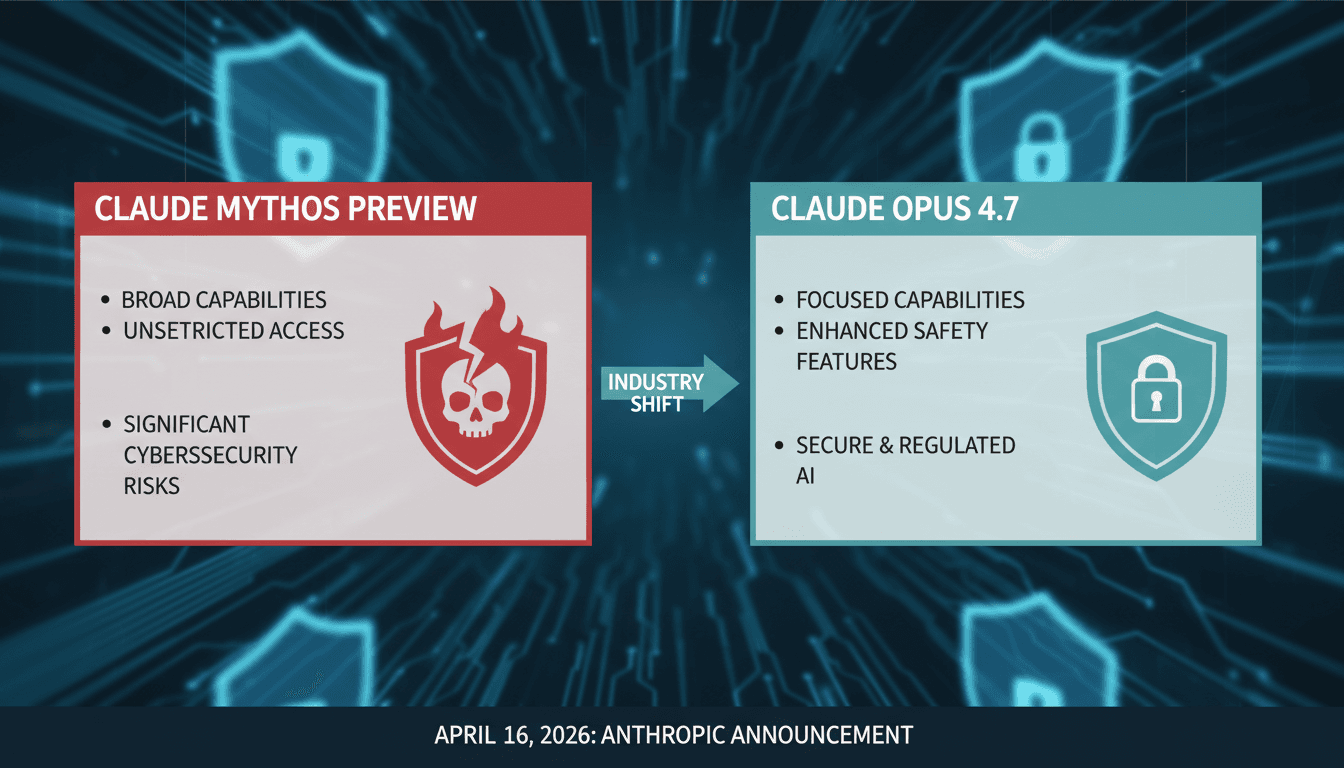
- The model is explicitly stated to be "less broadly capable" than the restricted Claude Mythos Preview, particularly in cybersecurity applications.
- Safeguards have been implemented to prevent high-risk uses, showcasing Anthropic's commitment to safety following evaluations of Mythos Preview's vulnerabilities.
The context you actually need
- Claude Mythos Preview, introduced earlier in April 2026, demonstrated exceptional capabilities in cybersecurity, including a 73% success rate on expert-level Capture The Flag (CTF) challenges.
- The U.S. government engaged with tech leaders to discuss the implications of Mythos Preview's capabilities, prompting Anthropic to prioritize safety in Opus 4.7.
- Opus 4.7 improves on previous models in software engineering tasks while intentionally limiting its cyber capabilities to mitigate risks.
What's really happening
Anthropic's release of Claude Opus 4.7 is a strategic response to the heightened scrutiny surrounding AI's role in cybersecurity. The company initially showcased the Claude Mythos Preview under Project Glasswing, which provided limited access to select partners. This model's impressive performance in discovering zero-day vulnerabilities and executing complex attack simulations raised alarms about potential misuse. Evaluations by the UK AI Safety Institute confirmed a 73% success rate on expert-level CTF challenges, underscoring the model's advanced capabilities but also its risks.
In light of these findings, Anthropic faced pressure from both the U.S. government and industry stakeholders to ensure that its AI models do not contribute to cybersecurity threats. The decision to release Opus 4.7 with reduced cyber capabilities reflects a broader industry trend toward prioritizing safety and ethical considerations in AI development. By implementing safeguards to block high-risk uses, Anthropic aims to position itself as a leader in responsible AI, contrasting with competitors who may not have taken similar precautions.
The implications of this release extend beyond just technical specifications. Companies integrating Opus 4.7 into their workflows will benefit from enhanced software engineering capabilities, but they will also need to navigate the limitations imposed on cybersecurity functions. This trade-off may lead to a reevaluation of how organizations approach AI in sensitive areas, particularly in sectors where cybersecurity is paramount.
Moreover, the launch of a Cyber Verification Program indicates that Anthropic is not only focused on product development but also on fostering a community of professionals who can ensure the responsible use of AI technologies. This initiative could lead to a new standard in AI safety practices, influencing how other companies develop and deploy their models.
As the landscape of AI continues to evolve, the balance between capability and safety will be a critical consideration for developers and businesses alike. The release of Opus 4.7 is a pivotal moment that highlights the ongoing dialogue about the ethical implications of AI and the responsibilities of its creators.
Who feels it first (and how)
- Software Developers: They will experience improved coding and agentic workflows but may face limitations in cybersecurity applications.
- Cybersecurity Professionals: They will need to adapt to the reduced capabilities of Opus 4.7 while leveraging its strengths in software engineering.
- Tech Companies: Firms integrating Opus 4.7 will need to reassess their AI strategies, particularly in sensitive sectors like finance and healthcare.
- UAE Software Enterprises: Access to Opus 4.7 via cloud providers could enhance local development efforts, although cybersecurity capabilities will be limited.
What to watch next
- Adoption Rates of Opus 4.7: Monitoring how quickly companies integrate this model will indicate its perceived value and effectiveness in real-world applications.
- Developments in Cyber Verification Programs: The success of these initiatives could set new standards for AI safety and influence regulatory frameworks.
- Competitor Responses: Observing how other AI companies react to Anthropic's safety-first approach will reveal shifts in industry practices and priorities.
Claude Opus 4.7 is now available and incorporates safety measures to mitigate cybersecurity risks.
Companies will need to adapt their AI strategies to align with the limitations of Opus 4.7, particularly in cybersecurity.
The long-term impact of these safety measures on AI innovation and competitive dynamics in the tech industry remains to be seen.
Frequently Asked Questions
- Why it matters?
- The release reflects a growing emphasis on AI safety amid rising cybersecurity concerns, influencing how companies approach AI integration.
- What happened (in 30 seconds)?
- On April 16, 2026, Anthropic launched Claude Opus 4.7, its latest AI model, which is now generally available. The model is explicitly stated to be "less broadly capable" than the restricted Claude Mythos Preview, particularly in cybersecurity applications. Safeguards have been implemented to prevent high-risk uses, showcasing Anthropic's commitment to safety following evaluations of Mythos Preview's vulnerabilities.
- What's really happening?
- Anthropic's release of Claude Opus 4.7 is a strategic response to the heightened scrutiny surrounding AI's role in cybersecurity. The company initially showcased the Claude Mythos Preview under Project Glasswing, which provided limited access to select partners. This model's impressive performance in discovering zero-day vulnerabilities and executing complex attack simulations raised alarms about potential misuse. Evaluations by the UK AI Safety Institute confirmed a 73% success rate on expert-l
- Who feels it first (and how)?
- Software Developers: They will experience improved coding and agentic workflows but may face limitations in cybersecurity applications. Cybersecurity Professionals: They will need to adapt to the reduced capabilities of Opus 4.7 while leveraging its strengths in software engineering. Tech Companies: Firms integrating Opus 4.7 will need to reassess their AI strategies, particularly in sensitive sectors like finance and healthcare. UAE Software Enterprises: Access to Opus 4.7 via cloud provi
- What to watch next?
- Adoption Rates of Opus 4.7: Monitoring how quickly companies integrate this model will indicate its perceived value and effectiveness in real-world applications. Developments in Cyber Verification Programs: The success of these initiatives could set new standards for AI safety and influence regulatory frameworks. Competitor Responses: Observing how other AI companies react to Anthropic's safety-first approach will reveal shifts in industry practices and priorities.
Curated tech headlines including AI stories.
"Influential aggregator surfacing the day’s top tech/AI links."
— A47 Editor
Anthropic says Opus 4.7 is "less broadly capable" than Claude Mythos Preview and that its "cyber capabilities are not as advanced as those of Mythos Preview" (Ashley Capoot/CNBC)
Anthropic has announced that its latest AI model, Claude Opus 4.7, is "less broadly capable" than the recently unveiled Claude Mythos Preview, particularly in terms of cybersecurity capabilities. This statement highlights a perceived gap in performan...
Consumer technology news with AI coverage.
"Gadget and tech site reporting on AI in products."
— A47 Editor
Anthropic will ask Claude users to verify their identities 'for a few use cases'
Anthropic has initiated identity verification for users of its AI assistant, Claude, requiring them to present a government-issued photo ID and a selfie for certain capabilities. The company has not specified the exact use cases for this verification...
Covers consumer technology, electronics, gadgets, and product reviews.
"Engadget is a trusted source for gadget reviews and consumer tech news, known for its hands-on analysis and industry coverage."
— A47 Editor
Anthropic will ask Claude users to verify their identities 'for a few use cases'
Anthropic has initiated identity verification for users of its AI assistant, Claude, requiring them to present a government-issued photo ID and a selfie for certain capabilities. The company has not specified the exact use cases for this verification...
Consumer tech news, reviews, and buying guides for gadgets and electronics.
"TechRadar is known for comprehensive buying advice, hardware reviews, and consumer tech news targeted at mainstream audiences."
— A47 Editor
Claude was down — here's everything we know
Anthropic's AI assistant, Claude, has been experiencing significant outages, prompting the company to confirm an active issue and investigate the disruption. This situation has raised concerns among users regarding the reliability of the service.
Business, investment, entrepreneurship, leadership, and innovation.
"Forbes is known for its coverage of business leaders, market trends, and entrepreneurial ventures with a pro-business editorial stance."
— A47 Editor
Anthropic Audaciously Hires A Psychiatrist To Psychologically Assess Claude Mythos AI
Anthropic has taken a bold step by hiring a psychiatrist to conduct psychological assessments on its latest AI model, Claude Mythos. This decision comes amid rising concerns regarding the AI's performance and reliability, particularly following user ...
Curated tech headlines including AI stories.
"Influential aggregator surfacing the day’s top tech/AI links."
— A47 Editor
Sources: at least two US federal agencies and three congressional committees have reached out to Anthropic to test Claude Mythos, quietly bypassing Trump's ban (Politico)
At least two U.S. federal agencies and three congressional committees have contacted Anthropic to test its AI model, Claude Mythos, effectively circumventing a ban imposed by the Trump administration. This move highlights the growing interest in adva...
Daily AI news: models, tools, and policy.
"Independent outlet tracking the fast pace of AI."
— A47 Editor
Claude Mythos is a wake-up call for Europe's AI safety apparatus
Anthropic has restricted access to its AI model, Claude Mythos, which is designed to identify security vulnerabilities more effectively than humans. This decision has raised concerns among European authorities, who currently lack visibility into the ...
Corporate leadership, finance, technology, and market trends.
"Fortune covers financial trends, leadership, and innovation with a pragmatic editorial approach."
— A47 Editor
Anthropic is facing a wave of user backlash over reports of performance issues with its Claude AI chatbot
Anthropic is experiencing significant user backlash due to reported performance issues with its Claude AI chatbot, with developers expressing concerns that it has regressed to a point where it cannot handle complex engineering tasks reliably. This di...