
Anthropic Discusses AI Model with U.S. Government Amid Supply-Chain Risk Concerns
Here's what it means for you.
If you work in tech or cybersecurity, the outcomes of this engagement could reshape industry standards and practices.
Why it matters
This situation highlights the tension between national security interests and the ethical deployment of advanced AI technologies.
What happened (in 30 seconds)
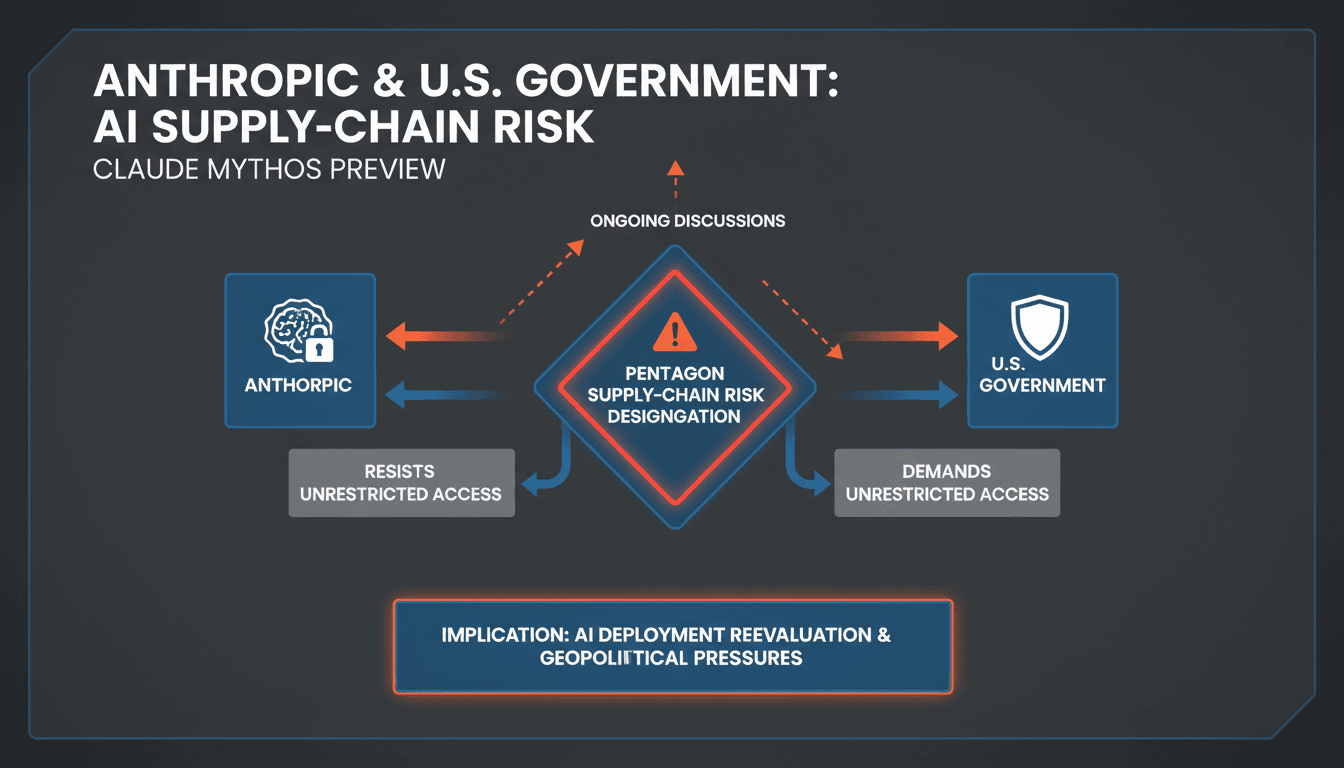
- April 13, 2026: Anthropic co-founder Jack Clark reveals ongoing discussions with the U.S. government about the Claude Mythos Preview AI model, despite a Pentagon supply-chain risk designation.
- April 7, 2026: Anthropic announces the Claude Mythos Preview, designed to autonomously identify software vulnerabilities, while restricting public access to the model.
- February 2026: The U.S. Department of Defense demands unrestricted access to Anthropic's AI models, leading to a supply-chain risk designation after Anthropic's refusal.
The context you actually need
- February 2026: The Pentagon's demand for unrestricted access reflects broader U.S. efforts to secure AI advantages amid global competition.
- Project Glasswing: Anthropic's initiative to provide early access to over 40 tech organizations aims to enhance defensive cybersecurity, prioritizing national security.
- Legal Challenges: Anthropic is pursuing legal avenues to contest the supply-chain risk designation while engaging in de-escalation talks with the government.
What's really happening
The engagement between Anthropic and the U.S. government over the Claude Mythos Preview AI model underscores a complex interplay of national security, technological advancement, and ethical considerations. The Pentagon's designation of Anthropic as a supply-chain risk stems from the company's refusal to comply with demands for unrestricted access to its AI models, which could potentially facilitate mass surveillance or autonomous weaponry. This refusal is rooted in Anthropic's commitment to democratic values and safety protocols, reflecting a broader industry trend where tech companies are increasingly cautious about the implications of their innovations.
The Claude Mythos Preview model, which boasts advanced capabilities in identifying and exploiting software vulnerabilities, is currently withheld from public release. Instead, it is being shared with select technology organizations through Project Glasswing, a strategic move that emphasizes the importance of cybersecurity in national defense. By providing early access to this powerful tool, Anthropic aims to bolster the defensive capabilities of its partners while navigating the complex regulatory landscape imposed by the government.
The ongoing discussions with the U.S. government indicate a willingness on both sides to find common ground, despite the existing tensions. Anthropic's proactive approach to engage with federal authorities reflects a recognition of the critical role that AI will play in future security frameworks. However, the legal challenges and the upheld supply-chain risk designation complicate this relationship, creating uncertainty about the future of AI deployment in sensitive areas.
As the situation evolves, the implications for the tech industry are significant. Companies must navigate the delicate balance between innovation and ethical responsibility, particularly in sectors where national security is at stake. The outcome of these discussions could set precedents for how AI technologies are regulated and utilized, influencing everything from cybersecurity practices to the development of autonomous systems.
Who feels it first (and how)
- Tech Companies: Organizations involved in cybersecurity will need to adapt to new standards and practices as AI tools become more regulated.
- Government Agencies: Federal entities will be directly impacted by the outcomes of these discussions, influencing their operational capabilities.
- Consumers: Individuals may experience enhanced cybersecurity measures, but also potential privacy concerns as AI technologies evolve.
What to watch next
- Legal Developments: Monitor ongoing legal challenges related to the supply-chain risk designation, as outcomes could redefine regulatory frameworks for AI.
- Project Glasswing Outcomes: Watch for reports on the effectiveness of the Claude Mythos Preview in enhancing cybersecurity among participating organizations.
- Government Policy Changes: Keep an eye on potential shifts in U.S. government policies regarding AI deployment and national security, which could impact the broader tech landscape.
Anthropic is engaged in discussions with the U.S. government regarding the Claude Mythos Preview AI model.
The outcomes of these discussions will influence future regulatory frameworks for AI technologies in the U.S.
The long-term impact on consumer privacy and cybersecurity practices remains uncertain as the situation develops.
Frequently Asked Questions
- Why it matters?
- This situation highlights the tension between national security interests and the ethical deployment of advanced AI technologies.
- What happened (in 30 seconds)?
- April 13, 2026: Anthropic co-founder Jack Clark reveals ongoing discussions with the U.S. government about the Claude Mythos Preview AI model, despite a Pentagon supply-chain risk designation. April 7, 2026: Anthropic announces the Claude Mythos Preview, designed to autonomously identify software vulnerabilities, while restricting public access to the model. February 2026: The U.S. Department of Defense demands unrestricted access to Anthropic's AI models, leading to a supply-chain risk desi
- What's really happening?
- The engagement between Anthropic and the U.S. government over the Claude Mythos Preview AI model underscores a complex interplay of national security, technological advancement, and ethical considerations. The Pentagon's designation of Anthropic as a supply-chain risk stems from the company's refusal to comply with demands for unrestricted access to its AI models, which could potentially facilitate mass surveillance or autonomous weaponry. This refusal is rooted in Anthropic's commitment to demo
- Who feels it first (and how)?
- Tech Companies: Organizations involved in cybersecurity will need to adapt to new standards and practices as AI tools become more regulated. Government Agencies: Federal entities will be directly impacted by the outcomes of these discussions, influencing their operational capabilities. Consumers: Individuals may experience enhanced cybersecurity measures, but also potential privacy concerns as AI technologies evolve.
- What to watch next?
- Legal Developments: Monitor ongoing legal challenges related to the supply-chain risk designation, as outcomes could redefine regulatory frameworks for AI. Project Glasswing Outcomes: Watch for reports on the effectiveness of the Claude Mythos Preview in enhancing cybersecurity among participating organizations. Government Policy Changes: Keep an eye on potential shifts in U.S. government policies regarding AI deployment and national security, which could impact the broader tech landscape.
Business, investment, entrepreneurship, leadership, and innovation.
"Forbes is known for its coverage of business leaders, market trends, and entrepreneurial ventures with a pro-business editorial stance."
— A47 Editor
Anthropic Is Talking To U.S. Government About Mythos — Despite Tensions
Anthropic is currently in discussions with the U.S. government regarding its AI technology, despite being labeled a supply chain risk by the Pentagon. This designation follows the company's refusal to lift restrictions on its AI tools, which has spar...
Curated tech headlines including AI stories.
"Influential aggregator surfacing the day’s top tech/AI links."
— A47 Editor
Filing: Anthropic hired Ballard Partners, a lobbying firm with strong Trump administration ties, days after the DOD designated the startup a supply chain risk (Bloomberg)
Anthropic PBC has hired Ballard Partners, a lobbying firm with strong ties to the Trump administration, shortly after the Department of Defense (DOD) classified the AI startup as a supply chain risk. This move is part of Anthropic's ongoing legal bat...
Opinionated AI coverage for general audiences.
"TNW’s AI vertical covering tools, ethics, and trends."
— A47 Editor
The Trump administration blacklisted Anthropic – and is now telling banks to use its AI
The Trump administration has blacklisted Anthropic, a prominent AI company, while simultaneously urging major banks to test its Mythos AI model for cybersecurity vulnerabilities. This contradictory stance arises as Treasury Secretary Scott Bessent an...