
Iran Closes Strait of Hormuz Amid Israeli Strikes in Lebanon Threatening U.S.-Iran Ceasefire
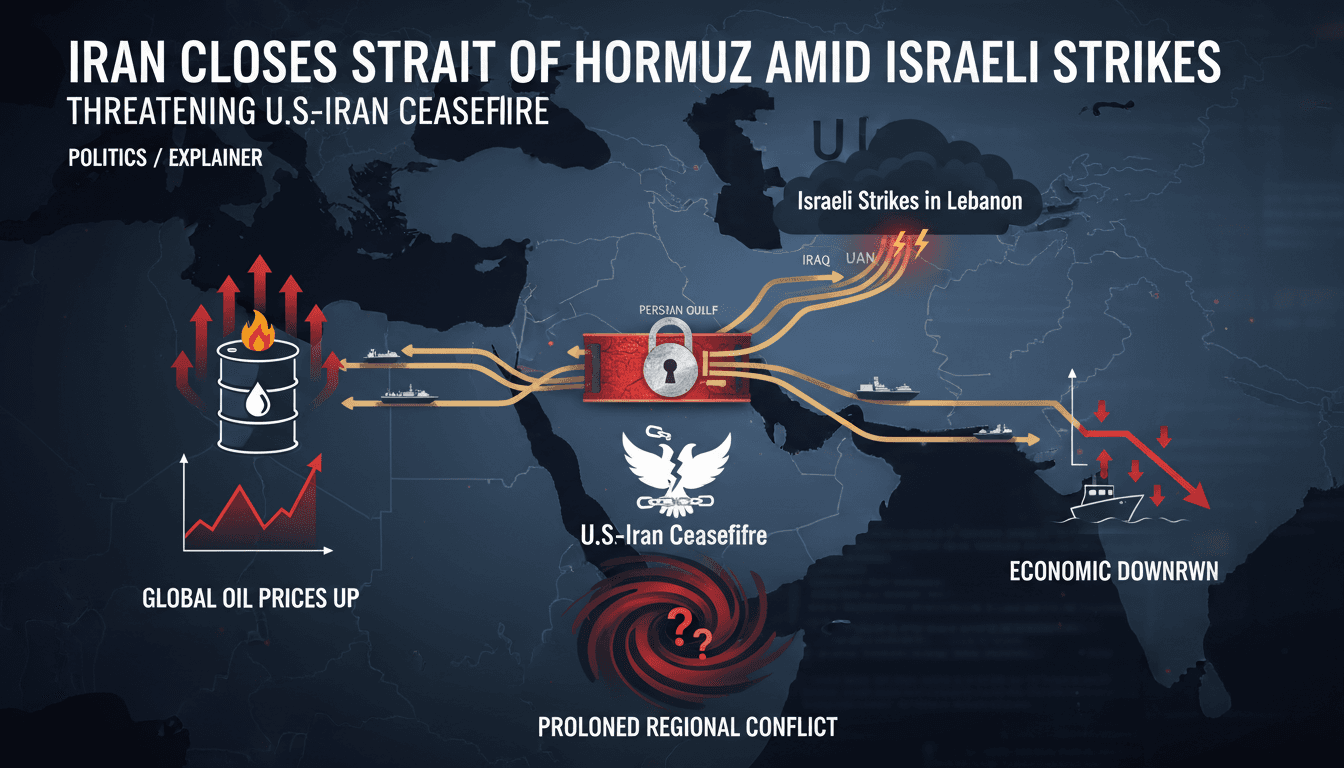
Here's what it means for you.
Global shipping and oil markets are at risk as tensions in the Middle East escalate.
Why it matters
The Strait of Hormuz is crucial for global oil shipments, and any disruption can lead to increased prices and economic instability worldwide.
What happened (in 30 seconds)
- On April 8, 2026, reports emerged of Iran closing the Strait of Hormuz amid Israeli strikes in Lebanon, complicating a newly brokered ceasefire.
- President Trump announced a two-week ceasefire on April 7, mediated by Pakistan, requiring Iran to reopen the strait.
- Ongoing negotiations in Islamabad are strained as conflicting claims of violations arise, threatening the ceasefire's viability.
The context you actually need
- The Strait of Hormuz is a vital chokepoint for approximately one-fifth of global oil shipments, making its closure a significant concern for international trade.
- Israel's military operations against Hezbollah in Lebanon have resulted in over 1,500 deaths since the conflict escalated, heightening regional tensions.
- U.S. officials are navigating complex diplomatic waters, balancing ceasefire negotiations with the realities of ongoing military actions and Iranian threats.
What's really happening
The recent escalation in the U.S.-Iran conflict stems from a series of provocations and retaliatory actions that have created a precarious environment for international diplomacy. Following the announcement of a two-week ceasefire on April 7, brokered by Pakistan, expectations were high for a de-escalation of hostilities. However, the situation quickly deteriorated as Israeli forces launched their most intensive strikes on Lebanon, targeting Hezbollah, which resulted in significant casualties. Reports indicate that these strikes killed dozens to 300 individuals and injured hundreds more, further inflaming tensions.
In response, Iranian state media claimed that they had closed the Strait of Hormuz, a critical maritime route for oil shipments, as a form of retaliation. This closure is particularly alarming given that the strait is responsible for the transit of about 20% of the world's oil supply. The U.S. White House quickly denied these claims, asserting that traffic through the strait remained unaffected and emphasizing the need for Iran to reopen it as a condition of the ceasefire.
The Iranian leadership has accused the U.S. of violating the ceasefire agreement by excluding Lebanon from the truce and conducting drone incursions. This has led to a breakdown in trust, with Iranian officials expressing frustration over perceived inequities in the negotiations. Despite these tensions, Vice President Vance has maintained an optimistic outlook, suggesting that a broad agreement is still possible if both sides can navigate their grievances.
The implications of this conflict extend beyond immediate military concerns. Global markets have reacted to the uncertainty, with U.S. stocks experiencing a rally and the Dubai index increasing by 8.5% amid optimism for a ceasefire. However, the potential for prolonged economic pressure looms large, particularly for Dubai residents who are witnessing shipping disruptions, with over 1,000 vessels waiting near ports like Jebel Ali and Khor Fakkan for clearance through Hormuz.
As negotiations continue in Islamabad, the stakes remain high. The outcome will not only affect regional stability but also the global economy, particularly in oil-dependent markets. The delicate balance of power in the Middle East is at a crossroads, and the decisions made in the coming days will have lasting repercussions.
Who feels it first (and how)
- Shipping companies: Increased delays and costs due to potential disruptions in the Strait of Hormuz.
- Oil markets: Fluctuations in oil prices as uncertainty affects supply chains.
- Residents of Dubai: Local economic impacts from shipping delays and stock market volatility.
- Investors: Market reactions to geopolitical developments could affect investment strategies and portfolio performance.
What to watch next
- Negotiation outcomes: Watch for developments from the talks in Islamabad, as any agreement could stabilize or further destabilize the region.
- Oil price fluctuations: Monitor global oil prices for signs of volatility that could impact economic conditions worldwide.
- Military actions: Keep an eye on Israeli and Iranian military operations, as escalations could derail any potential ceasefire.
The Strait of Hormuz is critical for global oil shipments.
Continued tensions and military actions will complicate ceasefire negotiations.
The long-term viability of the ceasefire and its impact on regional stability.
Frequently Asked Questions
- Why it matters?
- The Strait of Hormuz is crucial for global oil shipments, and any disruption can lead to increased prices and economic instability worldwide.
- What happened (in 30 seconds)?
- On April 8, 2026, reports emerged of Iran closing the Strait of Hormuz amid Israeli strikes in Lebanon, complicating a newly brokered ceasefire. President Trump announced a two-week ceasefire on April 7, mediated by Pakistan, requiring Iran to reopen the strait. Ongoing negotiations in Islamabad are strained as conflicting claims of violations arise, threatening the ceasefire's viability.
- What's really happening?
- The recent escalation in the U.S.-Iran conflict stems from a series of provocations and retaliatory actions that have created a precarious environment for international diplomacy. Following the announcement of a two-week ceasefire on April 7, brokered by Pakistan, expectations were high for a de-escalation of hostilities. However, the situation quickly deteriorated as Israeli forces launched their most intensive strikes on Lebanon, targeting Hezbollah, which resulted in significant casualties. R
- Who feels it first (and how)?
- Shipping companies: Increased delays and costs due to potential disruptions in the Strait of Hormuz. Oil markets: Fluctuations in oil prices as uncertainty affects supply chains. Residents of Dubai: Local economic impacts from shipping delays and stock market volatility. Investors: Market reactions to geopolitical developments could affect investment strategies and portfolio performance.
- What to watch next?
- Negotiation outcomes: Watch for developments from the talks in Islamabad, as any agreement could stabilize or further destabilize the region. Oil price fluctuations: Monitor global oil prices for signs of volatility that could impact economic conditions worldwide. Military actions: Keep an eye on Israeli and Iranian military operations, as escalations could derail any potential ceasefire.
Capitol Hill news, legislation, and policy insight.
"The Hill specializes in U.S. politics and policy, with a focus on Capitol Hill developments and a reputation for insider reporting."
— A47 Editor
Strait of Hormuz, Lebanon emerge as obstacles for Iran ceasefire
A two-week ceasefire between the U.S. and Iran, announced by President Trump, is showing signs of fragility as Israel intensifies its military operations in Lebanon and Iran reportedly closes the Strait of Hormuz. This closure is a direct response to...
European coverage of Middle East politics and security issues.
"France 24 offers international reporting with a European editorial perspective."
— A47 Editor
Iran closes Strait of Hormuz again as Israel pounds Lebanon, air defense systems go off in Tehran
Iran has announced the closure of the Strait of Hormuz in response to ongoing Israeli airstrikes in Lebanon, which have intensified despite a recently declared ceasefire between the United States and Iran. Air defense systems were activated in Tehran...
Coverage of current events and conflicts in the Middle East.
"France 24 is viewed as a globally focused outlet with balanced coverage and a European perspective."
— A47 Editor
Iran closes Strait of Hormuz again as Israel pounds Lebanon, air defense systems go off in Tehran
Iran has announced the closure of the Strait of Hormuz in response to ongoing Israeli airstrikes in Lebanon, which have intensified despite a recently declared ceasefire between the United States and Iran. Air defense systems were activated in Tehran...
Comprehensive coverage of global events, politics, and international issues.
"NBC News is a mainstream outlet known for comprehensive national and international coverage with a centrist to slightly left-leaning editorial tone."
— A47 Editor
Iran says Strait of Hormuz is closed due to Israeli strikes on Lebanon
Iranian state media reports that the Strait of Hormuz is closed as a response to ongoing Israeli airstrikes in Lebanon, indicating a significant escalation in regional tensions. White House press secretary Karoline Leavitt clarified that Lebanon is n...
National headlines across the United States including breaking stories and societal issues.
"NBC News is a mainstream media outlet known for comprehensive national and international news coverage with a centrist to slightly left-leaning editorial tone."
— A47 Editor
Iran says Strait of Hormuz is closed due to Israeli strikes on Lebanon
Iranian state media reports that the Strait of Hormuz is closed as a response to ongoing Israeli airstrikes in Lebanon, indicating a significant escalation in regional tensions. White House press secretary Karoline Leavitt clarified that Lebanon is n...
Breaking news, politics, business, and entertainment from the U.S. and around the world.
"The New York Post is a tabloid-format newspaper known for its sensationalist headlines and conservative-leaning editorial tone."
— A47 Editor
Iran blocks oil tankers in Strait of Hormuz, blaming Israel strikes in Lebanon
Iran has blocked oil tankers from passing through the Strait of Hormuz, just hours after agreeing to reopen the waterway, citing Israeli airstrikes in Lebanon as the reason for this action. This move escalates tensions in a region critical for global...
Global business headlines with AI angles.
"General business outlet that frequently covers AI."
— A47 Editor
Iran Says It's Halting Passage Through Strait Of Hormuz Due To Israeli Attacks In Lebanon And Is 'Working On Its Response'
Iran has announced a halt to passage through the Strait of Hormuz in response to Israeli attacks in Lebanon, amidst ongoing tensions and a fragile ceasefire with the U.S. This decision underscores Iran's strategic control over this vital maritime rou...