
Israel Excludes Hezbollah from US-Iran Ceasefire in Lebanon
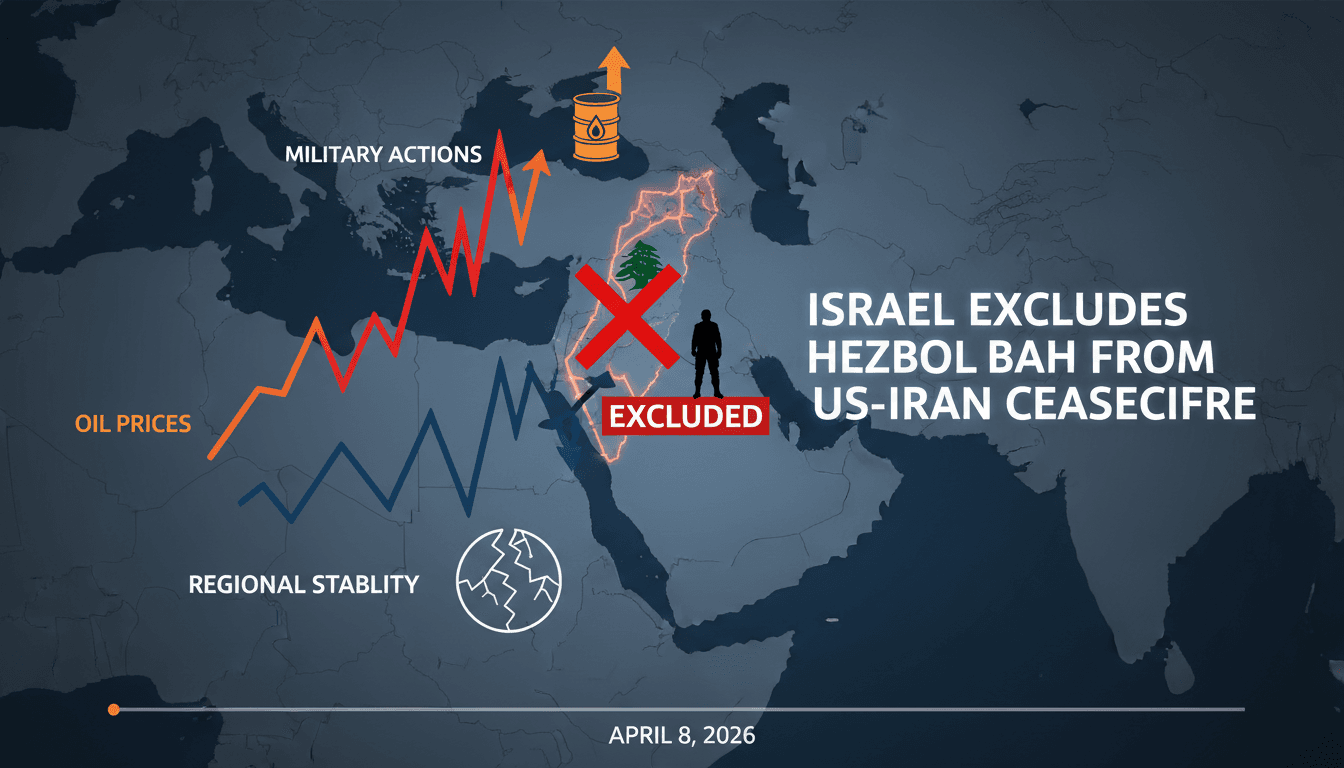
Here's what it means for you.
If you’re involved in global trade or energy markets, the ongoing conflict could impact oil prices and supply chains.
Why it matters
The exclusion of Hezbollah from the ceasefire complicates regional stability and could lead to further escalations affecting global oil prices.
What happened (in 30 seconds)
- On April 8, 2026, Israel stated that the US-Iran ceasefire does not apply to military actions against Hezbollah in Lebanon.
- Prime Minister Netanyahu denied Lebanon's inclusion in the truce, while Hezbollah claimed the agreement encompassed Lebanon.
- Israeli airstrikes continued in southern Lebanon, including Tyre, despite the ceasefire announcement.
The context you actually need
- The US-Iran war that began in early 2026 led to increased hostilities, including Hezbollah rocket attacks and Israeli airstrikes.
- A two-week ceasefire was brokered by Pakistan, but its terms ambiguously addressed the Israel-Hezbollah front, leading to conflicting interpretations.
- As of April 7, 2026, over 1,530 Lebanese have been killed due to Israeli strikes, highlighting the humanitarian impact of the ongoing conflict.
What's really happening
The recent declaration by Israel that the US-Iran ceasefire does not extend to Hezbollah operations in Lebanon underscores the complexity of Middle Eastern geopolitics. The ceasefire, which was intended to halt direct hostilities between the US and Iran, has become a point of contention as Israel seeks to maintain its military objectives against Hezbollah. This situation is exacerbated by the fact that Hezbollah, backed by Iran, has been actively involved in the conflict, launching rocket attacks into Israel and prompting retaliatory airstrikes.
Israel's Prime Minister Benjamin Netanyahu's firm stance indicates a strategic decision to prioritize national security over diplomatic agreements that may seem beneficial in the short term. The Israeli Defense Forces (IDF) have made it clear that operations against Hezbollah will continue, which could lead to further escalations in violence. This decision reflects a broader Israeli strategy to deter Iranian influence in the region, particularly through proxy groups like Hezbollah.
The humanitarian toll is significant, with the Lebanese Health Ministry reporting over 1,530 deaths due to Israeli strikes as of early April 2026. This raises ethical concerns regarding civilian casualties and the impact on Lebanon's already fragile state. The ongoing conflict has also led to a humanitarian crisis, with many displaced and in need of aid.
From a market perspective, the situation is volatile. The closure of the Strait of Hormuz due to the conflict has already disrupted 20-27% of global oil trade, leading to fluctuations in oil prices. The recent ceasefire announcement initially caused a dip in oil prices, but Israel's continued military actions could reverse this trend, affecting global markets and investor confidence.
Moreover, the geopolitical dynamics are shifting, with Pakistan acting as a mediator. However, conflicting statements from mediators and involved parties create uncertainty about the ceasefire's effectiveness and longevity. As the situation evolves, the potential for renewed hostilities remains high, which could further destabilize the region and impact global trade routes.
Who feels it first (and how)
- Global traders: Fluctuations in oil prices directly impact costs and supply chains.
- Energy sector: Companies reliant on stable oil prices face increased risk and uncertainty.
- Lebanese civilians: The ongoing conflict leads to humanitarian crises and economic instability.
- Investors in UAE markets: Stock market fluctuations in response to geopolitical events affect investment strategies.
What to watch next
- Continued Israeli military operations: Monitor how Israel's actions against Hezbollah evolve, as they could lead to broader regional conflict.
- US-Iran negotiations: Watch for developments in talks scheduled in Islamabad, which may influence the ceasefire's future.
- Global oil price movements: Keep an eye on oil prices, as further escalations could lead to significant shifts in the market.
The ceasefire brokered by Pakistan does not include Hezbollah, leading to continued Israeli operations.
Further military actions by Israel could escalate tensions and impact global oil prices.
The long-term effectiveness of the ceasefire and its implications for regional stability remain uncertain.
Frequently Asked Questions
- Why it matters?
- The exclusion of Hezbollah from the ceasefire complicates regional stability and could lead to further escalations affecting global oil prices.
- What happened (in 30 seconds)?
- On April 8, 2026, Israel stated that the US-Iran ceasefire does not apply to military actions against Hezbollah in Lebanon. Prime Minister Netanyahu denied Lebanon's inclusion in the truce, while Hezbollah claimed the agreement encompassed Lebanon. Israeli airstrikes continued in southern Lebanon, including Tyre, despite the ceasefire announcement.
- What's really happening?
- The recent declaration by Israel that the US-Iran ceasefire does not extend to Hezbollah operations in Lebanon underscores the complexity of Middle Eastern geopolitics. The ceasefire, which was intended to halt direct hostilities between the US and Iran, has become a point of contention as Israel seeks to maintain its military objectives against Hezbollah. This situation is exacerbated by the fact that Hezbollah, backed by Iran, has been actively involved in the conflict, launching rocket attack
- Who feels it first (and how)?
- Global traders: Fluctuations in oil prices directly impact costs and supply chains. Energy sector: Companies reliant on stable oil prices face increased risk and uncertainty. Lebanese civilians: The ongoing conflict leads to humanitarian crises and economic instability. Investors in UAE markets: Stock market fluctuations in response to geopolitical events affect investment strategies.
- What to watch next?
- Continued Israeli military operations: Monitor how Israel's actions against Hezbollah evolve, as they could lead to broader regional conflict. US-Iran negotiations: Watch for developments in talks scheduled in Islamabad, which may influence the ceasefire's future. Global oil price movements: Keep an eye on oil prices, as further escalations could lead to significant shifts in the market.
Breaking news, politics, business, and entertainment from the U.S. and around the world.
"The New York Post is a tabloid-format newspaper known for its sensationalist headlines and conservative-leaning editorial tone."
— A47 Editor
Israel insists US-Iran cease-fire doesn’t apply to attacks on Lebanon’s Hezbollah
Israel's military spokesperson Avichay Adraee has asserted that the recent U.S.-Iran ceasefire agreement does not extend to attacks on Hezbollah in Lebanon, emphasizing the ongoing military operations in the region.
24/7 international news from a French perspective in multiple languages.
"France 24 is viewed as a globally focused outlet with balanced coverage and a European perspective."
— A47 Editor
Israel strikes Lebanon as says Iran truce does not apply
An Israeli airstrike targeted a building in the southern Lebanese city of Tyre on Wednesday, continuing its military operations against Hezbollah, despite a truce agreement between the United States and Iran that Israel claims does not apply to Leban...
Focused political reporting and governmental affairs.
"NBC News is a mainstream media outlet known for comprehensive national and international news coverage with a centrist to slightly left-leaning editorial tone."
— A47 Editor
Israel Says Iran Ceasefire Agreement Does Not Apply to Lebanon
Following the announcement of a two-week ceasefire agreement between the United States and Iran, Israeli Prime Minister Benjamin Netanyahu confirmed that Israel would halt bombing operations in Iran but would continue military actions against Hezboll...