
Iran Implements Strait of Hormuz Protocol During Ceasefire
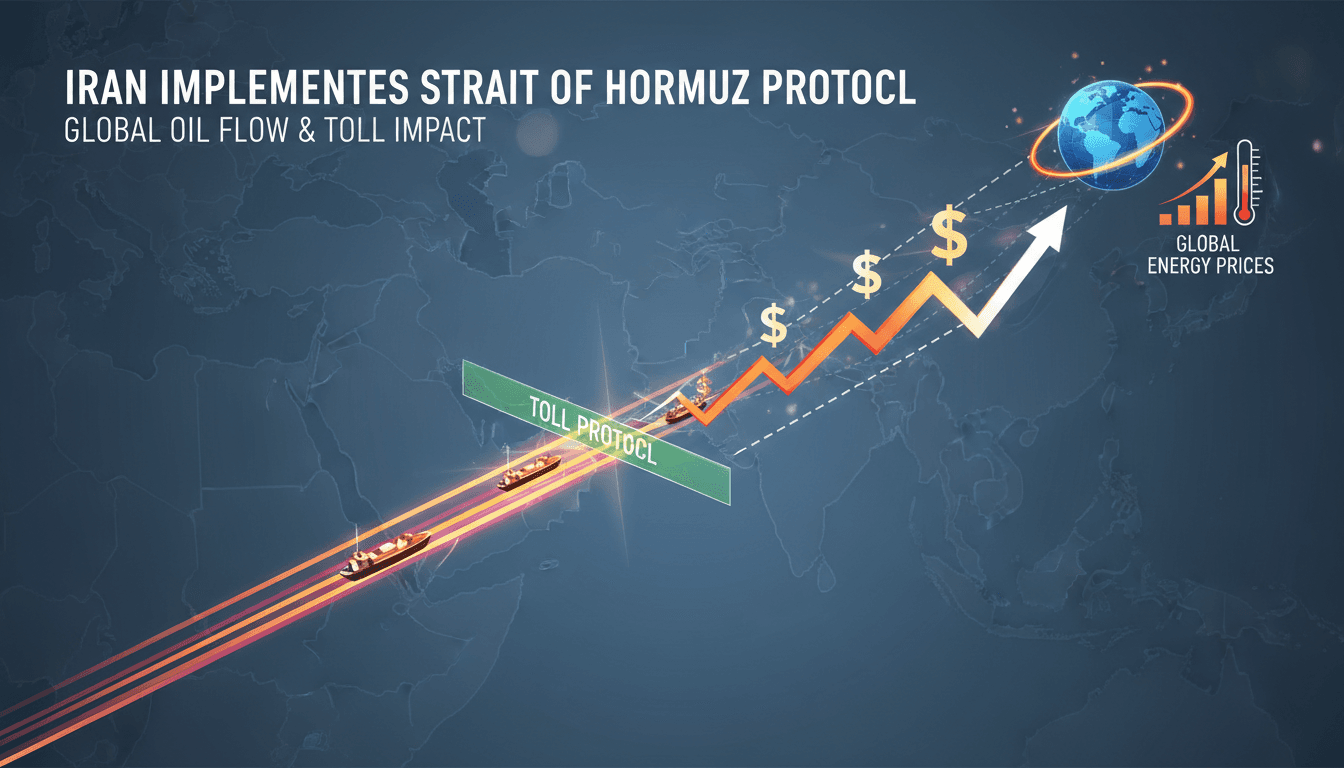
Here's what it means for you.
If you rely on global oil and LNG markets, the new tolls and controlled transit protocols in the Strait of Hormuz could directly impact energy prices and supply chains.
Why it matters
The Strait of Hormuz is a critical chokepoint for 20% of the world's oil and LNG, making any disruptions or changes in control significant for global energy markets.
What happened (in 30 seconds)
- Iran issued a protocol on April 9, 2026, detailing terms for safe passage through the Strait of Hormuz during a two-week ceasefire.
- Proposed tolls of up to $2 million per vessel or $1 per barrel of oil are intended to fund reconstruction efforts in Iran, shared with Oman.
- Limited transits are currently allowed, with only 3-5 ships passing through as negotiations continue in Islamabad.
The context you actually need
- Escalating tensions began in February 2026, following US and Israeli strikes on Iranian infrastructure, which led to Iranian retaliation and a halt in maritime traffic.
- A UN resolution demanding the reopening of the strait was vetoed by Russia and China, complicating international responses.
- Pakistan brokered a ceasefire on April 8, 2026, which included Iran's proposal to control transit through the strait, highlighting its strategic leverage in ongoing peace talks.
What's really happening
The Strait of Hormuz has long been a focal point of geopolitical tension, particularly between Iran and Western nations. Following a series of military strikes by the US and Israel on Iranian assets, Iran retaliated by attacking merchant vessels in the strait, effectively halting most maritime traffic. This escalation triggered a global energy crisis, as the strait is responsible for transporting approximately 20% of the world's oil and LNG.
In response to the crisis, Iran's Islamic Revolutionary Guard Corps (IRGC) released a protocol outlining controlled transit routes and proposed tolls. The toll structure, which includes fees of up to $2 million per vessel or $1 per barrel of oil, is designed not only to fund the reconstruction of war-damaged infrastructure in Iran but also to assert Iran's control over a vital maritime corridor. This move is seen as a strategic leverage point in ongoing peace negotiations, with Pakistan acting as a mediator.
The proposed tolls have already met resistance, particularly from Oman, which cites international maritime agreements that may conflict with Iran's unilateral imposition of fees. The US has also expressed opposition to Iran's control over the strait, warning of potential military action if negotiations fail. This creates a complex scenario where Iran seeks to maintain its influence while facing pushback from both regional allies and global powers.
As the situation unfolds, the implications for global energy markets are significant. The tolls could raise export costs for oil and gas, exacerbating existing supply shocks and leading to increased energy prices. Additionally, shipping companies are weighing the risks of compliance against the potential for stranding their vessels, which could cost hundreds of millions of dollars.
Who feels it first (and how)
- Energy companies: Increased costs could lead to higher prices for consumers and businesses reliant on oil and gas.
- Shipping firms: Companies must navigate new tolls and potential risks of stranding in a politically unstable region.
- Governments: Countries dependent on oil imports may face economic pressure from rising energy prices and supply disruptions.
- Consumers: Individuals may experience higher fuel prices and increased costs of goods due to elevated shipping expenses.
What to watch next
- Negotiation outcomes: The April 11 talks in Islamabad will be crucial in determining the future of transit protocols and tolls in the Strait of Hormuz.
- Market reactions: Watch for fluctuations in oil and LNG prices as the situation evolves, particularly if tolls are implemented.
- Geopolitical developments: Monitor responses from Gulf states and major powers like the US and China, as their actions will influence regional stability and energy markets.
The Strait of Hormuz is critical for global oil and LNG transit, accounting for 20% of flows.
Tolls will be contested by regional players, particularly Oman and the US, leading to ongoing negotiations.
The long-term impact on global energy prices and shipping logistics remains uncertain as the situation develops.
Frequently Asked Questions
- Why it matters?
- The Strait of Hormuz is a critical chokepoint for 20% of the world's oil and LNG, making any disruptions or changes in control significant for global energy markets.
- What happened (in 30 seconds)?
- Iran issued a protocol on April 9, 2026, detailing terms for safe passage through the Strait of Hormuz during a two-week ceasefire. Proposed tolls of up to $2 million per vessel or $1 per barrel of oil are intended to fund reconstruction efforts in Iran, shared with Oman. Limited transits are currently allowed, with only 3-5 ships passing through as negotiations continue in Islamabad.
- What's really happening?
- The Strait of Hormuz has long been a focal point of geopolitical tension, particularly between Iran and Western nations. Following a series of military strikes by the US and Israel on Iranian assets, Iran retaliated by attacking merchant vessels in the strait, effectively halting most maritime traffic. This escalation triggered a global energy crisis, as the strait is responsible for transporting approximately 20% of the world's oil and LNG. In response to the crisis, Iran's Islamic Revolution
- Who feels it first (and how)?
- Energy companies: Increased costs could lead to higher prices for consumers and businesses reliant on oil and gas. Shipping firms: Companies must navigate new tolls and potential risks of stranding in a politically unstable region. Governments: Countries dependent on oil imports may face economic pressure from rising energy prices and supply disruptions. Consumers: Individuals may experience higher fuel prices and increased costs of goods due to elevated shipping expenses.
- What to watch next?
- Negotiation outcomes: The April 11 talks in Islamabad will be crucial in determining the future of transit protocols and tolls in the Strait of Hormuz. Market reactions: Watch for fluctuations in oil and LNG prices as the situation evolves, particularly if tolls are implemented. Geopolitical developments: Monitor responses from Gulf states and major powers like the US and China, as their actions will influence regional stability and energy markets.
Comprehensive coverage of Middle Eastern and global issues.
"Al Jazeera is a prominent voice from the Global South, especially the Middle East, with an emphasis on underreported stories."
— A47 Editor
What is Iran’s Strait of Hormuz protocol and will other nations accept it?
Iran has announced a new protocol for the Strait of Hormuz, implementing a toll system that charges ships up to $2 million to pass through this critical maritime route. This move is part of Tehran's strategy to generate revenue amid ongoing conflicts...
Conservative-leaning political and national coverage.
"The Washington Times is a conservative-leaning newspaper known for its political coverage and advocacy of right-of-center viewpoints."
— A47 Editor
British officials openly reject proposed toll system for Strait of Hormuz
British officials have rejected Iran's proposal to establish a toll system for the Strait of Hormuz, asserting that commercial vessels should navigate the waterway freely and safely in accordance with international law. This rejection highlights ongo...