
White House Issues Insider Trading Warning Amid US-Iran War
Here's what it means for you.
If you're involved in financial markets, especially those linked to oil, this warning could affect your trading strategies and risk assessments.
Why it matters
The integrity of prediction markets and futures trading is under scrutiny, impacting investor confidence and regulatory frameworks.
What happened (in 30 seconds)
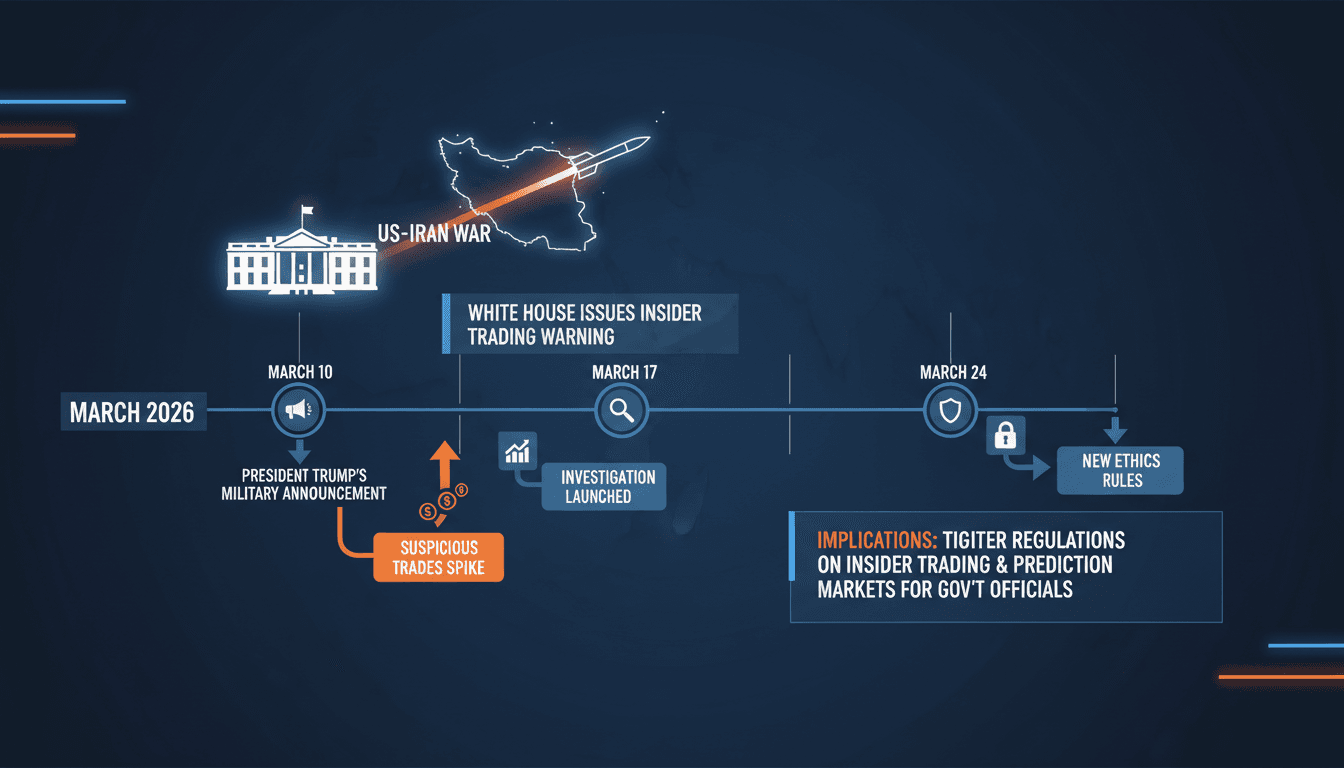
- On March 24, 2026, the White House warned staff against insider trading on prediction markets amid the US-Iran war.
- Suspicious trades totaling approximately $500-580 million occurred just before key announcements by President Trump, raising ethical concerns.
- Congressional bills are advancing to ban officials from betting on prediction markets using nonpublic information, with potential fines.
The context you actually need
- Prediction markets like Polymarket and Kalshi saw explosive growth in 2026, with billions traded on events related to the US-Iran war.
- Federal ethics laws, such as 18 U.S.C. § 1348, prohibit profiting from nonpublic information, which is central to the current scrutiny.
- The US-Iran war, which began on February 28, 2026, has heightened tensions and volatility in oil markets, affecting global trading behavior.
What's really happening
The White House's internal email warning against insider trading reflects a growing concern about the ethical implications of prediction markets during times of conflict. The US-Iran war, which escalated on February 28, 2026, has created a volatile environment for financial speculation, particularly in oil futures. On March 23, just before President Trump announced a five-day pause in strikes on Iranian energy sites, traders executed suspiciously large bets—estimated between $500-580 million—on Brent and WTI crude futures. This strategic positioning allowed them to profit from a subsequent 15% drop in oil prices.
The timing of these trades raised alarms about potential insider trading, as they occurred minutes before a significant policy announcement. The White House management office's memo served as a reminder of the federal ethics rules prohibiting the use of nonpublic information for personal gain, particularly for government employees. This directive comes amid heightened scrutiny over the integrity of prediction markets, which have gained popularity for betting on political and military events.
As a result of these developments, bipartisan congressional bills are being proposed to impose stricter regulations on prediction markets, specifically targeting officials who might leverage insider information for profit. These bills could impose fines up to double the profits made from such trades, signaling a serious commitment to maintaining ethical standards in government operations.
The scrutiny extends beyond just the White House; platforms like Polymarket are facing inquiries from federal prosecutors, although no charges have been filed against White House staff to date. This situation has led to a significant increase in trading volumes on prediction markets related to the Iran conflict, with over $170 million wagered on ceasefire outcomes alone. The rapid growth of these markets, combined with the potential for unethical behavior, poses risks not only to the integrity of the markets but also to the broader financial system.
Who feels it first (and how)
- Government employees: They face potential legal repercussions and ethical scrutiny.
- Traders and investors: Those involved in oil and prediction markets may see increased volatility and regulatory changes.
- Financial institutions: Banks and trading firms may need to adjust compliance protocols to align with new regulations.
What to watch next
- Congressional actions: Monitor the progress of proposed bills aimed at regulating prediction markets, as they could reshape trading practices.
- Market reactions: Observe how oil prices and trading volumes respond to ongoing developments in the US-Iran conflict.
- Regulatory changes: Keep an eye on any new guidelines issued by the White House or financial regulators regarding insider trading and prediction markets.
The White House has issued a warning against insider trading related to prediction markets.
Stricter regulations on prediction markets will be proposed and may pass in Congress.
The long-term impact on prediction markets and oil trading behavior remains uncertain.
Frequently Asked Questions
- Why it matters?
- The integrity of prediction markets and futures trading is under scrutiny, impacting investor confidence and regulatory frameworks.
- What happened (in 30 seconds)?
- On March 24, 2026, the White House warned staff against insider trading on prediction markets amid the US-Iran war. Suspicious trades totaling approximately $500-580 million occurred just before key announcements by President Trump, raising ethical concerns. Congressional bills are advancing to ban officials from betting on prediction markets using nonpublic information, with potential fines.
- What's really happening?
- The White House's internal email warning against insider trading reflects a growing concern about the ethical implications of prediction markets during times of conflict. The US-Iran war, which escalated on February 28, 2026, has created a volatile environment for financial speculation, particularly in oil futures. On March 23, just before President Trump announced a five-day pause in strikes on Iranian energy sites, traders executed suspiciously large bets—estimated between $500-580 million—on
- Who feels it first (and how)?
- Government employees: They face potential legal repercussions and ethical scrutiny. Traders and investors: Those involved in oil and prediction markets may see increased volatility and regulatory changes. Financial institutions: Banks and trading firms may need to adjust compliance protocols to align with new regulations.
- What to watch next?
- Congressional actions: Monitor the progress of proposed bills aimed at regulating prediction markets, as they could reshape trading practices. Market reactions: Observe how oil prices and trading volumes respond to ongoing developments in the US-Iran conflict. Regulatory changes: Keep an eye on any new guidelines issued by the White House or financial regulators regarding insider trading and prediction markets.
Arabic-language UAE newspaper coverage focused on domestic affairs, public institutions, business, society, and regional developments.
"Al Khaleej coverage generally reflects a mainstream UAE editorial lens with strong attention to public affairs, institutions, and regional developments."
— A47 Editor
البيت الأبيض يحذر موظفيه من المراهنة في الأسواق خلال الحرب
A U.S. official revealed that the White House warned its employees in an email on March 24 against improperly using their positions to speculate in futures markets, following President Donald Trump's order to suspend certain strikes against Iran. Thi...
Capitol Hill news, legislation, and policy insight.
"The Hill specializes in U.S. politics and policy, with a focus on Capitol Hill developments and a reputation for insider reporting."
— A47 Editor
White House staff warned against insider trading amid Iran war
The White House recently issued a warning to its staff against engaging in insider trading, particularly in light of the ongoing conflict in Iran. This caution follows reports of staff making profitable trades based on nonpublic information related t...
Covers blockchain, cryptocurrency news, project analysis, and market insights.
"Cointelegraph is a leading crypto-focused media outlet known for timely news, analysis, and educational content related to blockchain and digital assets."
— A47 Editor
White House warns staff as Iran bets add to growing insider trading concerns
The White House has issued a warning to its staff regarding the use of confidential information amid rising concerns over insider trading linked to Iran-related oil futures bets. This warning follows reports of suspicious betting activity that coinci...
Insights and news on social issues, policy, and political movements across the United States.
"The Wall Street Journal is known for its deep political coverage, especially at the intersection of policy, regulation, and social dynamics."
— A47 Editor
Just hours after President Trump announced a sudden pause of strikes against Iran, the White House warned staff against improperly leveraging their positions to place well-timed bets in futures markets
Just hours after President Trump announced a pause in military strikes against Iran, the White House cautioned staff against exploiting their positions for strategic bets in futures markets, amid rising scrutiny from Democrats over potential conflict...