
International Summit Co-Chaired by Macron and Starmer Establishes Defensive Mission for Strait of Hormuz
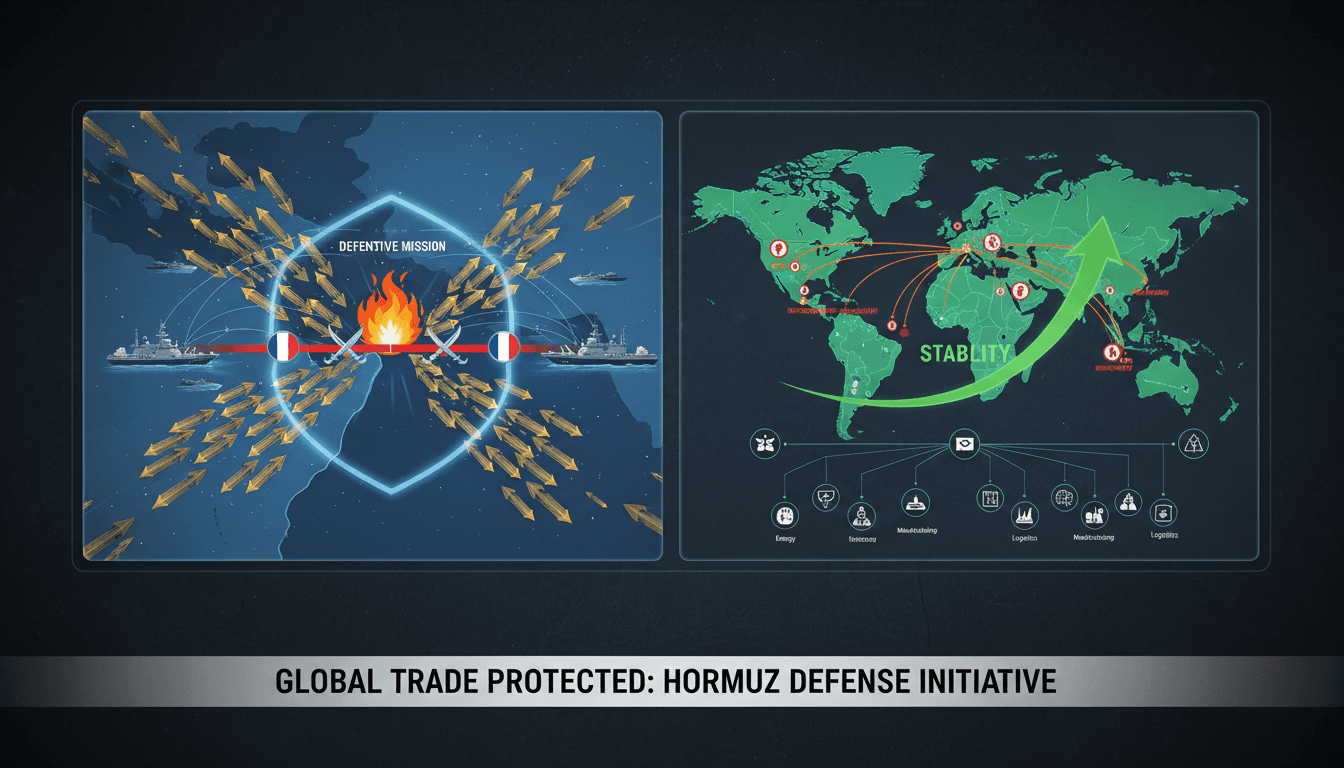
Here's what it means for you.
If you rely on global supply chains, the outcomes of this summit could stabilize shipping routes and influence prices in your market.
Why it matters
The Strait of Hormuz is a critical chokepoint for global oil trade, with 20% of the world's oil transiting through it.
What happened (in 30 seconds)
- April 17, 2026: French President Emmanuel Macron and British Prime Minister Keir Starmer co-chaired a virtual summit with representatives from 51 countries to address navigation security in the Strait of Hormuz.
- Joint Statement: The summit concluded with a commitment to establish a defensive multinational mission led by France and the UK to protect commercial shipping and prevent future disruptions.
- Market Reaction: Following the summit, oil prices dropped as Iran announced the reopening of the strait, signaling a potential easing of supply chain pressures.
The context you actually need
- Crisis Trigger: The 2026 Strait of Hormuz crisis began with US-Israeli attacks on Iran, leading to a blockade that threatened global oil supplies.
- Ceasefires: A series of ceasefires were declared in mid-April, allowing for diplomatic discussions and the eventual reopening of the strait for commercial traffic.
- International Coordination: The summit reflects a growing recognition among nations of the need for coordinated action to ensure maritime security and economic stability.
What's really happening
The summit co-chaired by Macron and Starmer is a direct response to the ongoing crisis in the Strait of Hormuz, which has significant implications for global trade and energy markets. The blockade imposed by Iran since February 28, 2026, has disrupted the flow of oil, leading to heightened tensions and economic uncertainty. With approximately 20% of the world's oil trade passing through this narrow waterway, any disruption can have cascading effects on global supply chains, impacting everything from fuel prices to consumer goods.
The multinational mission established during the summit aims to reassure insurers and protect commercial shipping from potential threats. By coordinating efforts among 51 non-belligerent countries, the initiative seeks to create a secure environment for vessels navigating the strait. This is particularly crucial as the region has seen increased military activity and geopolitical tensions, which can deter shipping companies from operating in these waters.
The joint statement issued at the summit emphasizes the importance of unconditional reopening of the strait without tolls, which is a significant step towards restoring normalcy in maritime trade. The commitment to demining operations post-ceasefire further highlights the proactive measures being taken to ensure safe navigation. With over a dozen countries pledging contributions to this mission, there is a clear international consensus on the need for collective action.
The economic implications of this summit are profound. As oil prices fluctuate in response to geopolitical events, the stabilization of the Strait of Hormuz could lead to lower fuel costs and a more predictable market environment. This is particularly relevant for industries heavily reliant on oil, such as transportation and manufacturing. Additionally, the summit's focus on avoiding protectionism and ensuring the safety of seafarers reflects a broader commitment to maintaining open trade routes in an increasingly interconnected world.
In the aftermath of the summit, the market reacted positively, with oil prices plunging as news of the reopening spread. This rebound indicates investor confidence in the potential for a return to stability in the region. However, the ongoing US blockade of Iranian ports and President Trump's rejection of NATO assistance complicates the situation, leaving room for uncertainty in the future.
Who feels it first (and how)
- Shipping Companies: Increased security and reduced risks in the Strait of Hormuz will directly impact operational costs and insurance premiums.
- Energy Sector: Oil producers and consumers will experience fluctuations in prices based on the stability of shipping routes.
- Global Supply Chain Managers: Companies relying on timely deliveries will benefit from restored navigation, reducing delays and costs.
- Consumers: Ultimately, consumers may see changes in prices for goods and services tied to oil and shipping costs.
What to watch next
- Military Planning Developments: Monitor the progress of military planning for the multinational mission, as effective implementation will be crucial for ensuring maritime security.
- Oil Price Trends: Keep an eye on oil price fluctuations in response to geopolitical developments and the reopening of the Strait of Hormuz, as this will impact global markets.
- International Cooperation: Watch for further international summits or agreements aimed at enhancing maritime security and economic coordination, which could signal a shift in global trade dynamics.
The Strait of Hormuz is vital for global oil trade, with 20% of the world's oil passing through it.
The multinational mission will enhance security for commercial shipping, leading to a more stable market environment.
The long-term effectiveness of the mission and its ability to deter future disruptions remains uncertain, especially with ongoing geopolitical tensions.
Frequently Asked Questions
- Why it matters?
- The Strait of Hormuz is a critical chokepoint for global oil trade, with 20% of the world's oil transiting through it.
- What happened (in 30 seconds)?
- April 17, 2026: French President Emmanuel Macron and British Prime Minister Keir Starmer co-chaired a virtual summit with representatives from 51 countries to address navigation security in the Strait of Hormuz. Joint Statement: The summit concluded with a commitment to establish a defensive multinational mission led by France and the UK to protect commercial shipping and prevent future disruptions. Market Reaction: Following the summit, oil prices dropped as Iran announced the reopening of
- What's really happening?
- The summit co-chaired by Macron and Starmer is a direct response to the ongoing crisis in the Strait of Hormuz, which has significant implications for global trade and energy markets. The blockade imposed by Iran since February 28, 2026, has disrupted the flow of oil, leading to heightened tensions and economic uncertainty. With approximately 20% of the world's oil trade passing through this narrow waterway, any disruption can have cascading effects on global supply chains, impacting everything
- Who feels it first (and how)?
- Shipping Companies: Increased security and reduced risks in the Strait of Hormuz will directly impact operational costs and insurance premiums. Energy Sector: Oil producers and consumers will experience fluctuations in prices based on the stability of shipping routes. Global Supply Chain Managers: Companies relying on timely deliveries will benefit from restored navigation, reducing delays and costs. Consumers: Ultimately, consumers may see changes in prices for goods and services tied to
- What to watch next?
- Military Planning Developments: Monitor the progress of military planning for the multinational mission, as effective implementation will be crucial for ensuring maritime security. Oil Price Trends: Keep an eye on oil price fluctuations in response to geopolitical developments and the reopening of the Strait of Hormuz, as this will impact global markets. International Cooperation: Watch for further international summits or agreements aimed at enhancing maritime security and economic coordina
UAE-based English-language newspaper covering regional politics, economics, and global affairs.
"The National reflects Emirati policy perspectives while maintaining international editorial standards."
— A47 Editor
Macron and Starmer host Hormuz conference on restoring critical supply chains
French President Emmanuel Macron and UK Prime Minister Keir Starmer co-hosted a conference focused on restoring critical supply chains in the Strait of Hormuz, a vital maritime route for global oil transport. This meeting aims to address the rising t...
Pan-Arab news coverage spanning politics, business, sports, and regional affairs.
"Asharq Al-Awsat reflects a broad Arab editorial perspective with strong attention to regional geopolitics."
— A47 Editor
مؤتمر دولي ينعقد في باريس لضمان أمن الملاحة بمضيق هرمز
French President Emmanuel Macron and British Prime Minister Keir Starmer are convening in Paris to discuss the formation of a multilateral force aimed at ensuring freedom of navigation in the Strait of Hormuz. This meeting highlights the ongoing inte...
Regional and international reporting focused on Middle Eastern politics, diplomacy, and economics.
"Asharq Al-Awsat is a Saudi-owned international newspaper reflecting mainstream Gulf political perspectives."
— A47 Editor
Over a Dozen Countries Offer to Play Role in Hormuz Mission, Starmer Says
British Prime Minister Keir Starmer announced that over a dozen countries have expressed willingness to participate in a mission aimed at securing the Strait of Hormuz, a crucial maritime route for global oil shipments. This initiative comes amid ris...
Editor-curated FT homepage stories spanning markets, business, world, and opinion.
"The Financial Times is a globally respected business publication with a centrist/center-left tone and strong markets focus."
— A47 Editor
Macron and Starmer to hold summit on plan to secure Strait of Hormuz
French President Emmanuel Macron and UK Prime Minister Keir Starmer are set to hold a summit to discuss strategies for securing the Strait of Hormuz, a vital maritime route for global oil shipments, amid rising tensions in the region. This meeting is...