
Shipping Traffic Through the Strait of Hormuz Remains Largely Halted Amid US-Iran Conflict
Here's what it means for you.
If you rely on global shipping routes, the ongoing conflict could lead to increased costs and delays in essential goods.
Why it matters
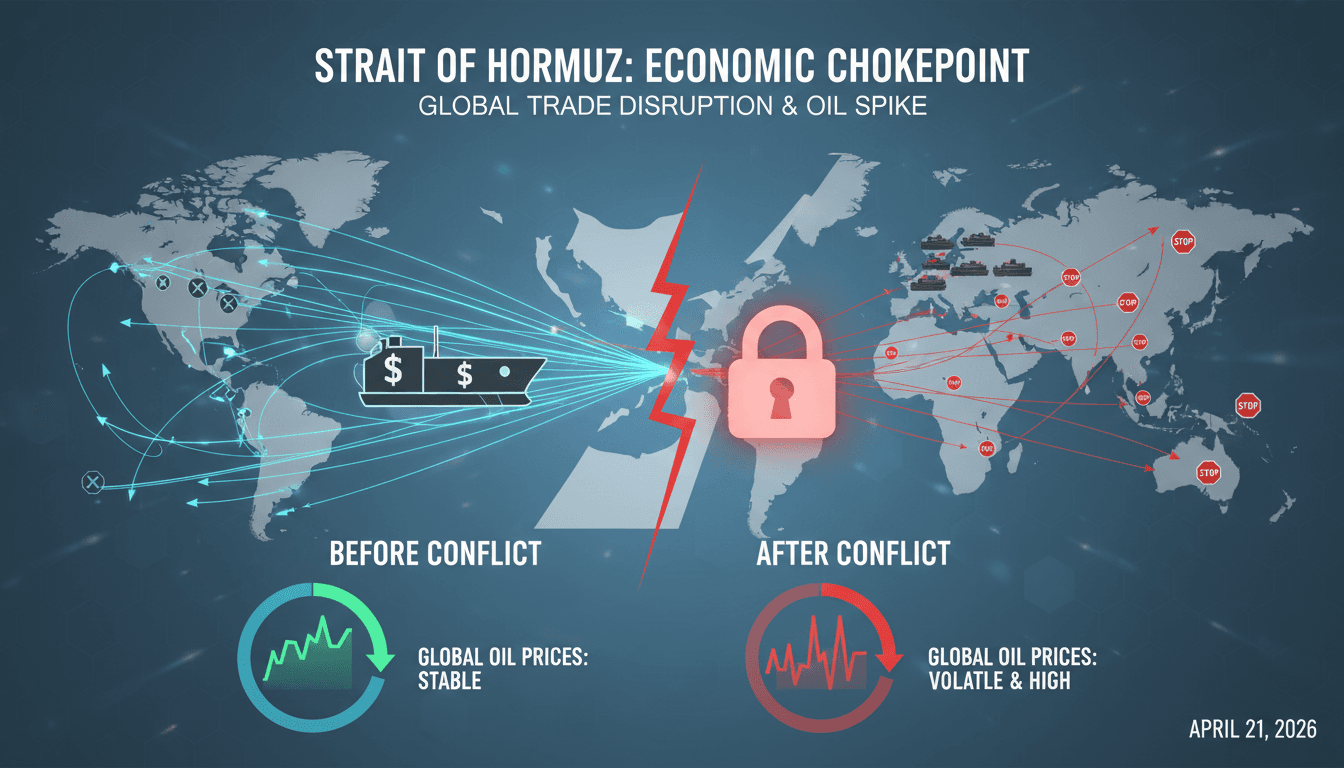
The Strait of Hormuz is a critical chokepoint for global oil and goods, with about 20% of the world's oil passing through it.
What happened (in 30 seconds)
- Shipping traffic through the Strait of Hormuz is largely halted, with only three vessels transiting in the last 24 hours compared to a pre-war average of 140.
- Over 600 ships and 20,000 seafarers are stranded in the Persian Gulf due to a U.S. naval blockade and Iranian counter-restrictions.
- Oil prices have surged past $100 per barrel, reflecting the escalating tensions and disruptions in maritime traffic.
The context you actually need
- The U.S.-Iran conflict escalated on February 28, 2026, when U.S. and Israeli forces launched airstrikes against Iran, prompting retaliatory actions from Tehran.
- Iran's military has enforced restrictions on the Strait of Hormuz, including missile and drone attacks, leading to a near-total halt in shipping traffic.
- The situation has resulted in significant economic implications, including soaring oil prices and disruptions to global supply chains.
What's really happening
The current maritime blockade in the Strait of Hormuz is a direct consequence of the U.S.-Iran conflict that escalated in early 2026. Following the initiation of Operation Epic Fury, a series of airstrikes targeting Iranian military and nuclear sites, Iran's response was swift and aggressive. The Islamic Revolutionary Guard Corps (IRGC) declared the Strait closed, employing tactics such as missile strikes, drone attacks, and naval maneuvers to enforce this closure.
As a result, shipping traffic plummeted, with only three vessels managing to transit the strait in the last 24 hours, a stark contrast to the pre-war average of 140 daily transits. The blockade has left over 600 ships stranded, including 61 non-Iran-related supertankers, many laden with up to 2 million barrels of oil each. This situation has led to a surge in oil prices, which have now surpassed $100 per barrel, as markets react to the uncertainty and potential supply shortages.
The economic implications extend beyond oil prices. The United Arab Emirates (UAE), which relies heavily on the Strait for its imports and exports, is experiencing elevated fuel costs and disruptions to essential goods, including fertilizers and medications. The Jebel Ali port, a key logistics hub, is facing significant delays, and the UAE has declared force majeure on exports, further complicating the situation.
Moreover, the geopolitical landscape is shifting as Gulf states, including the UAE, are forced to adapt to the new reality. The Abu Dhabi-Fujairah pipeline is being utilized to mitigate some of the logistical challenges, but this comes at a higher cost. Strategic food reserves are being activated to ensure stability amid rising prices and supply chain disruptions.
As the conflict continues, the likelihood of further escalations remains high. The U.S. has indicated a willingness to maintain its blockade, while Iran has shown no signs of backing down. This standoff not only threatens maritime safety but also poses risks to global energy markets and economic stability.
Who feels it first (and how)
- Shipping companies: Facing increased operational costs and delays in deliveries.
- Oil producers: Experiencing fluctuating prices and potential supply chain disruptions.
- Consumers: Likely to see higher prices for goods and fuel due to increased shipping costs.
- Seafarers: Stranded and facing uncertain working conditions and safety risks.
- UAE residents: Experiencing elevated fuel costs and potential shortages of essential goods.
What to watch next
- Oil price fluctuations: Continued volatility in oil prices will impact global markets and consumer costs.
- Shipping traffic updates: Any changes in the blockade status or shipping routes will affect supply chains and logistics.
- Geopolitical developments: Watch for potential diplomatic efforts or escalations that could alter the current standoff.
The Strait of Hormuz is a critical shipping route for global oil and goods.
Continued disruptions in shipping traffic and rising oil prices as the conflict persists.
The timeline for resolution or de-escalation of the U.S.-Iran conflict and its impact on global markets.
Frequently Asked Questions
- Why it matters?
- The Strait of Hormuz is a critical chokepoint for global oil and goods, with about 20% of the world's oil passing through it.
- What happened (in 30 seconds)?
- Shipping traffic through the Strait of Hormuz is largely halted, with only three vessels transiting in the last 24 hours compared to a pre-war average of 140. Over 600 ships and 20,000 seafarers are stranded in the Persian Gulf due to a U.S. naval blockade and Iranian counter-restrictions. Oil prices have surged past $100 per barrel, reflecting the escalating tensions and disruptions in maritime traffic.
- What's really happening?
- The current maritime blockade in the Strait of Hormuz is a direct consequence of the U.S.-Iran conflict that escalated in early 2026. Following the initiation of Operation Epic Fury, a series of airstrikes targeting Iranian military and nuclear sites, Iran's response was swift and aggressive. The Islamic Revolutionary Guard Corps (IRGC) declared the Strait closed, employing tactics such as missile strikes, drone attacks, and naval maneuvers to enforce this closure. As a result, shipping traffi
- Who feels it first (and how)?
- Shipping companies: Facing increased operational costs and delays in deliveries. Oil producers: Experiencing fluctuating prices and potential supply chain disruptions. Consumers: Likely to see higher prices for goods and fuel due to increased shipping costs. Seafarers: Stranded and facing uncertain working conditions and safety risks. UAE residents: Experiencing elevated fuel costs and potential shortages of essential goods.
- What to watch next?
- Oil price fluctuations: Continued volatility in oil prices will impact global markets and consumer costs. Shipping traffic updates: Any changes in the blockade status or shipping routes will affect supply chains and logistics. Geopolitical developments: Watch for potential diplomatic efforts or escalations that could alter the current standoff.
Oil, metals, and agriculture: supply/demand headlines, OPEC chatter, inventories, and price action.
"Solid tape for energy and metals traders tracking macro and micro catalysts."
— A47 Editor
Shipping traffic through Hormuz still largely halted
Shipping traffic through the Strait of Hormuz remains largely halted, reflecting ongoing geopolitical tensions and the impact of recent U.S. announcements regarding a blockade. Despite a temporary ceasefire agreement between the U.S. and Iran, the si...
Global markets, investing, and macroeconomics from a premier financial newsroom.
"Bloomberg is respected for in-depth financial reporting and data-driven analysis."
— A47 Editor
HORMUZ TRACKER: Traffic Stays at a Trickle of Iran-Aligned Ships
The Strait of Hormuz has seen minimal commercial traffic as Iran enforces a renewed closure, allowing only a few small vessels with ties to Tehran to pass through. This situation reflects ongoing tensions and conflicting statements from Iranian offic...
Regional coverage and analysis focused on politics, diplomacy, and business across the Middle East.
"Al-Monitor is known for analytical reporting on Middle East politics and policy developments."
— A47 Editor
Shipping traffic through Hormuz still largely halted
Shipping traffic through the Strait of Hormuz has been largely halted, with only three vessels passing in the last 24 hours, following a U.S. blockade of Iranian ports that has escalated tensions in the region. Iran has responded by maintaining its o...
UAE-based English-language newspaper covering regional politics, economics, and global affairs.
"The National reflects Emirati policy perspectives while maintaining international editorial standards."
— A47 Editor
Strait of Hormuz shipping traffic at near standstill as US boards Iranian vessel
Shipping traffic in the Strait of Hormuz has reached a near standstill as the U.S. military boarded an Iranian vessel, escalating tensions in a region critical for global oil transport. This incident follows Iran's recent declaration of the strait's ...
Regional coverage and analysis focused on politics, diplomacy, and business across the Middle East.
"Al-Monitor is known for analytical reporting on Middle East politics and policy developments."
— A47 Editor
Shipping traffic remains at virtual standstill through Hormuz, data shows
Shipping traffic through the Strait of Hormuz has reached a near standstill, with only three crossings recorded in a 12-hour period, as indicated by shipping data. The oil products tanker Nero, under British sanctions, was one of the few vessels navi...
Global markets, investing, and macroeconomics from a premier financial newsroom.
"Bloomberg is respected for in-depth financial reporting and data-driven analysis."
— A47 Editor
Hormuz Shipping Traffic Grinds to a Halt as Tensions Deepen
Shipping traffic through the Strait of Hormuz has come to a complete halt following a brief surge, as tensions escalate after reports of gunfire targeting vessels in the waterway. Iran has issued warnings against crossings, reversing earlier statemen...