
Saudi Crown Prince Receives Call from Pakistani PM Condemning Iranian Attacks
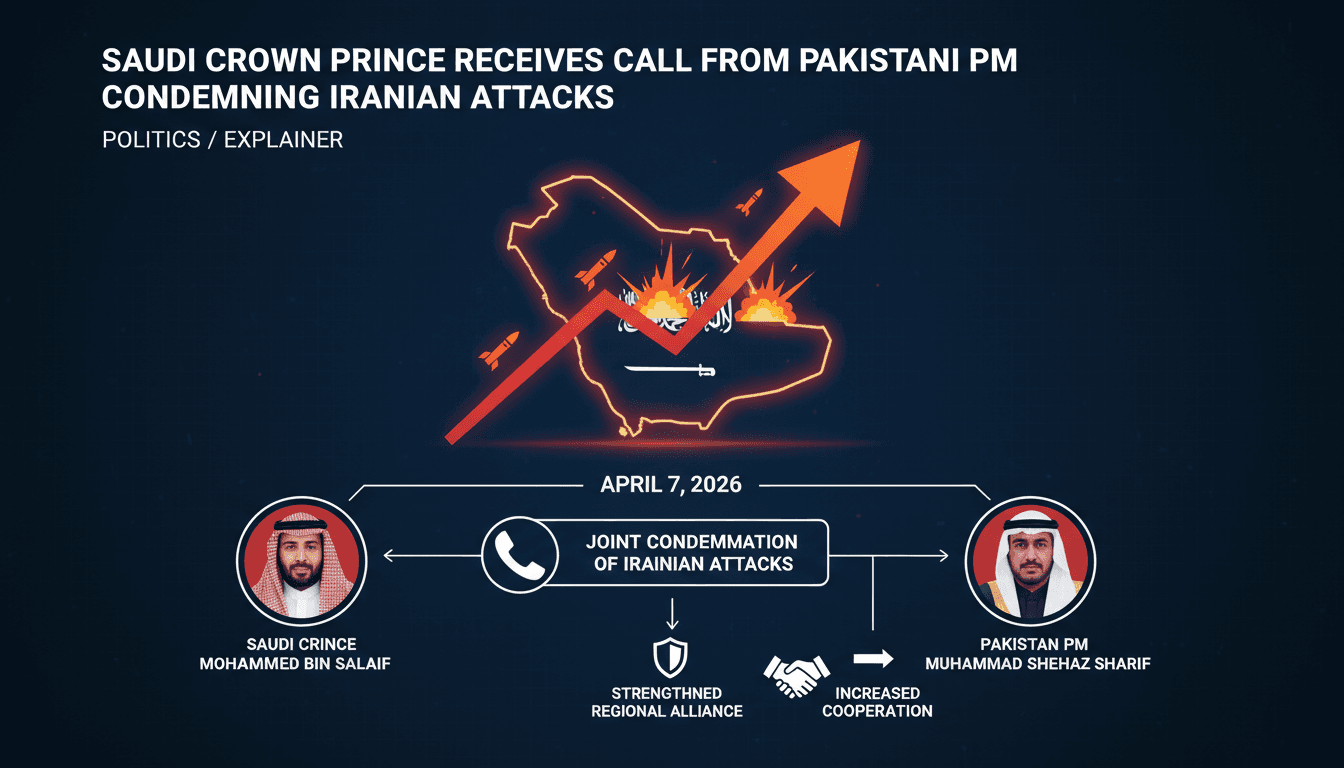
Here's what it means for you.
The escalating tensions in the Gulf could impact global oil prices and trade routes, affecting your business operations and costs.
Why it matters
The recent Iranian missile and drone strikes on Saudi Arabia have significant implications for regional security and global energy markets.
What happened (in 30 seconds)
- Crown Prince Mohammed bin Salman received a call from Pakistani Prime Minister Muhammad Shehbaz Sharif on April 7, 2026.
- Sharif condemned the Iranian attacks on Saudi energy facilities, emphasizing Pakistan's solidarity with Saudi Arabia.
- The conversation reflects deepening ties between Pakistan and Saudi Arabia amid rising regional tensions.
The context you actually need
- Iran's ongoing aggression: Since late February 2026, Iran has launched a series of missile and drone attacks targeting Saudi energy infrastructure, escalating regional tensions.
- Pakistan's strategic alliance: With 2.7 million Pakistanis residing in Saudi Arabia and bilateral trade exceeding $5 billion, Pakistan's support for Saudi Arabia underscores their strategic partnership.
- International response: The Iranian strikes have drawn widespread condemnation, highlighting the need for regional allies to unite against threats to stability.
What's really happening
The telephone conversation between Saudi Crown Prince Mohammed bin Salman and Pakistani Prime Minister Muhammad Shehbaz Sharif is emblematic of a broader geopolitical landscape shaped by Iranian aggression. Since late February 2026, Iran has escalated its military operations against Saudi Arabia, launching missile and drone strikes that target critical energy facilities in the Kingdom's Eastern Province. This pattern of aggression not only threatens Saudi sovereignty but also raises alarms about the stability of the entire Gulf region.
In this context, Pakistan's support for Saudi Arabia is significant. The two nations share a long-standing alliance, bolstered by the presence of approximately 2.7 million Pakistani expatriates in Saudi Arabia, who contribute significantly to the Kingdom's economy. This demographic connection fosters a sense of solidarity that transcends mere diplomatic niceties. Sharif's condemnation of the Iranian attacks reflects a commitment to regional stability, emphasizing Pakistan's role as a key ally in the Gulf.
The Iranian strikes have not only prompted a diplomatic response from Pakistan but have also triggered reactions in global markets. As fears of supply disruptions mount, oil prices have begun to rise, indicating how interconnected these geopolitical events are with the global economy. The situation underscores the fragility of energy security in the region, which is vital for countries like the UAE and beyond, where economic stability hinges on reliable oil supplies.
Moreover, the call between the two leaders signals a potential shift in regional dynamics. As Iran continues its aggressive posture, it may galvanize other Gulf states to strengthen their alliances and security measures. This could lead to increased military cooperation among Gulf Cooperation Council (GCC) members and their allies, further isolating Iran diplomatically and economically. The ramifications of these developments extend beyond the immediate region, influencing global energy markets and trade routes.
Ultimately, the conversation between Sharif and bin Salman is more than just a diplomatic exchange; it represents a critical moment in the ongoing struggle for influence and stability in the Middle East. As regional actors respond to Iranian provocations, the potential for escalation remains high, with significant implications for global security and economic stability.
Who feels it first (and how)
- Energy sector: Companies reliant on stable oil prices may face increased costs and volatility.
- Expatriates: Pakistani workers in Saudi Arabia could experience heightened tensions affecting their safety and employment.
- Regional businesses: Firms in the UAE and Gulf states may see disruptions in trade routes and supply chains.
What to watch next
- Oil price fluctuations: Monitor how continued Iranian aggression affects global oil prices, as this could impact your operational costs.
- Diplomatic developments: Watch for further statements from Pakistan and other Gulf states regarding their stance on Iranian actions, which could signal shifts in alliances.
- Military responses: Pay attention to any military escalations or joint exercises among Gulf states as they prepare for potential threats.
Iran's missile and drone attacks on Saudi Arabia are ongoing and have drawn international condemnation.
Increased military cooperation among Gulf states in response to Iranian aggression.
The long-term impact on global oil prices and regional stability as tensions evolve.
Frequently Asked Questions
- Why it matters?
- The recent Iranian missile and drone strikes on Saudi Arabia have significant implications for regional security and global energy markets.
- What happened (in 30 seconds)?
- Crown Prince Mohammed bin Salman received a call from Pakistani Prime Minister Muhammad Shehbaz Sharif on April 7, 2026. Sharif condemned the Iranian attacks on Saudi energy facilities, emphasizing Pakistan's solidarity with Saudi Arabia. The conversation reflects deepening ties between Pakistan and Saudi Arabia amid rising regional tensions.
- What's really happening?
- The telephone conversation between Saudi Crown Prince Mohammed bin Salman and Pakistani Prime Minister Muhammad Shehbaz Sharif is emblematic of a broader geopolitical landscape shaped by Iranian aggression. Since late February 2026, Iran has escalated its military operations against Saudi Arabia, launching missile and drone strikes that target critical energy facilities in the Kingdom's Eastern Province. This pattern of aggression not only threatens Saudi sovereignty but also raises alarms about
- Who feels it first (and how)?
- Energy sector: Companies reliant on stable oil prices may face increased costs and volatility. Expatriates: Pakistani workers in Saudi Arabia could experience heightened tensions affecting their safety and employment. Regional businesses: Firms in the UAE and Gulf states may see disruptions in trade routes and supply chains.
- What to watch next?
- Oil price fluctuations: Monitor how continued Iranian aggression affects global oil prices, as this could impact your operational costs. Diplomatic developments: Watch for further statements from Pakistan and other Gulf states regarding their stance on Iranian actions, which could signal shifts in alliances. Military responses: Pay attention to any military escalations or joint exercises among Gulf states as they prepare for potential threats.
Arabic-language coverage of Saudi, regional, and international affairs.
"Al Bilad offers mainstream Saudi newspaper coverage across domestic and broader Arab topics."
— A47 Editor
ولي العهد يتلقى اتصالًا هاتفيًا من رئيس وزراء باكستان
Crown Prince Mohammed bin Salman received a phone call from Pakistani Prime Minister Shehbaz Sharif, during which they discussed the ongoing regional developments. The Pakistani Prime Minister condemned the continuous Iranian attacks targeting facili...
English-language reporting on Saudi politics, policy, and society.
"Saudi Gazette reflects mainstream Saudi institutional perspectives."
— A47 Editor
Pakistan PM condemns Iran attacks in call with Crown Prince, reaffirms full solidarity
Pakistan Prime Minister Shehbaz Sharif condemned Iranian attacks on Saudi Arabian facilities during a recent phone call with Crown Prince Mohammed bin Salman, emphasizing Pakistan's solidarity with Saudi Arabia and its commitment to regional stabilit...
English-language reporting focused on Saudi Arabia and regional affairs.
"Saudi Gazette provides English-language coverage that often aligns with mainstream Saudi news priorities."
— A47 Editor
Pakistan PM condemns Iran attacks in call with Crown Prince, reaffirms full solidarity
Pakistan Prime Minister Shehbaz Sharif condemned Iranian attacks on Saudi Arabian facilities during a call with Crown Prince Mohammed bin Salman, emphasizing Pakistan's solidarity with Saudi Arabia and its commitment to regional stability. Sharif des...