
Polymarket Traders Doubt Israel-Hezbollah Ceasefire by April 30 Amid Ongoing Conflict
Here's what it means for you.
If you're involved in global markets or energy sectors, the ongoing geopolitical tensions could directly impact your operations and costs.
Why it matters
The fluctuating probabilities of a ceasefire between Israel and Hezbollah reflect broader instability in the Middle East, which can influence global oil prices and regional economic conditions.
What happened (in 30 seconds)
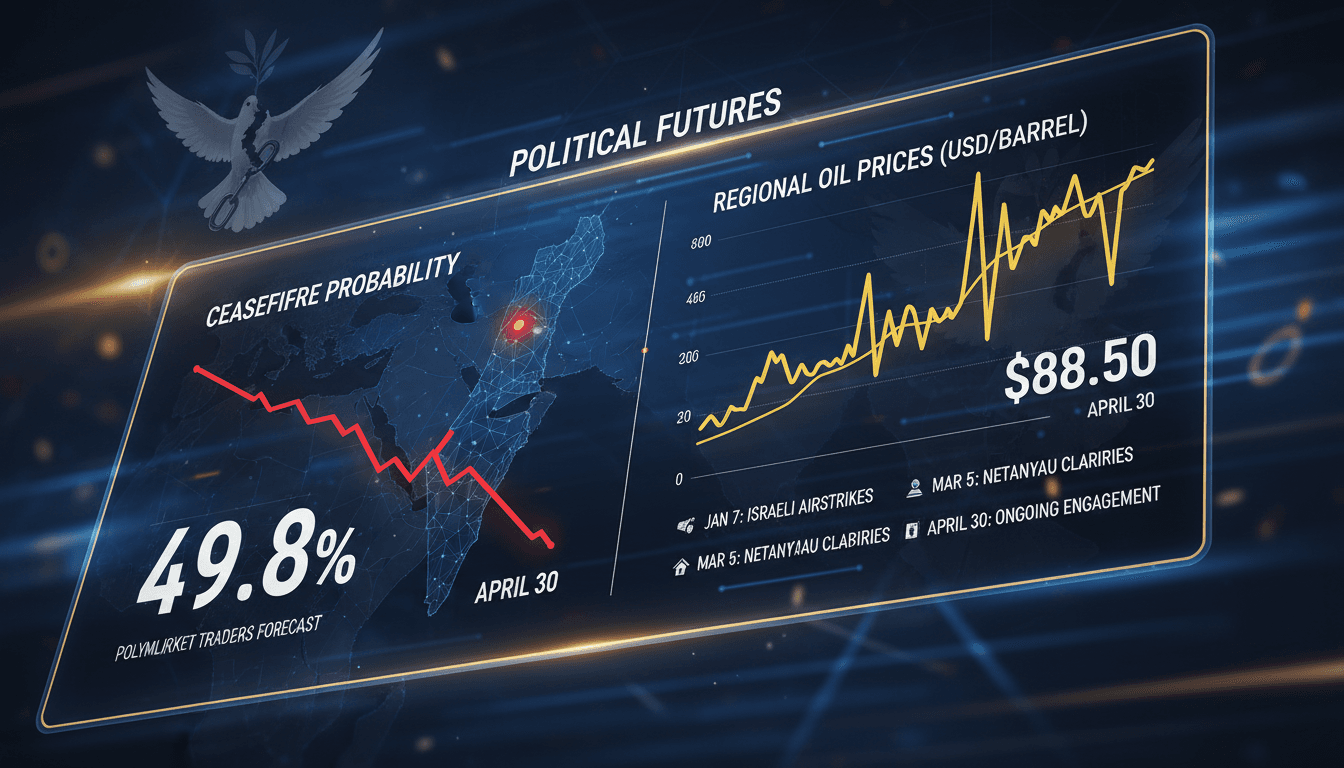
- Traders on Polymarket assigned a 49.8% probability to an Israel-Hezbollah ceasefire by April 30, 2026, indicating skepticism about a quick resolution.
- Ongoing Israeli airstrikes in Lebanon continue despite a recent US-Iran ceasefire agreement, which explicitly excludes operations in Lebanon.
- Market volume on Polymarket exceeded $770,000, highlighting significant trader engagement and concern over the situation's volatility.
The context you actually need
- The Israel-Hezbollah conflict escalated in early 2026 after a previous ceasefire collapsed, leading to increased military operations in southern Lebanon.
- Iran's actions in March 2026 effectively closed the Strait of Hormuz, disrupting shipping and causing oil prices to spike, which prompted US intervention.
- The US-Iran ceasefire on April 7, 2026, aimed to reopen the strait but was met with Israeli resistance regarding operations against Hezbollah, complicating the diplomatic landscape.
What's really happening
The Israel-Hezbollah conflict's resurgence is rooted in a complex interplay of military, political, and economic factors. Following the breakdown of a ceasefire in November 2024, Israel intensified its military operations in southern Lebanon, aiming to establish a buffer zone against Hezbollah, which it perceives as an existential threat backed by Iran. Concurrently, Iran's aggressive maneuvers in the Strait of Hormuz disrupted global shipping routes, leading to a spike in oil prices and heightened tensions in the region.
In response to these developments, US President Donald Trump issued ultimatums to Iran, culminating in a conditional two-week ceasefire agreement on April 7, 2026. This agreement required Iran to ensure safe passage through the Strait of Hormuz but explicitly excluded any restrictions on Israeli military actions in Lebanon. Prime Minister Benjamin Netanyahu's statements reinforced Israel's commitment to continue its operations against Hezbollah, further complicating the ceasefire's potential impact.
Traders on Polymarket have reacted to these mixed signals with skepticism, pricing the probability of a ceasefire at just under 50%. This reflects a broader sentiment that, despite diplomatic efforts, the underlying tensions and military engagements are unlikely to resolve quickly. The market's volume of over $770,000 indicates significant engagement from traders who are closely monitoring the evolving situation.
The implications of this conflict extend beyond immediate military concerns. The reopening of the Strait of Hormuz is crucial for global oil supply chains, and any disruption could have cascading effects on oil prices, impacting economies worldwide. For Dubai, the reopening alleviates prior shipping disruptions at Jebel Ali Port, a key regional hub, while a drop in oil prices by over 15% reduces fuel costs for residents. However, the ongoing military operations and uncertainty surrounding the ceasefire mean that the region remains vulnerable to further escalations.
Who feels it first (and how)
- Energy sector professionals: Fluctuating oil prices directly affect operational costs and profitability.
- Logistics and shipping companies: Disruptions in the Strait of Hormuz impact shipping routes and timelines.
- Investors in Middle Eastern markets: Increased volatility can lead to rapid shifts in market conditions and investment strategies.
- Residents in the UAE: Changes in fuel prices and economic stability are felt directly in daily living costs.
What to watch next
- Ceasefire developments: Monitor any official announcements regarding a ceasefire, as these will significantly impact market confidence and oil prices.
- Military engagements: Continued Israeli operations against Hezbollah could escalate tensions, affecting regional stability and trade routes.
- US-Iran relations: Changes in the diplomatic landscape between the US and Iran could influence broader geopolitical dynamics and economic conditions in the region.
The probability of a ceasefire by April 30 is currently at 49.8%.
Continued skepticism among traders regarding a quick resolution to the conflict.
The long-term implications of the US-Iran ceasefire on regional stability and military engagements.
Frequently Asked Questions
- Why it matters?
- The fluctuating probabilities of a ceasefire between Israel and Hezbollah reflect broader instability in the Middle East, which can influence global oil prices and regional economic conditions.
- What happened (in 30 seconds)?
- Traders on Polymarket assigned a 49.8% probability to an Israel-Hezbollah ceasefire by April 30, 2026, indicating skepticism about a quick resolution. Ongoing Israeli airstrikes in Lebanon continue despite a recent US-Iran ceasefire agreement, which explicitly excludes operations in Lebanon. Market volume on Polymarket exceeded $770,000, highlighting significant trader engagement and concern over the situation's volatility.
- What's really happening?
- The Israel-Hezbollah conflict's resurgence is rooted in a complex interplay of military, political, and economic factors. Following the breakdown of a ceasefire in November 2024, Israel intensified its military operations in southern Lebanon, aiming to establish a buffer zone against Hezbollah, which it perceives as an existential threat backed by Iran. Concurrently, Iran's aggressive maneuvers in the Strait of Hormuz disrupted global shipping routes, leading to a spike in oil prices and heighte
- Who feels it first (and how)?
- Energy sector professionals: Fluctuating oil prices directly affect operational costs and profitability. Logistics and shipping companies: Disruptions in the Strait of Hormuz impact shipping routes and timelines. Investors in Middle Eastern markets: Increased volatility can lead to rapid shifts in market conditions and investment strategies. Residents in the UAE: Changes in fuel prices and economic stability are felt directly in daily living costs.
- What to watch next?
- Ceasefire developments: Monitor any official announcements regarding a ceasefire, as these will significantly impact market confidence and oil prices. Military engagements: Continued Israeli operations against Hezbollah could escalate tensions, affecting regional stability and trade routes. US-Iran relations: Changes in the diplomatic landscape between the US and Iran could influence broader geopolitical dynamics and economic conditions in the region.
Real-time updates, analysis, and reports on the blockchain and cryptocurrency sectors.
"Crypto News delivers real-time updates, analysis, and reports on the blockchain and cryptocurrency sectors."
— A47 Editor
Polymarket traders doubt quick Israel–Hezbollah ceasefire despite Hormuz deal
Polymarket traders are expressing skepticism regarding a swift ceasefire between Israel and Hezbollah, despite a recent two-week ceasefire agreement between the US and Iran. The traders are betting that the conflict will persist for months, indicatin...
Technology business and AI-related headlines.
"Data-driven tech newsroom with global scope."
— A47 Editor
Polymarket Iran Bets Draw Fresh Dispute and Insider Scrutiny
Polymarket has seen over $170 million in bets on a potential ceasefire between the US and Iran, marking a significant moment in the prediction market landscape. This surge in betting activity highlights the platform's growing role in geopolitical for...
Technology business news, market impacts, and innovation trends.
"Bloomberg is a premier financial and tech news provider, respected for its in-depth reporting and analytical rigor."
— A47 Editor
Polymarket Iran Bets Draw Fresh Dispute and Insider Scrutiny
Polymarket has seen over $170 million in bets on a potential ceasefire between the US and Iran, marking a significant moment in the prediction market landscape. This surge in betting activity highlights the platform's growing role in geopolitical for...