
Israeli Airstrike Kills Lebanese Forces Official and Civilians in Ain Saadeh
Here's what it means for you.
Increased regional instability may impact expatriate communities and economic ties in the Gulf.
Why it matters
The airstrike has intensified sectarian divisions in Lebanon, affecting regional stability and economic relations.
What happened (in 30 seconds)
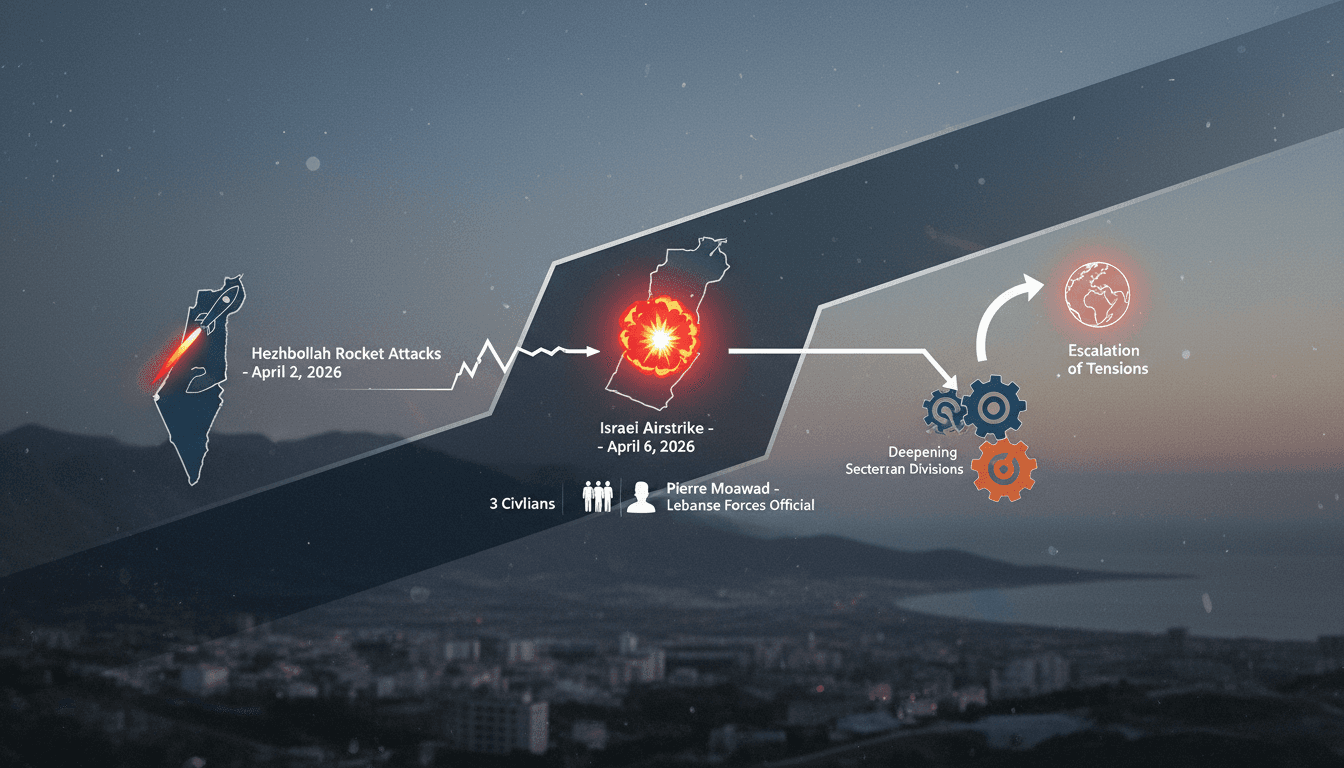
- Israeli airstrike on April 6, 2026, killed Lebanese Forces official Pierre Moawad and three women in Ain Saadeh, Lebanon.
- Hezbollah's rocket fire into Israel on March 2, 2026, prompted Israeli retaliation, escalating ongoing hostilities.
- Sectarian tensions have risen, with accusations against Hezbollah for provoking conflict that endangers civilians.
The context you actually need
- Hezbollah's actions: The group launched projectiles into Israel, claiming solidarity with Iran amid US-Israel tensions, leading to Israeli military responses.
- Civilian impact: The airstrike resulted in civilian casualties, raising concerns about the safety of non-combatants in Lebanon.
- Political fallout: Lebanese Forces leaders are blaming Hezbollah for the conflict, which threatens civil peace and exacerbates sectarian strife.
What's really happening
The April 6 airstrike in Ain Saadeh represents a critical escalation in the ongoing conflict between Israel and Hezbollah, which reignited after Hezbollah's rocket attacks on Israel in early March 2026. The Israeli military targeted what it described as a "terror site" linked to Hezbollah, but the strike resulted in the deaths of Pierre Moawad, a local official from the Lebanese Forces, along with three women, including his wife. This incident has not only deepened the humanitarian crisis but also intensified sectarian divisions within Lebanon.
The backdrop of this conflict includes a history of violence and political instability in the region. Following a ceasefire in 2024, intermittent strikes by Israel continued, leading to over 1,460 fatalities and more than one million displacements, primarily affecting Shiite Hezbollah supporters. The Lebanese Forces, a Christian political party, have accused Hezbollah of dragging Lebanon into a war that disproportionately affects non-combatants, highlighting the growing rift between different sectarian groups.
The airstrike's aftermath saw Lebanese Forces MP Razi El Hage stating that the country pays a heavy price due to Hezbollah's provocations. President Joseph Aoun emphasized the need to preserve civil peace, while Kataeb MP Nadim Gemayel warned of the potential for engineered sectarian strife. This rhetoric underscores the precarious balance of power in Lebanon, where sectarian identities are increasingly politicized and weaponized.
As the conflict continues, the implications extend beyond immediate casualties. The ongoing violence has led to heightened security concerns across the region, affecting Lebanese expatriates in the Gulf, including Dubai, where no direct casualties have been reported. However, the instability can influence economic ties and security policies, creating a ripple effect that may impact expatriate communities and businesses reliant on stability in Lebanon.
Who feels it first (and how)
- Lebanese expatriates: Increased anxiety and potential disruptions in community relations.
- Business sectors in the Gulf: Heightened security concerns may affect investment and economic activities.
- Political leaders in Lebanon: Pressure to address sectarian divisions and maintain civil peace amidst rising tensions.
What to watch next
- Civilian casualty reports: Monitoring the ongoing Israeli review of civilian casualties will indicate the humanitarian toll and potential for further escalation.
- Political responses: Watch for statements from Lebanese political leaders regarding sectarian tensions and calls for unity or division.
- Regional security measures: Increased security protocols in Gulf countries may reflect growing concerns over the impact of the conflict on expatriate communities.
The airstrike resulted in civilian casualties, exacerbating sectarian tensions in Lebanon.
Continued hostilities between Israel and Hezbollah will lead to further civilian impacts and political fallout.
The long-term effects on Gulf economic ties and expatriate communities remain uncertain as the conflict evolves.
Frequently Asked Questions
- Why it matters?
- The airstrike has intensified sectarian divisions in Lebanon, affecting regional stability and economic relations.
- What happened (in 30 seconds)?
- Israeli airstrike on April 6, 2026, killed Lebanese Forces official Pierre Moawad and three women in Ain Saadeh, Lebanon. Hezbollah's rocket fire into Israel on March 2, 2026, prompted Israeli retaliation, escalating ongoing hostilities. Sectarian tensions have risen, with accusations against Hezbollah for provoking conflict that endangers civilians.
- What's really happening?
- The April 6 airstrike in Ain Saadeh represents a critical escalation in the ongoing conflict between Israel and Hezbollah, which reignited after Hezbollah's rocket attacks on Israel in early March 2026. The Israeli military targeted what it described as a "terror site" linked to Hezbollah, but the strike resulted in the deaths of Pierre Moawad, a local official from the Lebanese Forces, along with three women, including his wife. This incident has not only deepened the humanitarian crisis but al
- Who feels it first (and how)?
- Lebanese expatriates: Increased anxiety and potential disruptions in community relations. Business sectors in the Gulf: Heightened security concerns may affect investment and economic activities. Political leaders in Lebanon: Pressure to address sectarian divisions and maintain civil peace amidst rising tensions.
- What to watch next?
- Civilian casualty reports: Monitoring the ongoing Israeli review of civilian casualties will indicate the humanitarian toll and potential for further escalation. Political responses: Watch for statements from Lebanese political leaders regarding sectarian tensions and calls for unity or division. Regional security measures: Increased security protocols in Gulf countries may reflect growing concerns over the impact of the conflict on expatriate communities.
Regional and international reporting focused on Middle Eastern politics, diplomacy, and economics.
"Asharq Al-Awsat is a Saudi-owned international newspaper reflecting mainstream Gulf political perspectives."
— A47 Editor
Israeli Strike Kills Lebanese Forces Official, Widening Divisions Over Hezbollah
An Israeli airstrike has killed a senior official from the Lebanese Forces, escalating tensions in Lebanon and highlighting divisions over Hezbollah's influence in the country. This incident follows a series of military operations that have intensifi...
Regional coverage and analysis focused on politics, diplomacy, and business across the Middle East.
"Al-Monitor is known for analytical reporting on Middle East politics and policy developments."
— A47 Editor
Israeli strike kills Christian party official in Lebanon, widening divisions over Hezbollah
An Israeli airstrike on an apartment in Ain Saadeh, east of Beirut, resulted in the death of a local official from a Christian political party, exacerbating existing tensions over Hezbollah amidst ongoing military operations in Lebanon. This incident...
UAE-based English-language newspaper covering regional politics, economics, and global affairs.
"The National reflects Emirati policy perspectives while maintaining international editorial standards."
— A47 Editor
Israeli strikes in Lebanon kill dozens as army chief vows to step up campaign against Hezbollah
Israeli airstrikes in Lebanon have intensified, resulting in the deaths of dozens, including at least 15 individuals on April 5, 2026. The Israeli military claims these strikes target Hezbollah positions, particularly in southern Beirut and surroundi...