
U.S. Federal Student Loan Management Transferred to Treasury Department
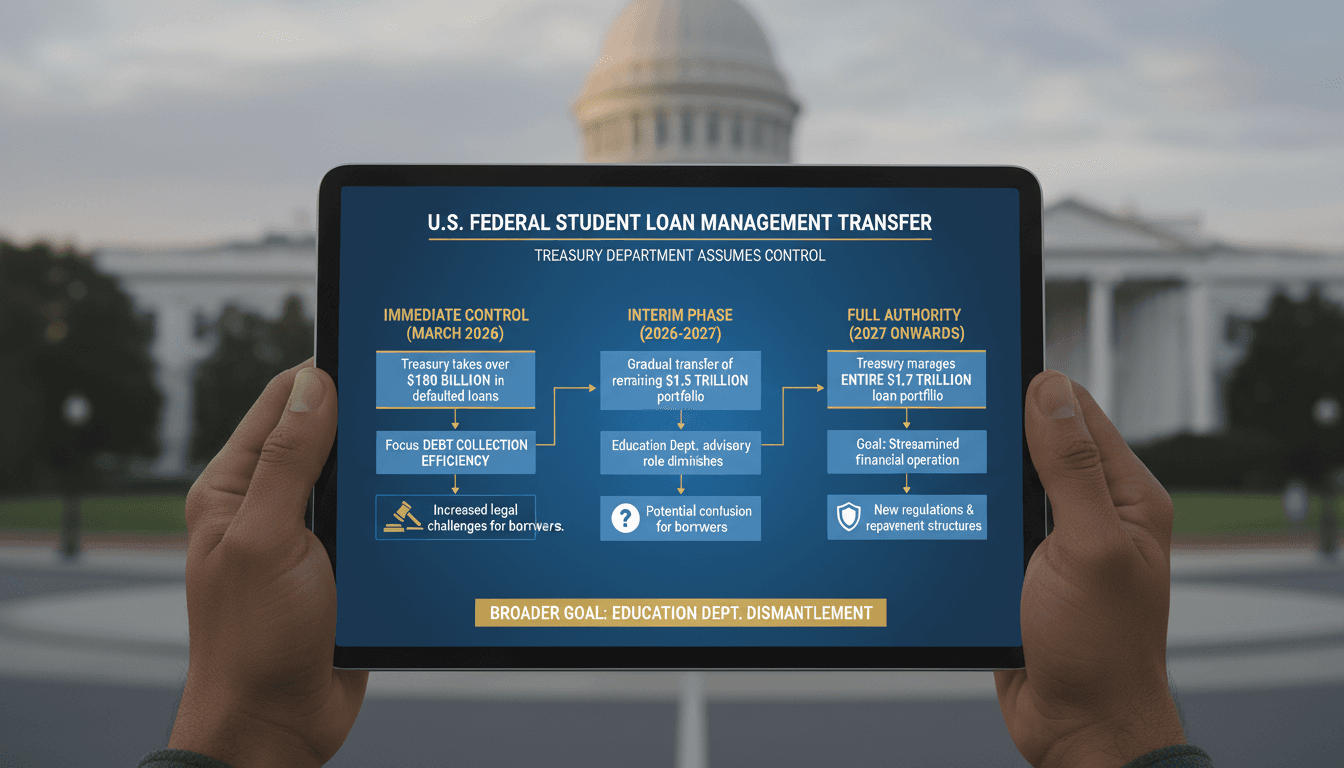
Here's what it means for you.
If you’re a U.S. borrower, this shift could redefine your repayment experience and the efficiency of debt collection.
Why it matters
This transfer impacts 43 million borrowers and could reshape the landscape of federal student loan management.
What happened (in 30 seconds)
- On March 19, 2026, the Trump administration announced the transfer of federal student loan management from the Department of Education to the Department of the Treasury.
- Phase 1 of the transfer is effective immediately, focusing on over $180 billion in defaulted loans affecting 9.2 to 12 million borrowers.
- Future phases will extend to non-defaulted loans and full control over FAFSA and Pell Grants, with no immediate changes for borrowers.
The context you actually need
- The federal student loan portfolio has ballooned to nearly $1.7 trillion, with around 25% of borrowers in default or serious delinquency.
- The Education Department, established in 1980, has historically managed these loans, but the Trump administration is pursuing a strategy to dissolve it and enhance debt collection efficiency.
- This transfer marks the tenth interagency agreement aimed at leveraging the Treasury's expertise in debt collection, including tools like IRS offsets and wage garnishment.
What's really happening
The March 19 announcement represents a significant shift in the management of federal student loans, a program that has been under the purview of the U.S. Department of Education since its inception. The interagency agreement titled "Federal Student Assistance Partnership" outlines a three-phase plan to transfer control to the Treasury.
Phase 1, which has already begun, allows the Treasury to manage over $180 billion in defaulted loans. This affects a substantial number of borrowers—between 9.2 to 12 million—who are currently struggling with their payments. The rationale behind this move is rooted in the high default rates that have plagued the federal student loan system, attributed to previous policies that emphasized loan forgiveness over repayment.
The Trump administration's approach aims to dismantle the Education Department without requiring congressional approval, a strategy that has raised concerns among borrower advocates. They fear that this transition could lead to increased confusion, reduced protections for borrowers, and a heavier burden on households already grappling with debt.
Phases 2 and 3 of the transfer are pending and will extend the Treasury's control to non-defaulted loans and eventually encompass the entire federal student loan portfolio, including the processing of FAFSA applications and Pell Grants. While borrowers will not see immediate changes to their servicers or payment plans, the long-term implications of this transfer could be profound.
The Treasury's expertise in debt collection could lead to more aggressive repayment strategies, which may further complicate the financial landscape for borrowers. The potential for legal challenges looms, as various stakeholders, including states and unions, may contest the legality of this transfer, citing statutory requirements for Education Department oversight.
Who feels it first (and how)
- Defaulted borrowers: Approximately 9.2 to 12 million individuals will experience immediate changes in loan management.
- Higher education institutions: Colleges and universities may face shifts in funding and student enrollment dynamics.
- Borrower advocates: Organizations focused on student debt relief will be directly impacted by the potential legal and operational challenges arising from this transfer.
What to watch next
- Legal challenges: Watch for lawsuits from states and advocacy groups contesting the legality of the transfer, which could delay or alter the implementation of future phases.
- Borrower responses: Monitor how borrowers react to this change, particularly those in default, as they may face new repayment strategies.
- Market reactions: Keep an eye on the financial markets for any shifts in servicer stocks or related sectors as the implications of this transfer unfold.
The transfer of management has begun with defaulted loans, affecting millions of borrowers.
Future phases will expand Treasury's control to non-defaulted loans and other federal student aid programs.
The long-term impact on borrower protections and the overall efficiency of debt collection remains uncertain.
Frequently Asked Questions
- Why it matters?
- This transfer impacts 43 million borrowers and could reshape the landscape of federal student loan management.
- What happened (in 30 seconds)?
- On March 19, 2026, the Trump administration announced the transfer of federal student loan management from the Department of Education to the Department of the Treasury. Phase 1 of the transfer is effective immediately, focusing on over $180 billion in defaulted loans affecting 9.2 to 12 million borrowers. Future phases will extend to non-defaulted loans and full control over FAFSA and Pell Grants, with no immediate changes for borrowers.
- What's really happening?
- The March 19 announcement represents a significant shift in the management of federal student loans, a program that has been under the purview of the U.S. Department of Education since its inception. The interagency agreement titled "Federal Student Assistance Partnership" outlines a three-phase plan to transfer control to the Treasury. Phase 1, which has already begun, allows the Treasury to manage over $180 billion in defaulted loans. This affects a substantial number of borrowers—between 9.
- Who feels it first (and how)?
- Defaulted borrowers: Approximately 9.2 to 12 million individuals will experience immediate changes in loan management. Higher education institutions: Colleges and universities may face shifts in funding and student enrollment dynamics. Borrower advocates: Organizations focused on student debt relief will be directly impacted by the potential legal and operational challenges arising from this transfer.
- What to watch next?
- Legal challenges: Watch for lawsuits from states and advocacy groups contesting the legality of the transfer, which could delay or alter the implementation of future phases. Borrower responses: Monitor how borrowers react to this change, particularly those in default, as they may face new repayment strategies. Market reactions: Keep an eye on the financial markets for any shifts in servicer stocks or related sectors as the implications of this transfer unfold.
Stock market news, investing ideas, and trading analysis.
"TheStreet provides market news and retail-investor-focused analysis."
— A47 Editor
The biggest change to student loans in 45 years is here
The Trump administration has announced a significant change in the management of federal student loans, transferring oversight from the Department of Education to the Treasury Department. This marks the first major shift in the federal student loan p...
Corporate leadership, finance, technology, and market trends.
"Fortune covers financial trends, leadership, and innovation with a pragmatic editorial approach."
— A47 Editor
Scott Bessent’s Treasury Department will start overseeing the $180 billion of student loans that are in default
The U.S. Education Department is transferring oversight of approximately $180 billion in defaulted student loans to the Treasury Department, a move led by Treasury Secretary Scott Bessent. This transition marks a significant shift in the management o...
Right-of-center views on political news.
"The Washington Times is a conservative-leaning newspaper known for its political coverage and advocacy of right-of-center viewpoints."
— A47 Editor
Student loans shifting to Treasury in Education Department overhaul
The Trump administration has announced a three-phase plan to transfer the federal government's nearly $1.7 trillion student loan portfolio from the U.S. Education Department to the U.S. Treasury Department, marking a significant step in its efforts t...
International stories from NPR’s global desk.
"NPR is an American public media organization known for thoughtful reporting and a slightly left-leaning editorial tone."
— A47 Editor
Trump is dismantling democracy, reports find. And, Treasury to take over student loans
Recent studies indicate that the U.S. is experiencing a decline in democratic practices, with reports suggesting that the Trump administration is contributing to this erosion. Additionally, the administration plans to shift the management of federal ...
Macro commentary, policy analysis, growth/inflation themes, and global outlooks.
"Contextual macro coverage that complements day-to-day market headlines."
— A47 Editor
Trump administration moving federal student loan management to Treasury Department
The Trump administration has announced the transfer of federal student loan management responsibilities to the Treasury Department, marking a significant shift in how these loans will be overseen. This move is part of broader efforts to streamline go...
Coverage of national news and events from across the United States.
"HuffPost is known for its progressive editorial stance, offering opinionated yet comprehensive coverage on social, political, and cultural topics."
— A47 Editor
Treasury Department Begins Taking Over Student Loans As The Education Department Gets Dismantled
The Treasury Department has begun the process of taking over the management of federal student loans, marking a significant shift as the Education Department faces dismantlement. This move represents the most substantial step yet in reducing the Educ...
Public radio coverage of American news and issues.
"NPR is an American public media organization known for thoughtful reporting and a slightly left-leaning editorial tone."
— A47 Editor
Federal student loans will move to Treasury, further shrinking Education Department
The Trump administration has announced a significant transition plan that will shift the management of most federal student loans and the Free Application for Federal Student Aid (FAFSA) to the Treasury Department, further reducing the role of the Ed...