
UAE and EU Leaders Address Iranian Missile Threats and Strategic Cooperation
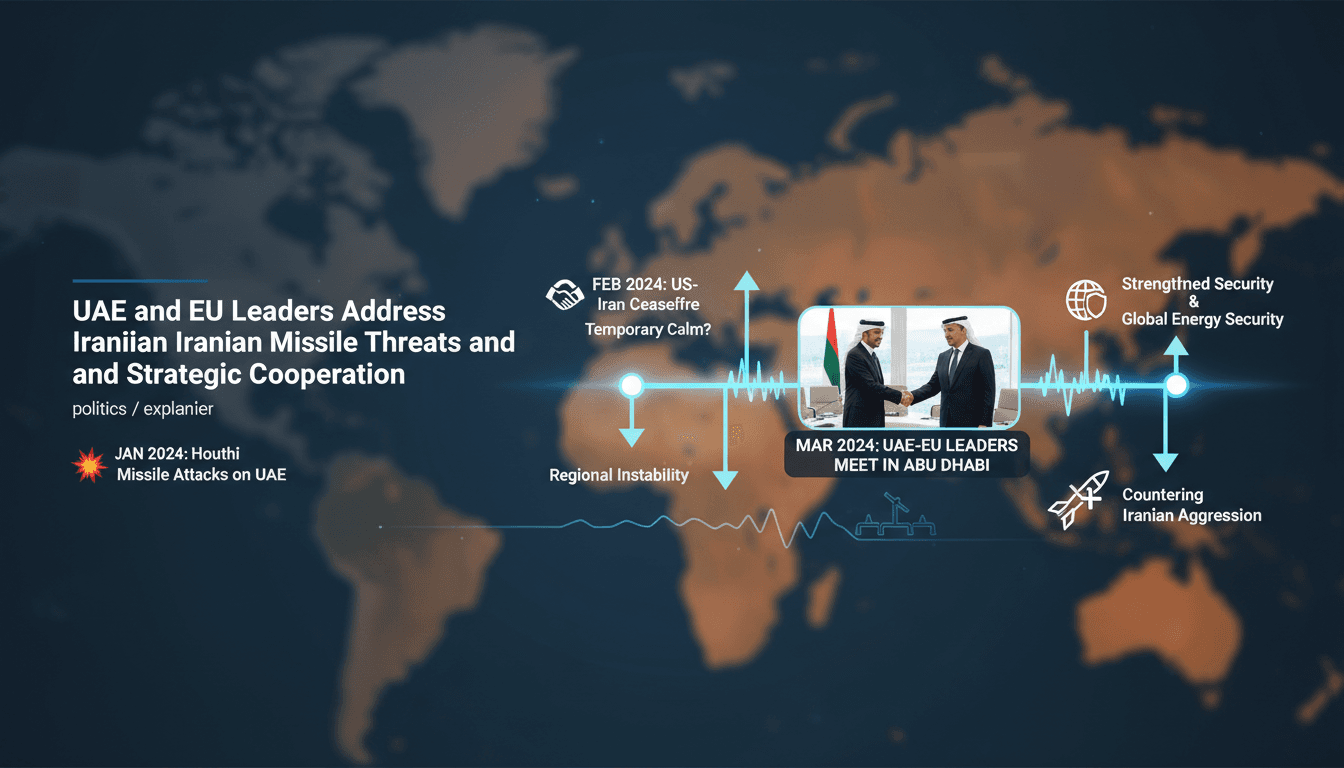
Here's what it means for you.
The evolving geopolitical landscape in the Middle East could impact global energy prices and security protocols in your region.
Why it matters
The recent Iranian missile strikes and subsequent diplomatic engagements signal heightened tensions that could disrupt international markets and energy supplies.
What happened (in 30 seconds)
- Sheikh Abdullah bin Zayed met with Kaja Kallas in Abu Dhabi to discuss Iranian missile attacks and their implications.
- Iran has launched 438 ballistic missiles at UAE targets since late February, leading to significant casualties and damage.
- A U.S.-Iran ceasefire was announced by President Trump, aiming to stabilize the region amid ongoing conflicts.
The context you actually need
- Iran's missile strikes have been characterized by UAE officials as terrorist acts targeting civilian infrastructure, resulting in 11 deaths and over 200 injuries.
- UAE air defenses successfully intercepted most projectiles, showcasing the effectiveness of their military capabilities amid regional tensions.
- Kaja Kallas's visit follows a broader EU strategy to enhance ties with Gulf states, emphasizing the importance of diplomatic relations in maintaining regional stability.
What's really happening
The recent meeting between Sheikh Abdullah bin Zayed Al Nahyan and EU High Representative Kaja Kallas comes at a critical juncture for the UAE and its international partners. Since late February 2026, Iran has escalated its military aggression, launching 438 ballistic missiles at various targets within the UAE. This has raised alarms not only for the UAE but also for neighboring Gulf states, as the strikes are perceived as direct threats to regional stability and civilian safety.
The UAE has been proactive in intercepting these missiles, with air defense systems successfully neutralizing most threats. However, the psychological impact on residents, particularly in Dubai, has been significant, with air raid alerts and debris from interceptions causing anxiety among the expatriate population, which constitutes 90% of Dubai's residents. Despite these challenges, daily life continues, aided by effective defense measures that have minimized casualties locally.
The backdrop of this diplomatic meeting is further complicated by the recent announcement of a two-week ceasefire between the U.S. and Iran, declared by President Trump. This ceasefire aims to alleviate tensions in the Strait of Hormuz, a crucial passage for global energy supplies. The UAE's response has been a mix of military readiness and diplomatic outreach, as they seek to solidify their partnerships with the EU and other global players.
Kallas's visit underscores the EU's commitment to supporting the UAE amidst these tensions. She emphasized the importance of solidarity and cooperation, particularly in light of the fragile ceasefire. The discussions also touched on the broader implications of Iranian aggression and the need for a coordinated response to ensure regional peace. The EU's involvement indicates a strategic pivot towards deeper engagement with Gulf states, recognizing their role in global energy security and geopolitical stability.
As the situation evolves, the UAE's diplomatic efforts will be crucial in shaping the future of its relationships with both European partners and regional adversaries. The outcome of these engagements could influence not only the UAE's security landscape but also global energy markets, as any escalation could lead to disruptions in oil supply and price volatility.
Who feels it first (and how)
- Expatriates in Dubai: Experiencing heightened anxiety due to missile threats and air raid alerts.
- Energy sector professionals: Monitoring potential impacts on oil supply and prices due to regional instability.
- Government officials: Engaged in diplomatic negotiations to ensure national security and international partnerships.
What to watch next
- Iran's military actions: Continued missile strikes or retaliatory measures could escalate tensions and affect regional stability.
- U.S.-Iran relations: The effectiveness of the announced ceasefire will be critical in determining future diplomatic engagements.
- EU's strategic initiatives: Watch for new policies or partnerships emerging from the EU's commitment to Gulf states, which could reshape regional dynamics.
Iranian missile strikes have resulted in casualties and heightened tensions in the Gulf region.
The UAE will continue to strengthen its diplomatic ties with the EU and other global partners in response to Iranian aggression.
The long-term effectiveness of the U.S.-Iran ceasefire and its impact on regional stability remains uncertain.
Frequently Asked Questions
- Why it matters?
- The recent Iranian missile strikes and subsequent diplomatic engagements signal heightened tensions that could disrupt international markets and energy supplies.
- What happened (in 30 seconds)?
- Sheikh Abdullah bin Zayed met with Kaja Kallas in Abu Dhabi to discuss Iranian missile attacks and their implications. Iran has launched 438 ballistic missiles at UAE targets since late February, leading to significant casualties and damage. A U.S.-Iran ceasefire was announced by President Trump, aiming to stabilize the region amid ongoing conflicts.
- What's really happening?
- The recent meeting between Sheikh Abdullah bin Zayed Al Nahyan and EU High Representative Kaja Kallas comes at a critical juncture for the UAE and its international partners. Since late February 2026, Iran has escalated its military aggression, launching 438 ballistic missiles at various targets within the UAE. This has raised alarms not only for the UAE but also for neighboring Gulf states, as the strikes are perceived as direct threats to regional stability and civilian safety. The UAE has be
- Who feels it first (and how)?
- Expatriates in Dubai: Experiencing heightened anxiety due to missile threats and air raid alerts. Energy sector professionals: Monitoring potential impacts on oil supply and prices due to regional instability. Government officials: Engaged in diplomatic negotiations to ensure national security and international partnerships.
- What to watch next?
- Iran's military actions: Continued missile strikes or retaliatory measures could escalate tensions and affect regional stability. U.S.-Iran relations: The effectiveness of the announced ceasefire will be critical in determining future diplomatic engagements. EU's strategic initiatives: Watch for new policies or partnerships emerging from the EU's commitment to Gulf states, which could reshape regional dynamics.
Arabic-language UAE newspaper coverage focused on domestic affairs, public institutions, business, society, and regional developments.
"Al Khaleej coverage generally reflects a mainstream UAE editorial lens with strong attention to public affairs, institutions, and regional developments."
— A47 Editor
عبدالله بن زايد وكايا كالاس يبحثان الاعتداءات الإيرانية الإرهابية
Sheikh Abdullah bin Zayed Al Nahyan, Deputy Prime Minister and Minister of Foreign Affairs, met with European Union High Representative for Foreign Affairs, Kaja Kallas, to discuss Iranian terrorist attacks. The meeting highlights ongoing concerns re...
Arabic-language digital news outlet covering UAE, regional, and international developments with broad general-news coverage.
"Al Ain News coverage typically blends UAE-focused reporting with wider Arab regional and international news."
— A47 Editor
عبدالله بن زايد يبحث مع ممثلة الاتحاد الأوروبي المستجدات الإقليمية
Sheikh Abdullah bin Zayed Al Nahyan, the UAE's Deputy Prime Minister and Minister of Foreign Affairs, met with Josep Borrell, the European Union's High Representative for Foreign Affairs and Security Policy, to discuss regional developments. This mee...