
IMF and World Bank Warn Developing Economies Face Severe Economic Fallout from Iran War
Here's what it means for you.
Rising energy costs and inflation could disrupt global markets, affecting your business operations and investment strategies.
What happened
IMF and World Bank officials warned that economic disruptions from the ongoing Iran war will severely affect poor countries.
The Context
- Vulnerabilities in developing economies: Low-income nations are particularly exposed to surging oil prices, inflation, and food shortages due to the conflict.
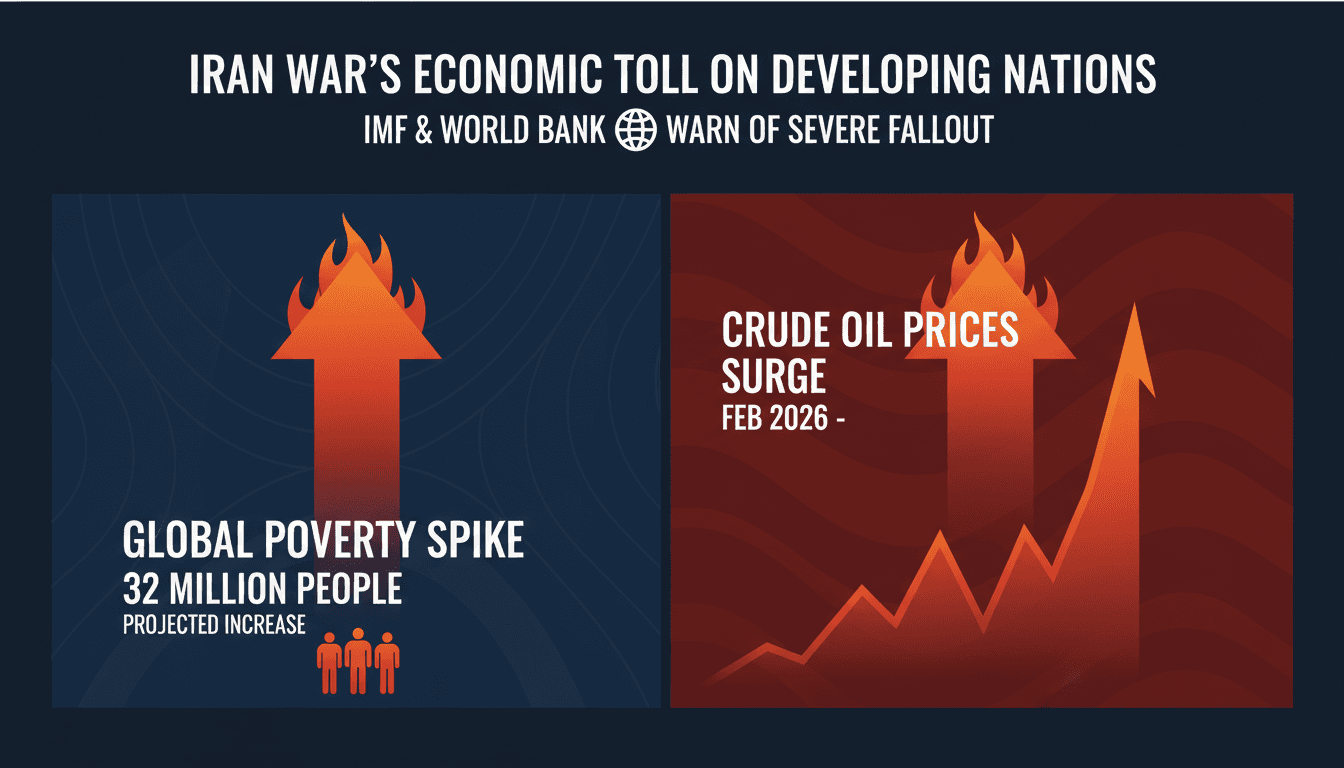
- Escalating energy costs: Oil prices have surged over 55% to $112+ per barrel, prompting rationing in Asia and Africa.
- Projected poverty increase: An estimated 32 million people worldwide are expected to fall into poverty as a result of war-induced economic shocks.
The Number
— This figure represents the number of people projected to fall into poverty due to the economic fallout from the war, highlighting the potential for increased market instability and humanitarian crises.
Takeaway
As the conflict continues, expect ongoing volatility in energy markets and potential ripple effects on global supply chains.
Editor-curated FT homepage stories spanning markets, business, world, and opinion.
"The Financial Times is a globally respected business publication with a centrist/center-left tone and strong markets focus."
— A47 Editor
Economic pain from Iran war will hit poor countries hardest, officials say
The ongoing conflict in Iran is expected to have severe economic repercussions, particularly for developing countries, as highlighted during the recent IMF and World Bank spring meetings. Officials warned that many of these nations may require additi...
UK and international business news, economics, and corporate coverage.
"The Guardian’s business section covers finance and markets with a progressive editorial tone."
— A47 Editor
‘It’s a twilight zone’: Iran war casts deep shadows over IMF gathering in Washington
The ongoing conflict in Iran has cast a significant shadow over the International Monetary Fund (IMF) meetings in Washington, where global finance leaders, including Rachel Reeves, highlighted the severe impact of rising energy prices on households a...
Global markets, investing, and macroeconomics from a premier financial newsroom.
"Bloomberg is respected for in-depth financial reporting and data-driven analysis."
— A47 Editor
IMF, World Bank Navigate Economic Fallout From Iran War
The International Monetary Fund (IMF) and World Bank are grappling with the economic fallout from the ongoing conflict in Iran, as highlighted during their recent meetings. The atmosphere was notably grim, reflecting concerns over a potential new eco...
Social/economic commentary and analysis relevant to business and markets.
"WSJ blends data-driven economic insight with commentary on policy and society."
— A47 Editor
World leaders, bankers and investors who convened this week for the International Monetary Fund and World Bank’s spring meetings were in a dour mood
The ongoing conflict in Iran has cast a shadow over the outlook of world finance ministers and investors, as participants at the recent IMF and World Bank spring meetings expressed concerns about prolonged economic and financial turbulence. Predictio...
Global political, business, and cultural coverage from WSJ international desks.
"The Wall Street Journal offers extensive international reporting with a reputation for financial insight and a center-right editorial stance."
— A47 Editor
Iran War Casts Gloom Over Outlook of World Finance Ministers and Investors
The ongoing conflict in Iran has cast a shadow over the outlook of world finance ministers and investors, as participants at the recent IMF and World Bank spring meetings expressed concerns about prolonged economic and financial turbulence. Predictio...