
GlaxoSmithKline Withdraws FDA Application for Leucovorin Calcium
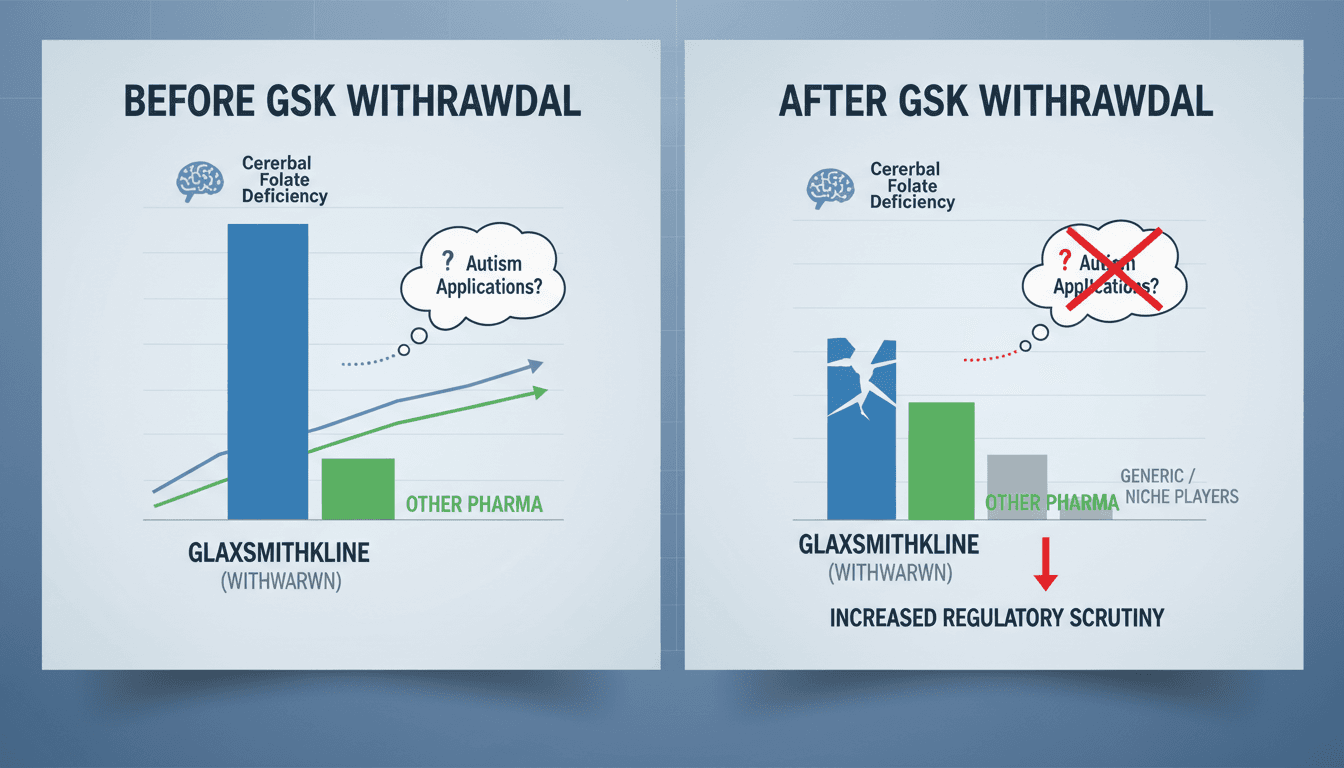
Here's what it means for you.
If you're in the healthcare sector, this withdrawal could signal shifts in drug approval strategies and market dynamics.
Why it matters
The withdrawal of GSK's application highlights the complexities of drug marketing and regulatory approval in the U.S. pharmaceutical landscape.
What happened (in 30 seconds)
- GSK withdrew its FDA application for Leucovorin calcium on April 9, 2026, citing a lack of market presence.
- The FDA recently approved the drug for cerebral folate deficiency, a rare neurological condition linked to autism.
- Generic versions of leucovorin remain available, mitigating immediate impacts on treatment options.
The context you actually need
- Leucovorin calcium, marketed as Wellcovorin, was initially approved in 1983 but ceased marketing in 1997 due to generic competition.
- In September 2025, the FDA revived the drug's application to explore its use for cerebral folate deficiency, a condition associated with autistic features.
- Despite FDA approval in March 2026, GSK's withdrawal suggests challenges in aligning market strategy with regulatory frameworks.
What's really happening
GlaxoSmithKline's (GSK) decision to withdraw its FDA application for Leucovorin calcium is rooted in a complex interplay of market dynamics, regulatory challenges, and shifting healthcare priorities. Initially approved in 1983 for various oncology indications, Wellcovorin saw a decline in market presence after GSK ceased marketing in 1997 due to the influx of generic alternatives. The drug's journey took a turn in September 2025 when the FDA, under initiatives promoting autism treatments, revived the New Drug Application (NDA) to explore its potential for treating cerebral folate deficiency (CFD), a rare condition linked to autistic features.
The FDA's approval in March 2026 was limited to specific genetic variants associated with CFD, reflecting the agency's cautious approach amid insufficient evidence for broader autism applications. This nuanced approval highlights the delicate balance between regulatory oversight and the pharmaceutical industry's push for new treatment avenues. However, GSK's subsequent withdrawal of the application just weeks later raises questions about the company's commitment to the drug and its market viability.
The withdrawal indicates that GSK may not see a profitable path forward for Leucovorin in the current market landscape, especially given the availability of generic alternatives. This scenario underscores the challenges pharmaceutical companies face when navigating regulatory approvals, market competition, and evolving healthcare needs. The FDA's focus on specific genetic markers for approval also suggests a trend toward precision medicine, where treatments are tailored to individual genetic profiles rather than broad applications.
Moreover, the withdrawal could signal a shift in how pharmaceutical companies approach drug development and marketing strategies, particularly in niche markets like autism-related conditions. As GSK steps back, the landscape may open for other players to explore similar treatments or alternative therapies, potentially reshaping the market dynamics for autism-related healthcare solutions.
In summary, GSK's withdrawal from the FDA application process for Leucovorin calcium reflects broader trends in the pharmaceutical industry, where regulatory challenges and market competition dictate the viability of drug development. As companies adapt to these realities, the implications for treatment options and healthcare strategies will continue to evolve.
Who feels it first (and how)
- Pharmaceutical companies: They may reassess their strategies for niche drug approvals and market entries.
- Healthcare providers: Physicians may need to navigate the implications of limited treatment options for conditions like cerebral folate deficiency.
- Patients and families: Those affected by autism-related conditions might experience uncertainty regarding available treatments and their efficacy.
What to watch next
- Market response: Watch for shifts in stock prices and market strategies from GSK and competitors in the wake of this withdrawal.
- Regulatory trends: Monitor how the FDA's approach to drug approvals evolves, particularly for treatments related to autism and rare conditions.
- Emerging therapies: Keep an eye on new entrants in the market that may seek to fill the gap left by GSK's withdrawal.
GSK has withdrawn its application for Leucovorin calcium; generic versions remain available.
Other pharmaceutical companies may seek to explore similar treatments for cerebral folate deficiency or autism-related conditions.
The long-term impact on treatment options for patients with autism and related conditions remains uncertain.
Frequently Asked Questions
- Why it matters?
- The withdrawal of GSK's application highlights the complexities of drug marketing and regulatory approval in the U.S. pharmaceutical landscape.
- What happened (in 30 seconds)?
- GSK withdrew its FDA application for Leucovorin calcium on April 9, 2026, citing a lack of market presence. The FDA recently approved the drug for cerebral folate deficiency, a rare neurological condition linked to autism. Generic versions of leucovorin remain available, mitigating immediate impacts on treatment options.
- What's really happening?
- GlaxoSmithKline's (GSK) decision to withdraw its FDA application for Leucovorin calcium is rooted in a complex interplay of market dynamics, regulatory challenges, and shifting healthcare priorities. Initially approved in 1983 for various oncology indications, Wellcovorin saw a decline in market presence after GSK ceased marketing in 1997 due to the influx of generic alternatives. The drug's journey took a turn in September 2025 when the FDA, under initiatives promoting autism treatments, revive
- Who feels it first (and how)?
- Pharmaceutical companies: They may reassess their strategies for niche drug approvals and market entries. Healthcare providers: Physicians may need to navigate the implications of limited treatment options for conditions like cerebral folate deficiency. Patients and families: Those affected by autism-related conditions might experience uncertainty regarding available treatments and their efficacy.
- What to watch next?
- Market response: Watch for shifts in stock prices and market strategies from GSK and competitors in the wake of this withdrawal. Regulatory trends: Monitor how the FDA's approach to drug approvals evolves, particularly for treatments related to autism and rare conditions. Emerging therapies: Keep an eye on new entrants in the market that may seek to fill the gap left by GSK's withdrawal.
Market-moving headlines impacting equities, bonds, and related risk assets.
"Real-time catalysts and volatility drivers across indices and sectors."
— A47 Editor
GSK withdraws autism drug application
GSK has officially withdrawn its application for a drug intended to treat autism, a decision that reflects ongoing challenges in the pharmaceutical development process. This withdrawal may impact the company's reputation and investor confidence as it...
Public health, medical research, healthcare policy, and pharmaceutical developments.
"Dow Jones is a major financial news provider with a professional tone and broad coverage, including specialized health-sector reporting."
— A47 Editor
GSK withdrew an application for a drug touted by Trump and RFK Jr. as a potential treatment for autism
GSK has withdrawn its application for a drug previously promoted by Donald Trump and Robert F. Kennedy Jr. as a potential treatment for autism, although generic versions of the drug will remain available for a rare genetic condition. This decision re...