
Trump Orders Continued Military Presence Around Iran Until Ceasefire Compliance Is Met
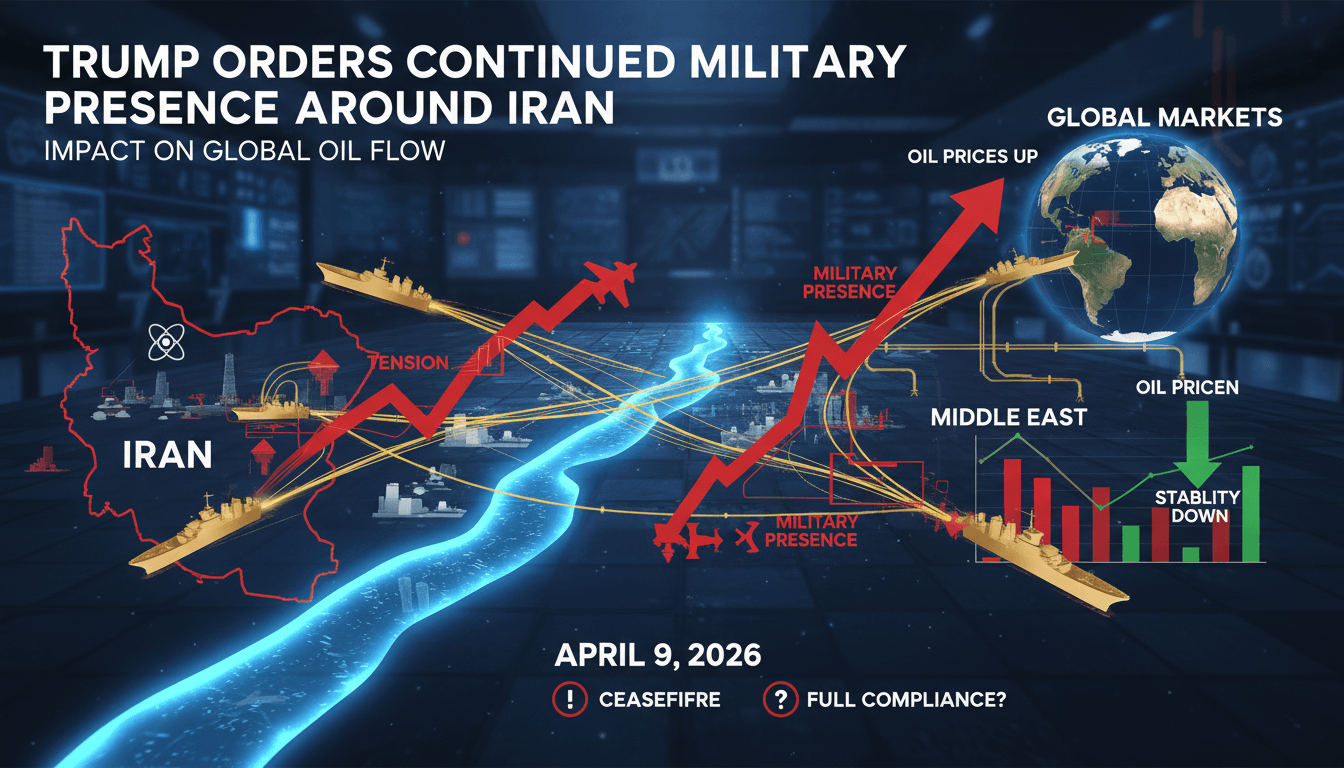
Here's what it means for you.
If you work in global trade or energy sectors, the ongoing military presence around Iran could impact shipping routes and oil prices.
Why it matters
The U.S. military's strategic positioning around Iran directly influences global oil markets and geopolitical stability in the Middle East.
What happened (in 30 seconds)
- On April 9, 2026, President Trump announced the continuation of U.S. military deployments around Iran until a ceasefire agreement is fully complied with.
- A fragile two-week ceasefire was established after weeks of escalation in the U.S.-Iran war, which included significant military actions by both the U.S. and Israel.
- Trump warned of intensified action if Iran fails to meet conditions regarding nuclear weapons and the reopening of the Strait of Hormuz.
The context you actually need
- The 2026 Iran War began in late February, triggered by U.S. and Israeli airstrikes on Iranian targets due to concerns over nuclear advancements.
- Over 1,900 fatalities have been reported in Iran from the conflict, highlighting the war's severe humanitarian impact.
- The Strait of Hormuz is a critical chokepoint for global oil shipments, making its security essential for international trade and energy prices.
What's really happening
The U.S. military's decision to maintain a presence around Iran stems from a complex interplay of geopolitical tensions, energy security, and international diplomacy. Following the escalation of hostilities that began in late February 2026, the U.S. and Israel launched airstrikes against Iranian military targets. These actions were primarily motivated by fears of Iran's advancing nuclear capabilities and its closure of the Strait of Hormuz, a vital artery for global oil transport.
The ceasefire agreement reached on April 7-8 was a temporary measure, allowing for a pause in hostilities while negotiations took place. However, Trump's announcement to keep U.S. forces deployed signals a readiness to respond to any violations of the ceasefire terms. This includes Iran's commitment to halt its nuclear activities and ensure the Strait of Hormuz remains open for navigation.
The implications of this military posture are significant. The U.S. is leveraging its military presence not only to deter Iranian aggression but also to reassure its allies in the region, particularly Israel and the Gulf states. The ongoing military readiness could prevent a return to full-scale conflict, but it also risks escalating tensions if Iran perceives this as a threat.
Moreover, the economic ramifications are palpable. Global markets reacted positively to the ceasefire news, with oil prices dropping below $95 per barrel, reflecting investor optimism about stability in the region. However, the fragility of the ceasefire means that any misstep could lead to renewed conflict, which would likely send oil prices soaring and disrupt global supply chains.
The situation is further complicated by the humanitarian crisis unfolding in Iran, where over 1,900 fatalities have been reported due to the conflict. International organizations are calling for a broader ceasefire that includes the violence in Lebanon, where Israeli strikes have killed over 250 people. This adds another layer of complexity to the negotiations and the potential for a lasting peace.
In summary, the U.S. military's continued deployment around Iran is a strategic move aimed at maintaining regional stability while navigating a delicate balance of power. The outcome of this situation will have far-reaching effects on global markets, security dynamics, and humanitarian conditions in the region.
Who feels it first (and how)
- Global Traders: Changes in oil prices and shipping routes will directly affect trade margins and logistics.
- Energy Sector Workers: Fluctuations in oil prices can impact job stability and investment in energy projects.
- Residents of the UAE: Increased military presence may lead to heightened security measures and economic fluctuations in the region.
- Diplomats and Policy Makers: Ongoing negotiations and potential escalations will shape foreign policy and international relations.
What to watch next
- Iran's compliance with ceasefire terms: Monitoring Iran's actions regarding nuclear activities and the Strait of Hormuz will be crucial for assessing future stability.
- Market reactions to military developments: Watch for fluctuations in oil prices and stock market responses to any escalations or agreements.
- International diplomatic efforts: The involvement of global powers in mediating the conflict could signal shifts in geopolitical alliances and strategies.
The U.S. military will remain deployed around Iran until compliance with ceasefire terms is achieved.
Continued tensions between the U.S., Iran, and Israel will persist, influencing regional stability.
The long-term effectiveness of the ceasefire and the potential for a lasting peace agreement remain uncertain.
Frequently Asked Questions
- Why it matters?
- The U.S. military's strategic positioning around Iran directly influences global oil markets and geopolitical stability in the Middle East.
- What happened (in 30 seconds)?
- On April 9, 2026, President Trump announced the continuation of U.S. military deployments around Iran until a ceasefire agreement is fully complied with. A fragile two-week ceasefire was established after weeks of escalation in the U.S.-Iran war, which included significant military actions by both the U.S. and Israel. Trump warned of intensified action if Iran fails to meet conditions regarding nuclear weapons and the reopening of the Strait of Hormuz.
- What's really happening?
- The U.S. military's decision to maintain a presence around Iran stems from a complex interplay of geopolitical tensions, energy security, and international diplomacy. Following the escalation of hostilities that began in late February 2026, the U.S. and Israel launched airstrikes against Iranian military targets. These actions were primarily motivated by fears of Iran's advancing nuclear capabilities and its closure of the Strait of Hormuz, a vital artery for global oil transport. The ceasefire
- Who feels it first (and how)?
- Global Traders: Changes in oil prices and shipping routes will directly affect trade margins and logistics. Energy Sector Workers: Fluctuations in oil prices can impact job stability and investment in energy projects. Residents of the UAE: Increased military presence may lead to heightened security measures and economic fluctuations in the region. Diplomats and Policy Makers: Ongoing negotiations and potential escalations will shape foreign policy and international relations.
- What to watch next?
- Iran's compliance with ceasefire terms: Monitoring Iran's actions regarding nuclear activities and the Strait of Hormuz will be crucial for assessing future stability. Market reactions to military developments: Watch for fluctuations in oil prices and stock market responses to any escalations or agreements. International diplomatic efforts: The involvement of global powers in mediating the conflict could signal shifts in geopolitical alliances and strategies.
Macro commentary, policy analysis, growth/inflation themes, and global outlooks.
"Contextual macro coverage that complements day-to-day market headlines."
— A47 Editor
Iran prepares for U.S. talks as Hormuz curbs and Lebanon fighting cloud truce
Iran is preparing for talks with the U.S. amid a fragile two-week ceasefire, which is intended to ease military tensions in the Middle East, particularly concerning the Strait of Hormuz and ongoing conflicts in Lebanon. The ceasefire is contingent up...
UAE-based English-language newspaper covering regional politics, economics, and global affairs.
"The National reflects Emirati policy perspectives while maintaining international editorial standards."
— A47 Editor
Iran war latest: Netanyahu suggests 'direct talks' with Lebanon on Hezbollah
Israeli Prime Minister Benjamin Netanyahu has suggested the possibility of 'direct talks' with Lebanon regarding Hezbollah, amid ongoing tensions in the region. This statement comes as military operations continue, particularly with Israel's airstrik...
Arabic-language political and world news coverage for UAE readers.
"Emarat Al Youm world coverage usually presents international developments through a UAE and Arab audience lens."
— A47 Editor
ترامب يهدد إيران: إذا لم تلتزم بالاتفاق سنشن أقوى هجوم على الإطلاق ترامب يهدد إيران: إذا لم تلتزم بالاتفاق سنشن أقوى هجوم على الإطلاق
U.S. President Donald Trump has issued a stark ultimatum to Iran, threatening to launch the strongest military attack ever if Tehran fails to comply with the terms of a ceasefire agreement and reopen the strategically vital Strait of Hormuz. This war...
Oil, metals, and agriculture: supply/demand headlines, OPEC chatter, inventories, and price action.
"Solid tape for energy and metals traders tracking macro and micro catalysts."
— A47 Editor
Trump says US military to stay around Iran; threatens action if Tehran fails to comply with deal
Former President Donald Trump announced that U.S. military forces will remain stationed near Iran and threatened potential actions if Tehran does not adhere to the terms of a recent ceasefire agreement. This announcement follows a two-week ceasefire ...
Breaking news, politics, business, and entertainment from the U.S. and around the world.
"The New York Post is a tabloid-format newspaper known for its sensationalist headlines and conservative-leaning editorial tone."
— A47 Editor
Trump threatens ‘bigger, and better, and stronger’ military response if Iran doesn’t comply with deal — or else ‘shootin’ starts’
President Donald Trump has intensified his threats against Iran, stating that all U.S. military assets will remain in the region until Iran complies with a deal, warning that failure to do so could lead to a significant military response. He emphasiz...