
Quantum Computers Achieve Exponential Advantage in AI Data Processing
Here's what it means for you.
If you work in AI or data science, this breakthrough could significantly enhance your ability to process large datasets efficiently.
Why it matters
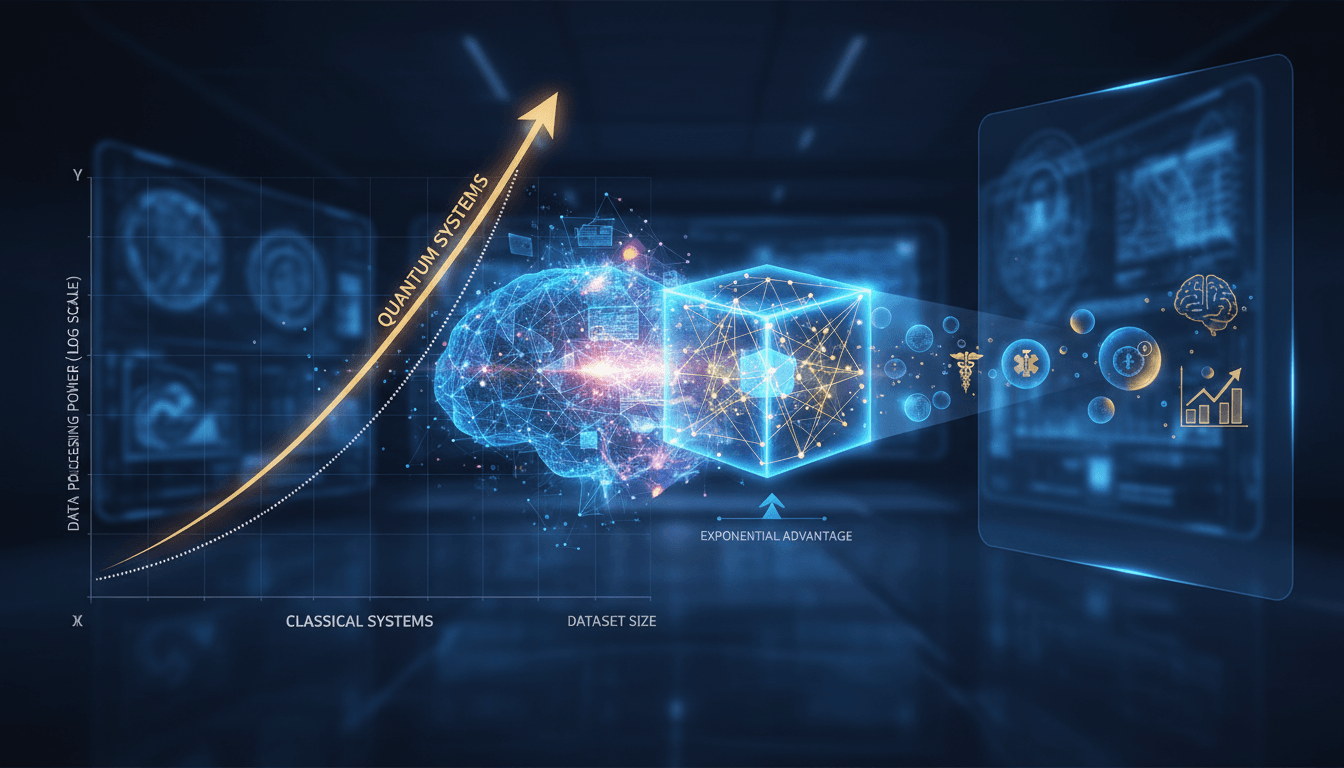
This development signals a pivotal shift in how quantum computing can be leveraged to outperform classical systems in machine learning tasks.
What happened (in 30 seconds)
- On April 20, 2026, New Scientist reported on a preprint by Haimeng Zhao and collaborators demonstrating exponential advantages of quantum computers in AI tasks.
- The research shows that quantum machines with fewer than 60 logical qubits can outperform classical systems in processing massive datasets.
- The method utilizes quantum oracle sketching and classical shadows to handle data in real-time, overcoming previous memory limitations.
The context you actually need
- Quantum machine learning has faced skepticism due to difficulties in managing large classical datasets and prior algorithms being adapted for classical simulation.
- Recent advancements in quantum error correction and logical qubits have improved hardware capabilities, but data processing remained a significant barrier until now.
- The new theoretical framework allows for on-the-fly data processing, making it feasible to apply quantum computing to real-world AI applications like single-cell RNA sequencing and sentiment analysis.
What's really happening
The recent preprint by Haimeng Zhao and collaborators marks a significant milestone in quantum machine learning, demonstrating that quantum computers can achieve exponential advantages over classical systems in specific AI tasks. The research focuses on the use of quantum oracle sketching and classical shadows, which enable quantum machines to process data in batches on-the-fly. This approach circumvents the memory bottlenecks that have historically limited the application of quantum computing in handling large datasets.
The core of the breakthrough lies in the ability of quantum systems to leverage superposition and entanglement, allowing them to explore multiple solutions simultaneously. This contrasts sharply with classical systems, which must evaluate each solution sequentially. The findings indicate that quantum machines with fewer than 60 logical qubits can achieve a size reduction of 4-6 orders of magnitude compared to classical counterparts when processing massive datasets. This is particularly relevant for applications in fields such as genomics and natural language processing, where the volume of data can be overwhelming.
The implications of this research extend beyond theoretical interest; they suggest a pathway for practical applications in various industries. For instance, in healthcare, the ability to analyze single-cell RNA sequencing data more efficiently could lead to faster and more accurate diagnostics. In finance, enhanced sentiment analysis could improve market predictions and investment strategies. The feasibility of implementing these quantum algorithms with near-term hardware is a crucial aspect that has garnered attention, as it suggests that the transition from theory to practice may be closer than previously thought.
However, experts caution that while the theoretical groundwork is laid, the actual implementation of these quantum algorithms on hardware remains a challenge. Issues such as dequantization risks and the need for robust quantum error correction must be addressed before widespread adoption can occur. Nevertheless, the momentum generated by this research is likely to accelerate investments in quantum computing and machine learning, particularly in regions like the UAE, where national strategies are already integrating quantum technologies with AI.
Who feels it first (and how)
- Data Scientists: Enhanced capabilities in processing large datasets will improve their analytical power.
- Healthcare Professionals: Faster data processing can lead to quicker diagnostics and treatment plans.
- Financial Analysts: Improved sentiment analysis tools will refine market predictions and investment strategies.
- Tech Companies: Firms focused on AI and quantum computing will benefit from competitive advantages in data processing.
- UAE Residents: Local initiatives in quantum technology and AI integration will enhance smart city applications and services.
What to watch next
- Hardware Development: Monitor advancements in quantum hardware that can support the implementation of these algorithms, as this will determine the pace of adoption.
- Investment Trends: Watch for increased funding in quantum computing startups and research initiatives, particularly in regions prioritizing quantum technology.
- Real-World Applications: Keep an eye on case studies and pilot projects that demonstrate the practical use of quantum machine learning in various sectors.
Quantum computers can outperform classical systems in specific AI tasks with fewer than 60 logical qubits.
The integration of quantum computing in industries like healthcare and finance will accelerate as practical applications emerge.
The timeline for widespread adoption of these quantum algorithms in real-world scenarios remains uncertain.
Frequently Asked Questions
- Why it matters?
- This development signals a pivotal shift in how quantum computing can be leveraged to outperform classical systems in machine learning tasks.
- What happened (in 30 seconds)?
- On April 20, 2026, New Scientist reported on a preprint by Haimeng Zhao and collaborators demonstrating exponential advantages of quantum computers in AI tasks. The research shows that quantum machines with fewer than 60 logical qubits can outperform classical systems in processing massive datasets. The method utilizes quantum oracle sketching and classical shadows to handle data in real-time, overcoming previous memory limitations.
- What's really happening?
- The recent preprint by Haimeng Zhao and collaborators marks a significant milestone in quantum machine learning, demonstrating that quantum computers can achieve exponential advantages over classical systems in specific AI tasks. The research focuses on the use of quantum oracle sketching and classical shadows, which enable quantum machines to process data in batches on-the-fly. This approach circumvents the memory bottlenecks that have historically limited the application of quantum computing i
- Who feels it first (and how)?
- Data Scientists: Enhanced capabilities in processing large datasets will improve their analytical power. Healthcare Professionals: Faster data processing can lead to quicker diagnostics and treatment plans. Financial Analysts: Improved sentiment analysis tools will refine market predictions and investment strategies. Tech Companies: Firms focused on AI and quantum computing will benefit from competitive advantages in data processing. UAE Residents: Local initiatives in quantum technology
- What to watch next?
- Hardware Development: Monitor advancements in quantum hardware that can support the implementation of these algorithms, as this will determine the pace of adoption. Investment Trends: Watch for increased funding in quantum computing startups and research initiatives, particularly in regions prioritizing quantum technology. Real-World Applications: Keep an eye on case studies and pilot projects that demonstrate the practical use of quantum machine learning in various sectors.
Tech coverage including AI and robotics.
"Accessible science/tech magazine with AI coverage."
— A47 Editor
We might finally know how to use quantum computers to boost AI
Recent analyses suggest that quantum computers may finally provide significant advantages for artificial intelligence (AI) applications, particularly in enhancing machine learning algorithms. This development marks a shift in the long-held skepticism...
Discoveries, research, environment, and health innovations.
"New Scientist is a well-respected publication offering accessible science news, commentary, and expert analysis."
— A47 Editor
We might finally know how to use quantum computers to boost AI
Recent analyses indicate that quantum computers may soon provide significant advantages in executing machine learning and similar algorithms, challenging previous skepticism about their practical applications in artificial intelligence (AI).