
Iran Acquires Chinese Spy Satellite to Target US Military Bases in Middle East
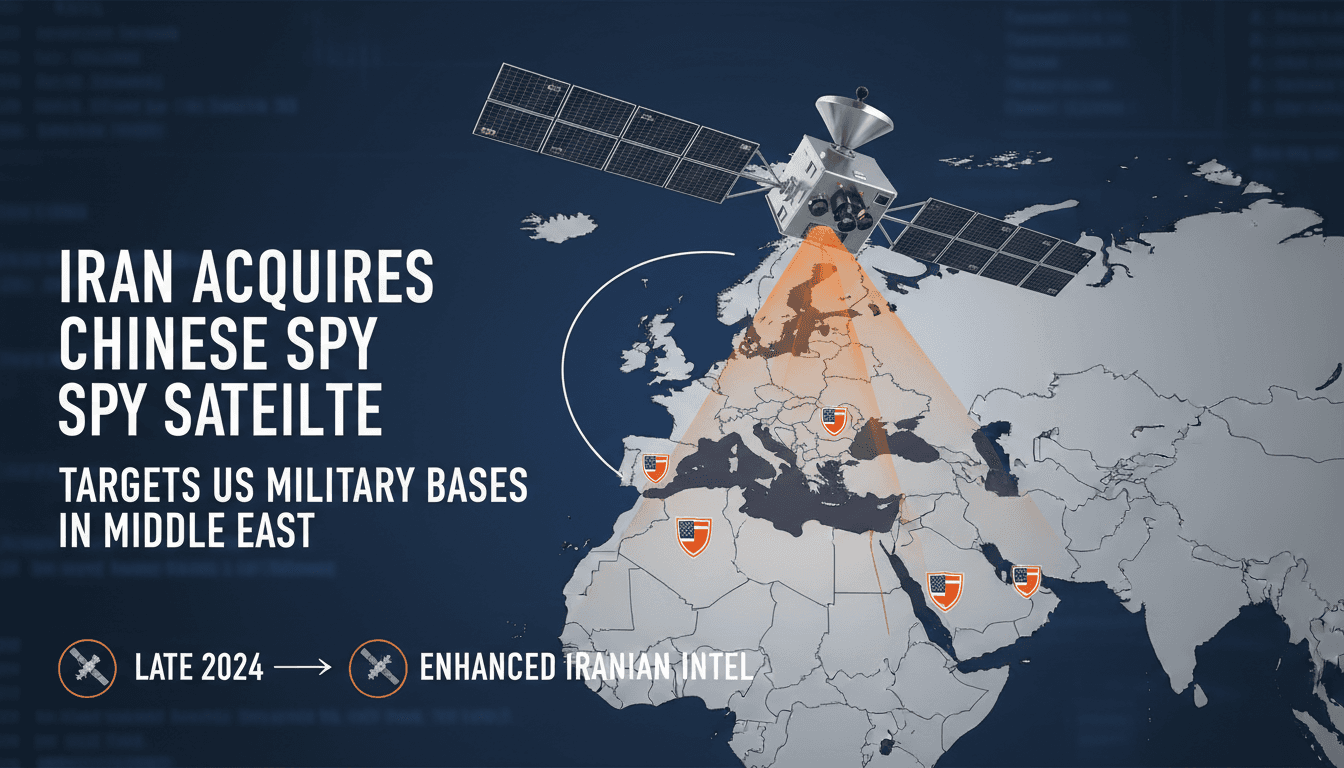
Here's what it means for you.
The escalation of military surveillance capabilities in the Middle East could directly impact global oil prices and regional security dynamics.
Why it matters
This development signals a significant shift in intelligence capabilities that could alter military strategies and geopolitical stability in the region.
What happened (in 30 seconds)
- Iran's Islamic Revolutionary Guard Corps (IRGC) acquired the Chinese-built TEE-01B spy satellite in late 2024 for approximately $37 million.
- In March 2026, the satellite was used to surveil U.S. military bases in the Middle East, enhancing Iran's targeting capabilities amid ongoing conflict.
- A Financial Times investigation revealed these activities on April 15, 2026, based on leaked documents and satellite imagery.
The context you actually need
- Iran's military strategy has increasingly relied on external technology due to limitations in its indigenous satellite capabilities, particularly in reconnaissance.
- The 2026 Iran-U.S. war escalated following U.S.-Israeli strikes on Iranian targets, prompting Iran to enhance its military response through improved intelligence.
- China's involvement in providing advanced satellite technology raises concerns about the implications for U.S. military operations and regional security.
What's really happening
In late 2024, the IRGC Aerospace Force made a strategic decision to acquire the TEE-01B satellite from the Chinese firm Earth Eye. This acquisition was driven by Iran's need for enhanced reconnaissance capabilities, particularly following a series of U.S.-Israeli strikes that escalated tensions in the region. The TEE-01B offers high-resolution imagery at 0.5-meter resolution, significantly sharper than Iran's domestic satellites, which operate at a 5-meter resolution. This capability allows Iran to identify individual aircraft and vehicles, providing a tactical advantage in military operations.
By March 2026, the IRGC utilized the TEE-01B to gather intelligence on key U.S. military installations, including the Prince Sultan Air Base in Saudi Arabia and the Muwaffaq Salti Air Base in Jordan. The satellite's imagery was crucial for pre-strike targeting and post-strike assessments during Iranian drone and missile operations. This intelligence-gathering effort coincided with a period of heightened military activity, as Iran retaliated against perceived threats from the U.S. and Israel.
The Financial Times investigation, published on April 15, 2026, revealed the extent of Iran's surveillance capabilities, based on leaked documents that included coordinates and images captured by the TEE-01B. The report highlighted the strategic implications of Iran's enhanced intelligence capabilities, which could shift the balance of power in the region.
China's involvement in this acquisition has drawn scrutiny, with the Chinese Foreign Ministry denying any connection to the report. The geopolitical ramifications are significant, as the U.S. and its allies may need to reassess their military strategies in light of Iran's improved surveillance and targeting capabilities. The situation is further complicated by the volatile oil markets, which have seen prices surge due to fears of conflict in the Strait of Hormuz, a critical chokepoint for global oil supply.
Who feels it first (and how)
- U.S. Military: Increased operational risks and potential for targeted attacks on bases.
- Oil Markets: Traders and consumers face volatility in prices, impacting fuel costs and inflation.
- Gulf States: Heightened security concerns and potential military escalations could affect regional stability.
- International Businesses: Companies operating in the Middle East may experience disruptions due to increased tensions and conflict risks.
What to watch next
- U.S. Military Response: Monitor any changes in U.S. military posture in the Middle East, which could indicate a shift in strategy.
- Oil Price Fluctuations: Keep an eye on Brent crude prices, as further escalations could drive prices above $120/barrel, impacting global markets.
- Iran's Military Developments: Watch for advancements in Iran's military capabilities and any new acquisitions that could further enhance its surveillance and strike capabilities.
Iran acquired the TEE-01B satellite from China for military surveillance.
The U.S. and its allies will reassess their military strategies in response to Iran's enhanced capabilities.
The long-term implications for U.S.-Iran relations and regional stability remain uncertain.
Frequently Asked Questions
- Why it matters?
- This development signals a significant shift in intelligence capabilities that could alter military strategies and geopolitical stability in the region.
- What happened (in 30 seconds)?
- Iran's Islamic Revolutionary Guard Corps (IRGC) acquired the Chinese-built TEE-01B spy satellite in late 2024 for approximately $37 million. In March 2026, the satellite was used to surveil U.S. military bases in the Middle East, enhancing Iran's targeting capabilities amid ongoing conflict. A Financial Times investigation revealed these activities on April 15, 2026, based on leaked documents and satellite imagery.
- What's really happening?
- In late 2024, the IRGC Aerospace Force made a strategic decision to acquire the TEE-01B satellite from the Chinese firm Earth Eye. This acquisition was driven by Iran's need for enhanced reconnaissance capabilities, particularly following a series of U.S.-Israeli strikes that escalated tensions in the region. The TEE-01B offers high-resolution imagery at 0.5-meter resolution, significantly sharper than Iran's domestic satellites, which operate at a 5-meter resolution. This capability allows Iran
- Who feels it first (and how)?
- U.S. Military: Increased operational risks and potential for targeted attacks on bases. Oil Markets: Traders and consumers face volatility in prices, impacting fuel costs and inflation. Gulf States: Heightened security concerns and potential military escalations could affect regional stability. International Businesses: Companies operating in the Middle East may experience disruptions due to increased tensions and conflict risks.
- What to watch next?
- U.S. Military Response: Monitor any changes in U.S. military posture in the Middle East, which could indicate a shift in strategy. Oil Price Fluctuations: Keep an eye on Brent crude prices, as further escalations could drive prices above $120/barrel, impacting global markets. Iran's Military Developments: Watch for advancements in Iran's military capabilities and any new acquisitions that could further enhance its surveillance and strike capabilities.
Arabic-language UAE newspaper coverage focused on domestic affairs, public institutions, business, society, and regional developments.
"Al Khaleej coverage generally reflects a mainstream UAE editorial lens with strong attention to public affairs, institutions, and regional developments."
— A47 Editor
فاينانشيال تايمز: إيران استخدمت قمر تجسس صينياً لاستهداف قواعد أمريكية
The Financial Times reported on Wednesday that Iran has secretly utilized a Chinese spy satellite to target American military bases. This revelation raises concerns about the extent of Iranian surveillance capabilities and its implications for U.S. n...
Pan-Arab news coverage spanning politics, business, sports, and regional affairs.
"Asharq Al-Awsat reflects a broad Arab editorial perspective with strong attention to regional geopolitics."
— A47 Editor
تقرير: إيران استخدمت قمر تجسس صينياً لاستهداف قواعد أميركية
A report by the Financial Times reveals that Iran has secretly utilized a Chinese spy satellite to enhance its capabilities in targeting U.S. military bases. This development indicates a significant advancement in Iran's surveillance and military str...
Arabic-language coverage of international news and geopolitics.
"RT Arabic is a Russian state-funded outlet often criticized for promoting Kremlin-aligned narratives."
— A47 Editor
"فاينانشال تايمز": إيران استخدمت قمرا صناعيا صينيا لاستهداف القواعد الأمريكية
According to the Financial Times, Iran's Revolutionary Guard has made a significant leap in its offensive capabilities by launching a Chinese-made spy satellite, which has been used to coordinate attacks on American bases. This development highlights...
Editor-curated FT homepage stories spanning markets, business, world, and opinion.
"The Financial Times is a globally respected business publication with a centrist/center-left tone and strong markets focus."
— A47 Editor
Iran used Chinese spy satellite to target US bases
Leaked documents reveal that the Islamic Revolutionary Guard Corps (IRGC) of Iran has secretly acquired a Chinese spy satellite system, which was utilized to guide strikes on US military bases during the ongoing conflict in March 2026.