
US and Iran Dispute Over Uranium Enrichment Terms Amid Ceasefire Agreement
Here's what it means for you.
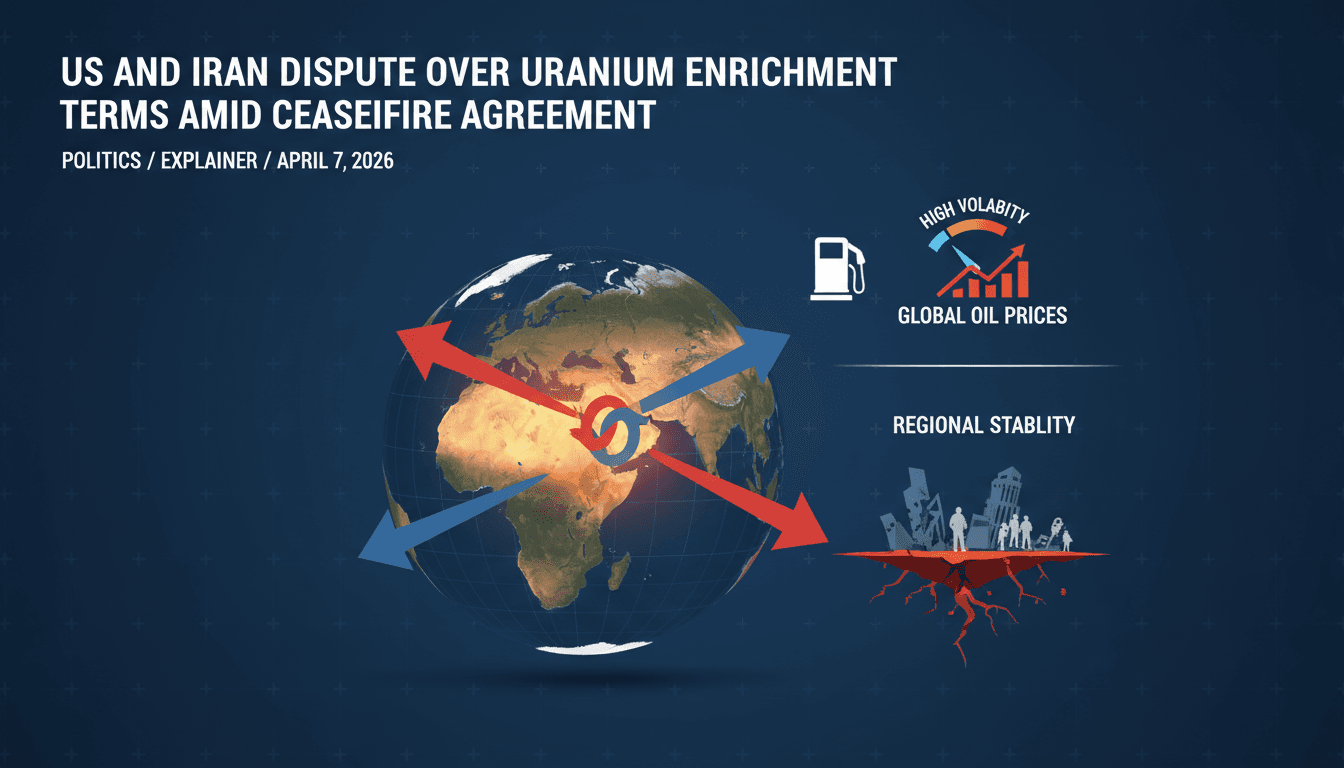
The ongoing US-Iran negotiations could significantly impact global oil prices and regional stability, affecting your investments and energy costs.
Why it matters
The ceasefire's outcome could reshape Middle Eastern geopolitics and influence global energy markets, with direct implications for consumers and businesses worldwide.
What happened (in 30 seconds)
- On April 7, 2026, a two-week ceasefire was brokered by Pakistan amid escalating US-Iran tensions and military conflict.
- The US demands Iran to cease uranium enrichment and relinquish its enriched stocks, while Iran insists on its rights to enrichment and sanctions relief.
- Market reactions included a temporary drop in oil prices, but concerns over the durability of the ceasefire have led to a rebound toward $100 per barrel.
The context you actually need
- Escalating conflict: The ceasefire follows 40 days of intense military operations, primarily driven by Israel's actions in Lebanon and Iran's blockade of the Strait of Hormuz.
- Domestic pressures: President Trump's administration faces internal pressures to manage the conflict without escalating military actions, particularly as calls for invoking the 25th Amendment grow.
- Geopolitical stakes: The ceasefire's terms are contested, with Iran's insistence on enrichment rights potentially undermining US-led sanctions and regional stability.
What's really happening
The ceasefire agreement reached on April 7, 2026, represents a fragile diplomatic effort to halt a rapidly escalating conflict that has already disrupted global oil flows. The US, led by President Donald Trump and Defense Secretary Pete Hegseth, has taken a hardline stance, demanding that Iran completely relinquish its enriched uranium stocks and cease all enrichment activities. This demand is rooted in a broader strategy to curb Iran's nuclear ambitions and mitigate perceived threats to regional allies, particularly Israel.
Conversely, Iran's Supreme National Security Council has publicly rejected these demands, asserting its right to enrich uranium as part of its national sovereignty. Their 10-point proposal includes not only the continuation of enrichment but also calls for sanctions relief and guarantees against US military aggression in the region. This stark divergence in positions highlights the complexity of the negotiations and the potential for further conflict if a compromise cannot be reached.
The ceasefire's immediate impact on oil markets has been notable. Following the announcement, oil prices initially dipped below $100 per barrel, reflecting a momentary sense of relief among investors. However, as doubts about the ceasefire's durability emerged, prices began to climb again. The volatility in oil markets is particularly concerning for consumers and businesses, as sustained high prices can lead to inflationary pressures and increased costs across various sectors.
Moreover, the geopolitical implications of this dispute extend beyond oil prices. The ongoing tensions in the region, particularly regarding Israel's operations in Lebanon and Iran's responses, could lead to further military escalations. The situation is exacerbated by the fact that the US administration is under significant domestic pressure to demonstrate effective leadership without resorting to military conflict. This creates a precarious balancing act, as any perceived weakness could embolden Iran and its allies.
In summary, the ceasefire is a temporary reprieve in a complex and multifaceted conflict, with significant implications for global energy markets and regional stability. The stakes are high, and the potential for renewed hostilities remains a pressing concern.
Who feels it first (and how)
- Consumers: Increased fuel prices and potential inflation in household costs.
- Investors: Volatility in energy stocks and market indices, particularly in the UAE and Gulf regions.
- Businesses: Companies reliant on stable oil prices may face higher operational costs, affecting profitability.
What to watch next
- Iran's compliance: Monitoring Iran's adherence to the ceasefire and its nuclear enrichment activities will be crucial for assessing future tensions.
- US domestic politics: The response from the Democratic Party regarding military actions and the 25th Amendment could influence the administration's approach to the conflict.
- Market reactions: Observing fluctuations in oil prices and stock indices in response to developments in the ceasefire negotiations will provide insights into market sentiment.
The ceasefire is currently holding, albeit tenuously, with ongoing disputes over terms.
Continued volatility in oil prices as markets react to geopolitical developments and potential breaches of the ceasefire.
The long-term implications of the ceasefire on US-Iran relations and regional stability remain uncertain.
Frequently Asked Questions
- Why it matters?
- The ceasefire's outcome could reshape Middle Eastern geopolitics and influence global energy markets, with direct implications for consumers and businesses worldwide.
- What happened (in 30 seconds)?
- On April 7, 2026, a two-week ceasefire was brokered by Pakistan amid escalating US-Iran tensions and military conflict. The US demands Iran to cease uranium enrichment and relinquish its enriched stocks, while Iran insists on its rights to enrichment and sanctions relief. Market reactions included a temporary drop in oil prices, but concerns over the durability of the ceasefire have led to a rebound toward $100 per barrel.
- What's really happening?
- The ceasefire agreement reached on April 7, 2026, represents a fragile diplomatic effort to halt a rapidly escalating conflict that has already disrupted global oil flows. The US, led by President Donald Trump and Defense Secretary Pete Hegseth, has taken a hardline stance, demanding that Iran completely relinquish its enriched uranium stocks and cease all enrichment activities. This demand is rooted in a broader strategy to curb Iran's nuclear ambitions and mitigate perceived threats to regiona
- Who feels it first (and how)?
- Consumers: Increased fuel prices and potential inflation in household costs. Investors: Volatility in energy stocks and market indices, particularly in the UAE and Gulf regions. Businesses: Companies reliant on stable oil prices may face higher operational costs, affecting profitability.
- What to watch next?
- Iran's compliance: Monitoring Iran's adherence to the ceasefire and its nuclear enrichment activities will be crucial for assessing future tensions. US domestic politics: The response from the Democratic Party regarding military actions and the 25th Amendment could influence the administration's approach to the conflict. Market reactions: Observing fluctuations in oil prices and stock indices in response to developments in the ceasefire negotiations will provide insights into market sentiment.
News from the United States including domestic politics, society, and culture.
"The Guardian is known for its progressive editorial stance and in-depth analysis, often advocating for social justice, environmental issues, and liberal values."
— A47 Editor
Trump news at a glance: a tale of two ceasefires as US and Iran claim different terms
The United States and Iran have reached a provisional two-week ceasefire, facilitated by Pakistan, following escalating tensions and threats from President Donald Trump. Both nations have claimed victory, but their interpretations of the agreement di...
English-language news from Qatar covering domestic and regional affairs.
"Gulf Times reflects Qatari perspectives on regional developments."
— A47 Editor
US President announces two-week ceasefire with Iran
US President Donald Trump announced a two-week ceasefire with Iran, contingent upon Tehran's agreement to reopen the Strait of Hormuz. This decision follows a ceasefire proposal from Pakistan and aims to de-escalate ongoing military tensions in the r...
European coverage of Middle East politics and security issues.
"France 24 offers international reporting with a European editorial perspective."
— A47 Editor
US, Iran agree to ceasefire as Trump pulls back on threat to destroy Iranian 'civilisation'
The United States and Iran have agreed to a two-week ceasefire, facilitated by Pakistan, just hours before President Donald Trump's ultimatum regarding the reopening of the strategically vital Strait of Hormuz. This agreement aims to de-escalate tens...
Coverage of current events and conflicts in the Middle East.
"France 24 is viewed as a globally focused outlet with balanced coverage and a European perspective."
— A47 Editor
US, Iran agree to ceasefire as Trump pulls back on threat to destroy Iranian 'civilisation'
The United States and Iran have agreed to a two-week ceasefire, facilitated by Pakistan, just hours before President Donald Trump's ultimatum for Iran to unblock the strategically vital Strait of Hormuz. This agreement marks a significant diplomatic ...
English-language news from Qatar covering domestic and regional affairs.
"Gulf Times reflects Qatari perspectives on regional developments."
— A47 Editor
US President announces acceptance of two-week ceasefire with Iran
US President Donald Trump has announced the acceptance of a two-week ceasefire with Iran, following a proposal from Pakistan. This decision comes amid escalating military tensions and is seen as a significant step towards de-escalation in the region....
European coverage of Middle East politics and security issues.
"France 24 offers international reporting with a European editorial perspective."
— A47 Editor
Macron urges Trump, Iran's Pezeshkian to include Lebanon in ceasefire as Israeli strikes kill 182
French President Emmanuel Macron has called on U.S. President Donald Trump and Iranian President Masoud Pezeshkian to include Lebanon in a ceasefire agreement, following Israeli airstrikes that resulted in 182 fatalities. This urgent plea comes amid ...
Coverage of current events and conflicts in the Middle East.
"France 24 is viewed as a globally focused outlet with balanced coverage and a European perspective."
— A47 Editor
Macron urges Trump, Iran's Pezeshkian to include Lebanon in ceasefire as Israeli strikes kill 182
French President Emmanuel Macron has called on U.S. President Donald Trump and Iranian President Masoud Pezeshkian to include Lebanon in a ceasefire agreement, following Israeli airstrikes that resulted in 182 fatalities. This urgent plea comes amid ...