
Samsung Electronics to Invest $4 Billion in New Chip Packaging Facility in Vietnam
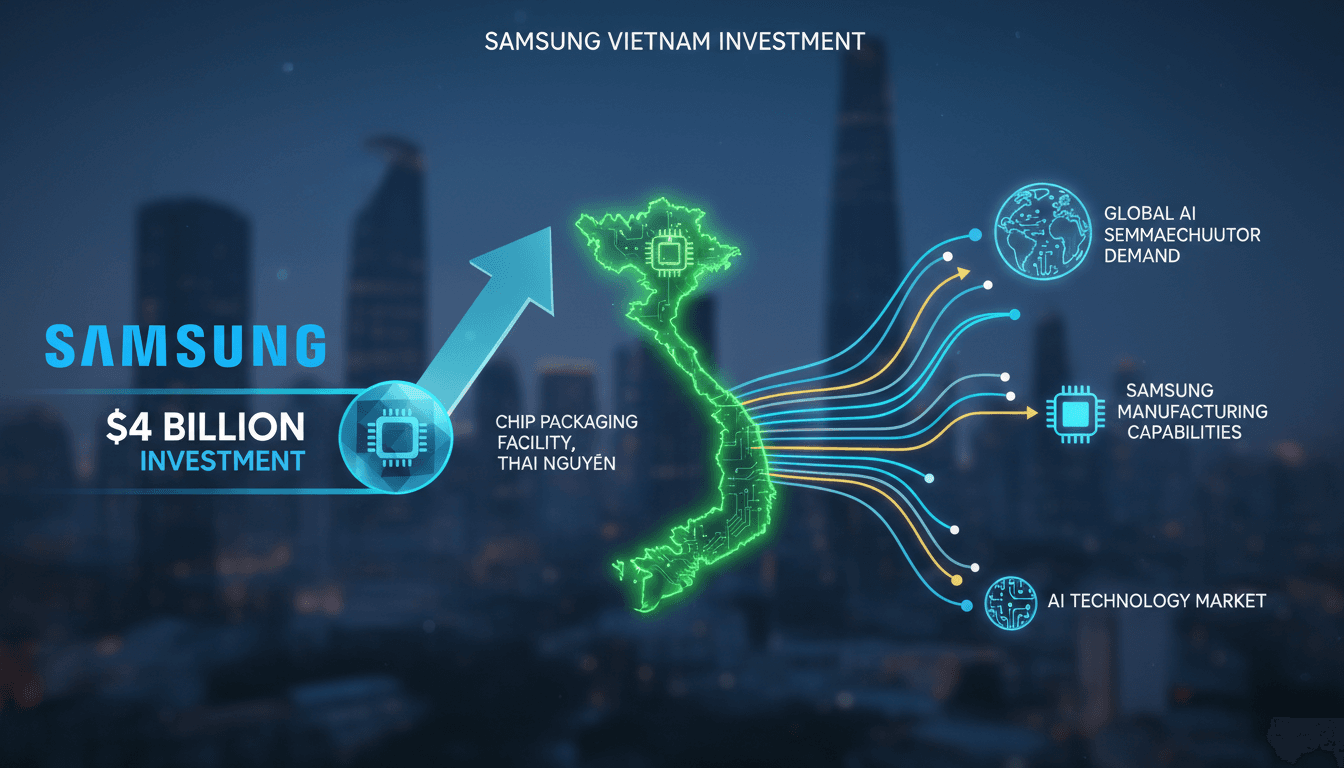
Here's what it means for you.
The expansion of Samsung's semiconductor capabilities could influence global AI technology costs and availability.
Why it matters
This investment underscores the growing importance of advanced semiconductor manufacturing in meeting the surging demand for AI technologies.
What happened (in 30 seconds)
- Samsung Electronics announced a $4 billion investment to build a chip packaging facility in Thai Nguyen province, Vietnam.
- The first phase of this project will cost $2 billion and aims to enhance capabilities for high-performance AI chips.
- Samsung has a strong presence in Vietnam, having invested over $22 billion since 2008, making it the largest foreign investor in the country.
The context you actually need
- Vietnam is becoming a key player in the global semiconductor supply chain, driven by investments from major companies like Samsung.
- The demand for AI semiconductors is rapidly increasing, prompting companies to diversify their manufacturing locations to mitigate risks associated with geopolitical tensions.
- Samsung's new facility will build on its existing operations in Vietnam, which currently produce smartphones and components, further solidifying its manufacturing footprint.
What's really happening
Samsung's $4 billion investment in a new chip packaging facility in Thai Nguyen province is a strategic response to the escalating global demand for AI semiconductors. The initial phase of this project, costing $2 billion, signals a robust commitment to enhancing advanced packaging capabilities, which are critical for the production of high-performance AI chips. This move aligns with a broader trend of companies diversifying their manufacturing bases amid geopolitical tensions that threaten supply chains.
Since 2008, Samsung has invested over $22 billion in Vietnam, establishing itself as the country's top exporter. The new facility will not only bolster Samsung's production capabilities but also contribute to the local economy, creating jobs and fostering technological advancements in the region. The establishment of Samsung Vietnam Semiconductor Co., Ltd. (SVS) in early April 2026 further indicates the company's intent to expand its semiconductor operations in Vietnam, particularly in the context of AI-driven demand.
As the semiconductor industry faces challenges such as supply chain disruptions and rising production costs, Samsung's investment represents a proactive approach to securing its position in the market. The facility will focus on advanced packaging technologies, which are essential for the performance and efficiency of AI chips. This is particularly relevant as industries worldwide increasingly rely on AI solutions, driving the need for more sophisticated semiconductor manufacturing processes.
Moreover, this investment can be seen as part of a larger trend where companies are seeking to mitigate risks associated with over-reliance on specific regions for semiconductor production. By establishing a significant presence in Vietnam, Samsung is not only enhancing its operational capabilities but also contributing to the diversification of the global semiconductor supply chain. This strategic move could lead to more stable pricing and availability of AI semiconductors, which is crucial for various sectors, including technology, automotive, and healthcare.
Who feels it first (and how)
- Tech companies relying on AI semiconductors for product development will benefit from improved availability and potentially lower costs.
- Local Vietnamese workers will see job creation and skill development opportunities in high-tech manufacturing.
- Investors in the semiconductor industry may experience shifts in market dynamics as supply chains become more diversified.
What to watch next
- Market response to AI chip demand: Monitor how the investment impacts pricing and availability of AI semiconductors globally.
- Local economic growth in Vietnam: Watch for indicators of job creation and economic development in Thai Nguyen province as the facility becomes operational.
- Geopolitical developments: Keep an eye on how international relations affect semiconductor supply chains and manufacturing strategies.
Samsung's investment is aimed at enhancing AI semiconductor production capabilities.
The facility will create jobs and stimulate local economic growth in Vietnam.
The long-term impact on global semiconductor pricing and availability remains to be seen.
Frequently Asked Questions
- Why it matters?
- This investment underscores the growing importance of advanced semiconductor manufacturing in meeting the surging demand for AI technologies.
- What happened (in 30 seconds)?
- Samsung Electronics announced a $4 billion investment to build a chip packaging facility in Thai Nguyen province, Vietnam. The first phase of this project will cost $2 billion and aims to enhance capabilities for high-performance AI chips. Samsung has a strong presence in Vietnam, having invested over $22 billion since 2008, making it the largest foreign investor in the country.
- What's really happening?
- Samsung's $4 billion investment in a new chip packaging facility in Thai Nguyen province is a strategic response to the escalating global demand for AI semiconductors. The initial phase of this project, costing $2 billion, signals a robust commitment to enhancing advanced packaging capabilities, which are critical for the production of high-performance AI chips. This move aligns with a broader trend of companies diversifying their manufacturing bases amid geopolitical tensions that threaten supp
- Who feels it first (and how)?
- Tech companies relying on AI semiconductors for product development will benefit from improved availability and potentially lower costs. Local Vietnamese workers will see job creation and skill development opportunities in high-tech manufacturing. Investors in the semiconductor industry may experience shifts in market dynamics as supply chains become more diversified.
- What to watch next?
- Market response to AI chip demand: Monitor how the investment impacts pricing and availability of AI semiconductors globally. Local economic growth in Vietnam: Watch for indicators of job creation and economic development in Thai Nguyen province as the facility becomes operational. Geopolitical developments: Keep an eye on how international relations affect semiconductor supply chains and manufacturing strategies.
Curated tech headlines including AI stories.
"Influential aggregator surfacing the day’s top tech/AI links."
— A47 Editor
Samsung plans to invest $4B to construct a chip packaging facility in Vietnam's Thai Nguyen province to support AI demand; sources say the first phase costs $2B (Bloomberg)
Samsung Electronics Co. has announced plans to invest $4 billion in constructing a chip packaging facility in Thai Nguyen province, Vietnam, with the first phase costing $2 billion. This investment aims to meet the growing demand for artificial intel...
Technology business and AI-related headlines.
"Data-driven tech newsroom with global scope."
— A47 Editor
Samsung to Invest $4 Billion in Chip Packaging Site in Vietnam
Samsung Electronics Co. has announced a significant investment of $4 billion to establish a chip packaging plant in northern Vietnam, marking a strategic expansion as the country's largest foreign investor. This move underscores the company's commitm...
Technology business news, market impacts, and innovation trends.
"Bloomberg is a premier financial and tech news provider, respected for its in-depth reporting and analytical rigor."
— A47 Editor
Samsung to Invest $4 Billion in Chip Packaging Site in Vietnam
Samsung Electronics Co. has announced a significant investment of $4 billion to establish a chip packaging plant in northern Vietnam, marking a strategic expansion as the country's largest foreign investor. This move underscores the company's commitm...