
China Brokers Two-Week Ceasefire Between US and Iran Amid Ongoing Conflict
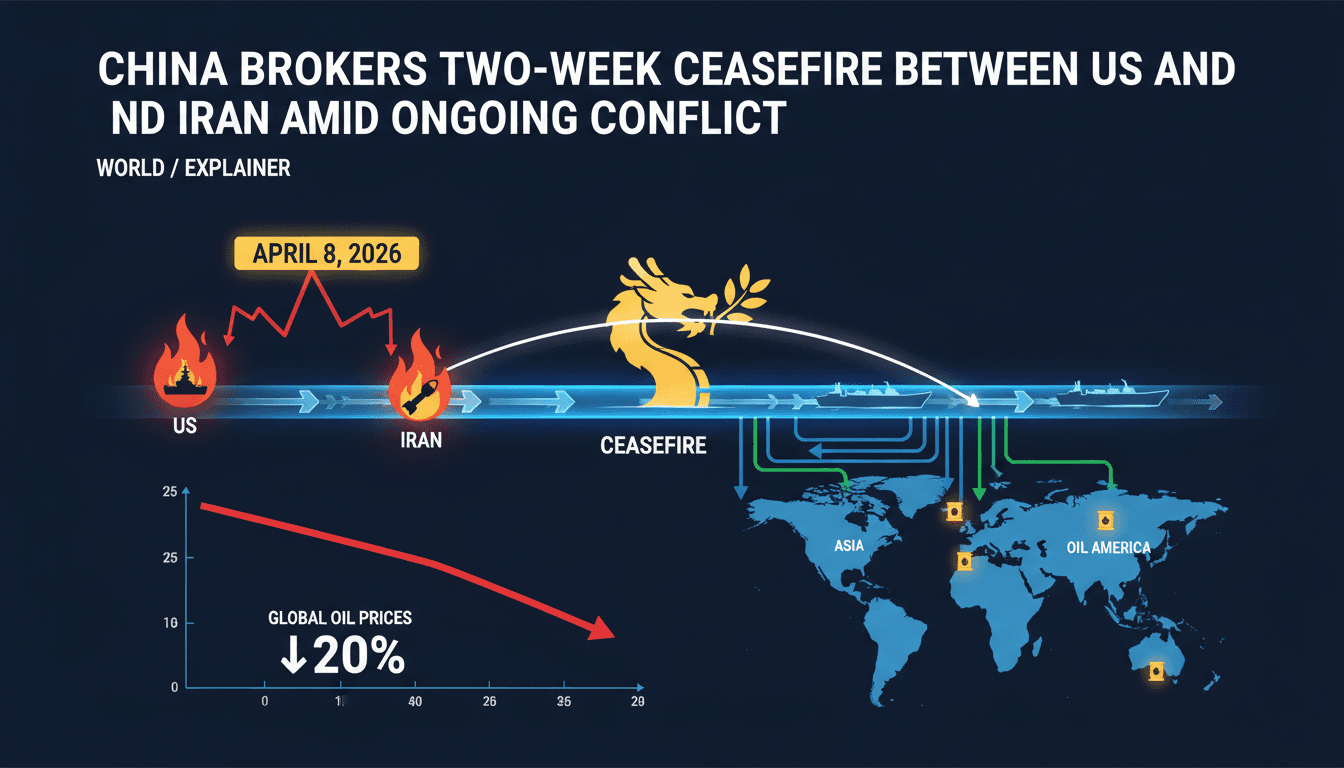
Here's what it means for you.
The recent ceasefire between the US and Iran, brokered by China, could stabilize energy prices and influence global markets, directly impacting your cost of living.
Why it matters
This ceasefire halts a conflict that threatened to disrupt global energy supplies, affecting economies worldwide.
What happened (in 30 seconds)
- China intervened on April 8, 2026, securing a two-week ceasefire between the US and Iran amid escalating conflict.
- The agreement followed intense negotiations and was crucial in preventing further economic turmoil and oil price spikes.
- Global markets reacted positively, with oil prices dropping significantly, providing relief to consumers and businesses alike.
The context you actually need
- The 2026 US-Iran war escalated after US-Israeli strikes killed Iran's Supreme Leader, leading to Iran's closure of the Strait of Hormuz, disrupting one-third of global oil transit.
- China's role as Iran's top oil buyer and Pakistan's ally positioned it uniquely to mediate, leveraging its economic influence and UN veto power.
- The fragile ceasefire reflects a shift in global power dynamics, with China emerging as a key player in Middle Eastern diplomacy, potentially reshaping future negotiations.
What's really happening
The US-Iran conflict, which intensified in early 2026, stemmed from a series of aggressive military actions, including targeted strikes that resulted in the death of Iran's Supreme Leader, Ali Khamenei. This event triggered a rapid escalation in hostilities, with Iran retaliating by closing the Strait of Hormuz, a critical chokepoint for global oil transit. The closure led to significant disruptions in oil supply, causing prices to spike and creating economic instability worldwide.
In response to the escalating crisis, Pakistan initiated mediation efforts, forming an expert panel to address maritime, nuclear, and regional issues. However, these efforts faced challenges due to deep-seated mutual distrust between the US and Iran. As the situation deteriorated, China stepped in, recognizing the potential for economic fallout if the conflict continued unchecked. China's Foreign Minister, Wang Yi, engaged in extensive shuttle diplomacy, conducting 26 phone calls to persuade Iran to accept a ceasefire.
The pivotal moment came just hours before a deadline set by President Donald Trump, when China successfully convinced Iran to agree to a two-week truce. This agreement was framed as a temporary measure to facilitate further negotiations, with Pakistan designated as the host for upcoming talks. The announcement of the ceasefire led to a dramatic drop in oil prices, with a reported plunge of 17%, providing immediate relief to global markets.
The ceasefire also highlights the shifting landscape of international relations, where China's involvement underscores a move towards multipolarity in global governance. The UN veto by China and Russia against a resolution to forcibly reopen the Strait of Hormuz further illustrates this shift, as traditional Western dominance in international diplomacy faces challenges from rising powers.
As the ceasefire holds, the implications for global energy markets and geopolitical stability remain significant. The fragile nature of the agreement means that ongoing negotiations will be critical in determining whether a lasting peace can be achieved or if tensions will reignite.
Who feels it first (and how)
- Energy consumers: Lower oil prices will ease costs at the pump and for heating, directly affecting household budgets.
- Investors: Stock markets, particularly in energy sectors, will see immediate impacts, with potential gains or losses based on ongoing negotiations.
- Businesses: Companies reliant on stable energy prices will benefit from reduced volatility, aiding in planning and operational costs.
What to watch next
- Negotiation outcomes: Watch for developments in the talks hosted by Pakistan, as they will determine the future of the ceasefire and potential long-term peace.
- Oil price trends: Monitor oil prices closely; sustained low prices could indicate a stable market, while volatility may signal renewed tensions.
- Geopolitical shifts: Observe how China's role in Middle Eastern diplomacy evolves, as it could redefine alliances and power dynamics in the region.
The ceasefire is currently holding, and preliminary talks are scheduled.
Continued negotiations will shape the future of US-Iran relations and regional stability.
The long-term impact of China's involvement on global diplomatic norms remains to be seen.
Frequently Asked Questions
- Why it matters?
- This ceasefire halts a conflict that threatened to disrupt global energy supplies, affecting economies worldwide.
- What happened (in 30 seconds)?
- China intervened on April 8, 2026, securing a two-week ceasefire between the US and Iran amid escalating conflict. The agreement followed intense negotiations and was crucial in preventing further economic turmoil and oil price spikes. Global markets reacted positively, with oil prices dropping significantly, providing relief to consumers and businesses alike.
- What's really happening?
- The US-Iran conflict, which intensified in early 2026, stemmed from a series of aggressive military actions, including targeted strikes that resulted in the death of Iran's Supreme Leader, Ali Khamenei. This event triggered a rapid escalation in hostilities, with Iran retaliating by closing the Strait of Hormuz, a critical chokepoint for global oil transit. The closure led to significant disruptions in oil supply, causing prices to spike and creating economic instability worldwide. In response
- Who feels it first (and how)?
- Energy consumers: Lower oil prices will ease costs at the pump and for heating, directly affecting household budgets. Investors: Stock markets, particularly in energy sectors, will see immediate impacts, with potential gains or losses based on ongoing negotiations. Businesses: Companies reliant on stable energy prices will benefit from reduced volatility, aiding in planning and operational costs.
- What to watch next?
- Negotiation outcomes: Watch for developments in the talks hosted by Pakistan, as they will determine the future of the ceasefire and potential long-term peace. Oil price trends: Monitor oil prices closely; sustained low prices could indicate a stable market, while volatility may signal renewed tensions. Geopolitical shifts: Observe how China's role in Middle Eastern diplomacy evolves, as it could redefine alliances and power dynamics in the region.
Arabic-language UAE newspaper coverage focused on domestic affairs, public institutions, business, society, and regional developments.
"Al Khaleej coverage generally reflects a mainstream UAE editorial lens with strong attention to public affairs, institutions, and regional developments."
— A47 Editor
كيف نجحت الصين في التوصل لهدنة بين طهران وواشنطن؟
Pakistan has received international praise for its unexpected mediation in achieving a ceasefire between the United States and Iran. This development marks a significant diplomatic effort in a region often characterized by tension and conflict.
European coverage of Middle East politics and security issues.
"France 24 offers international reporting with a European editorial perspective."
— A47 Editor
US-Iran truce: ‘Sensitive behind-the-scenes conversations’ paved way for Pakistan-brokered ceasefire
A two-week ceasefire between the United States and Iran has been brokered by Pakistan, marking a significant diplomatic achievement amid rising tensions in the region. This truce, characterized by sensitive negotiations, reflects a shift in power dyn...
Coverage of current events and conflicts in the Middle East.
"France 24 is viewed as a globally focused outlet with balanced coverage and a European perspective."
— A47 Editor
US-Iran truce: ‘Sensitive behind-the-scenes conversations’ paved way for Pakistan-brokered ceasefire
A two-week ceasefire between the United States and Iran has been brokered by Pakistan, marking a significant diplomatic achievement amid rising tensions in the region. This truce, characterized by sensitive negotiations, reflects a shift in power dyn...
International coverage from The Guardian's global desks.
"The Guardian is known for its progressive editorial stance and in-depth analysis."
— A47 Editor
How Pakistan secured ‘biggest diplomatic win in years’ with Iran ceasefire
Pakistan has successfully mediated a two-week ceasefire between the United States and Iran, marking a significant diplomatic achievement amid escalating tensions in the region. This breakthrough was reached after extensive negotiations and discussion...
English-language news from Qatar covering domestic and regional affairs.
"Gulf Times reflects Qatari perspectives on regional developments."
— A47 Editor
US President announces acceptance of two-week ceasefire with Iran
US President Donald Trump has announced the acceptance of a two-week ceasefire with Iran, following a proposal from Pakistan. This decision comes amid escalating military tensions and is seen as a significant step towards de-escalation in the region....