
United States and Iran Agree to Two-Week Cease-Fire Amid Ongoing Conflict
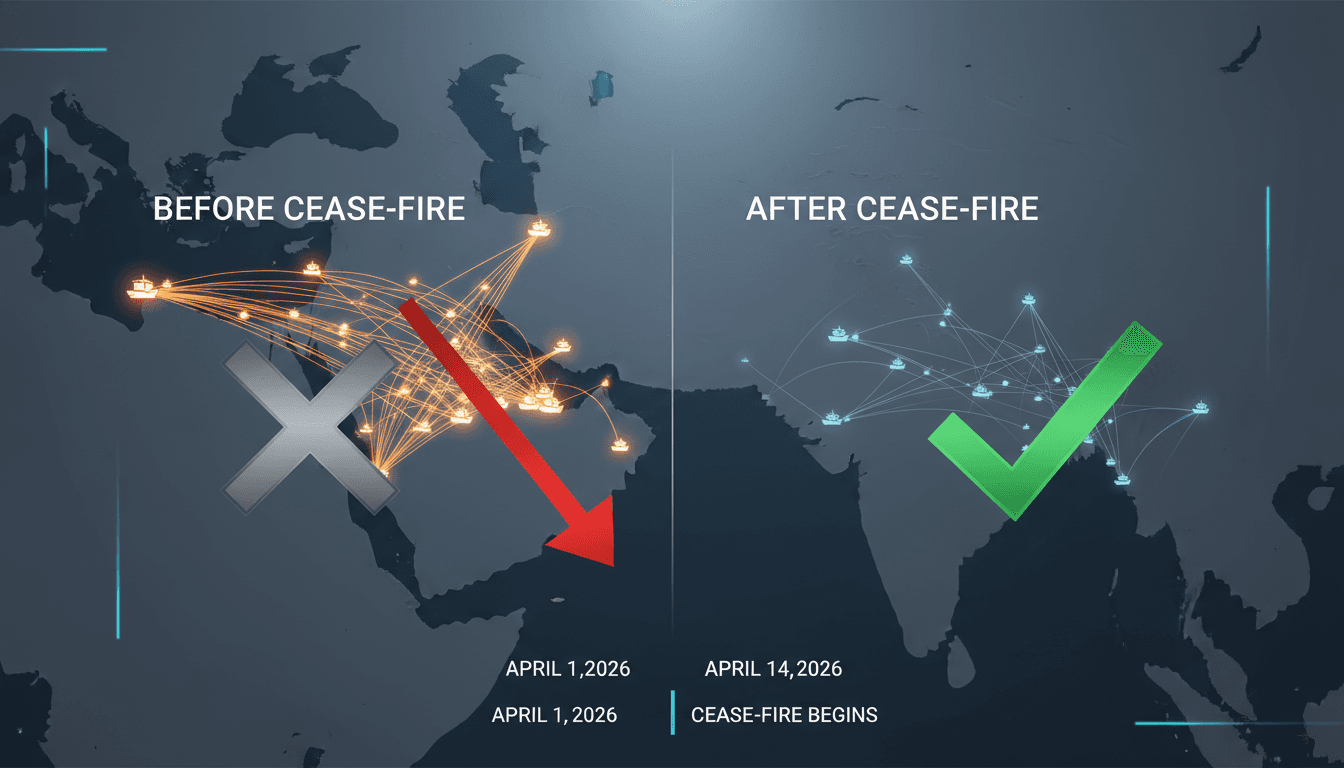
Here's what it means for you.
The fragile cease-fire impacts global oil markets and regional stability, affecting your business operations and energy costs.
What happened
The United States and Iran agreed to a two-week cease-fire on April 7, 2026, mediated by Pakistan, halting direct military strikes amid escalating tensions.
The Context
- Escalating conflict: The cease-fire follows U.S. and Israeli airstrikes on Iranian nuclear sites, prompting Iranian retaliatory attacks that disrupted Gulf oil infrastructure.
- Negotiation hurdles: Peace talks in Islamabad collapsed shortly after the cease-fire was announced, raising concerns about the future of diplomacy.
- Market volatility: The U.S. naval blockade on Iranian ports has significantly reduced shipping traffic through the Strait of Hormuz, impacting energy prices and regional economies.
The Number
ships transited the Strait of Hormuz per day pre-war, now reduced to just a few, highlighting the blockade's severe impact on global shipping and energy supply.
Takeaway
As tensions remain high, the potential for renewed conflict or diplomatic breakthroughs will shape the geopolitical landscape and market dynamics in the coming weeks.
Global political, business, and cultural coverage from WSJ international desks.
"The Wall Street Journal offers extensive international reporting with a reputation for financial insight and a center-right editorial stance."
— A47 Editor
Here’s What We Know About the U.S. Cease-Fire With Iran—and What Happens Next
High-level ceasefire talks between the United States and Iran are currently underway in Islamabad, following a fragile two-week truce brokered by Pakistan. This diplomatic engagement aims to address ongoing military tensions that have escalated in re...
Global news coverage with extensive reporting on Middle Eastern conflicts and geopolitics.
"Al Jazeera is a Qatar-based broadcaster known for wide regional coverage and alternative perspectives."
— A47 Editor
How shaky is the Iran-US ceasefire?
A fragile ceasefire between the United States and Iran has been established, allowing for high-level negotiations aimed at reducing military tensions. This two-week truce, brokered by Pakistan, has seen senior Iranian officials engage in discussions ...
Comprehensive coverage of Middle Eastern and global issues.
"Al Jazeera is a prominent voice from the Global South, especially the Middle East, with an emphasis on underreported stories."
— A47 Editor
How shaky is the Iran-US ceasefire?
A fragile ceasefire between the United States and Iran has been established, allowing for high-level peace talks to commence in Islamabad. This two-week truce follows a month of escalating military actions, particularly involving Israel and Hezbollah...
Global news coverage with extensive reporting on Middle Eastern conflicts and geopolitics.
"Al Jazeera is a Qatar-based broadcaster known for wide regional coverage and alternative perspectives."
— A47 Editor
US-Iran ceasefire talks: What are the key sticking points?
High-level ceasefire talks between the United States and Iran are currently underway in Islamabad, following a two-week ceasefire aimed at reducing military tensions in the region. The discussions are marked by significant divisions, with both sides ...
Comprehensive coverage of Middle Eastern and global issues.
"Al Jazeera is a prominent voice from the Global South, especially the Middle East, with an emphasis on underreported stories."
— A47 Editor
US-Iran ceasefire talks: What are the key sticking points?
High-level ceasefire talks between the United States and Iran are currently underway in Islamabad, following a two-week ceasefire aimed at reducing military tensions in the region. The discussions are marked by significant divisions, with both sides ...