
Trump Declares US-Iran War 'Very Close to Over' as Naval Blockade Fully Implemented
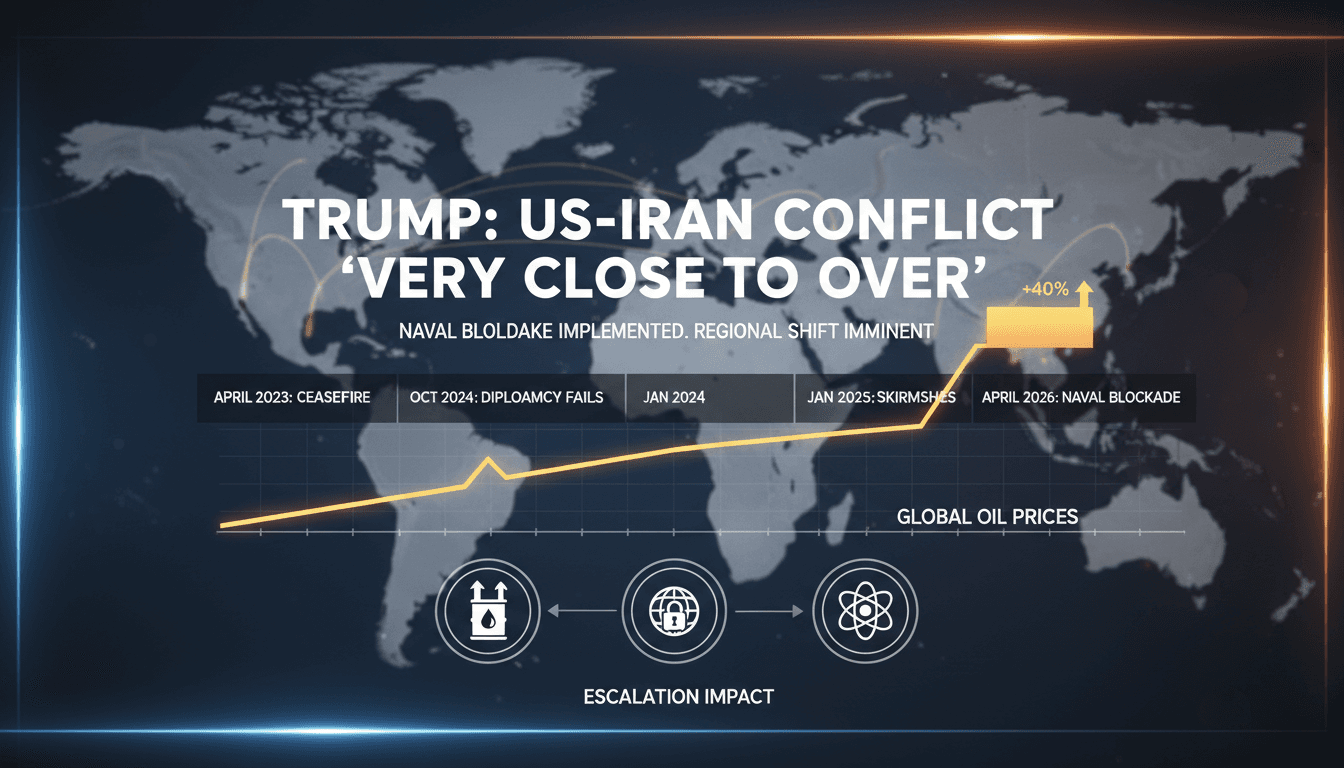
Here's what it means for you.
The ongoing US-Iran conflict could disrupt global markets and energy prices, impacting your business and daily expenses.
Why it matters
The conflict's escalation threatens stability in the Middle East, a critical region for global oil supply and geopolitical alliances.
What happened (in 30 seconds)
- On April 15, 2026, President Trump declared the US-Iran war "very close to over" amid a fully implemented US naval blockade of Iranian ports.
- A fragile ceasefire is under negotiation, following a two-week pause in hostilities that began on April 8.
- The conflict originated from US-Israeli airstrikes on February 28, targeting Iranian military and nuclear facilities, leading to significant retaliatory actions from Iran.
The context you actually need
- The 2026 US-Israel-Iran War began with coordinated airstrikes on over 900 Iranian sites, aiming to neutralize perceived threats and induce regime change.
- Iran's retaliation included missile and drone attacks on Israel and Gulf states, resulting in over 2,000 fatalities in Lebanon alone by the end of March.
- Economic pressures have led to a fragile ceasefire, with the US imposing a naval blockade to enforce demands regarding Iran's nuclear program and regional influence.
What's really happening
The US-Iran conflict has escalated significantly since its inception on February 28, 2026, when the United States and Israel launched a series of airstrikes targeting Iranian military and nuclear facilities. This aggressive strategy aimed to neutralize threats posed by Iran and its proxies, particularly Hezbollah in Lebanon. The airstrikes resulted in substantial Iranian casualties, with reports indicating over 2,000 fatalities by the end of March. In retaliation, Iran unleashed a barrage of missiles and drones targeting Israel and Gulf states, including the UAE, which successfully intercepted hundreds of these attacks.
As the conflict intensified, the economic ramifications became evident. The US imposed a naval blockade on Iranian ports on April 14, 2026, effectively halting Iran's sea trade and further escalating tensions. This blockade was a strategic move to enforce demands regarding Iran's nuclear program and its influence in the region. The blockade's implementation coincided with a fragile ceasefire that had been negotiated just days earlier, highlighting the precarious nature of the situation.
The geopolitical landscape is further complicated by the involvement of regional powers. Diplomatic efforts are underway to mediate the conflict, with talks potentially taking place in Islamabad, Pakistan, involving key players such as China and Turkey. These negotiations are crucial, as they could pave the way for a resolution to the conflict, but they also reflect the broader struggle for influence in the Middle East.
The implications of this conflict extend beyond the immediate region. Global oil prices have stabilized near $95 per barrel amid hopes for a ceasefire, but the International Monetary Fund has warned of recession risks stemming from prolonged disruptions. The conflict's impact on energy markets is particularly relevant for businesses and consumers alike, as fluctuations in oil prices can lead to increased costs across various sectors.
Moreover, the humanitarian toll of the conflict cannot be overlooked. The ongoing skirmishes in southern Lebanon and the direct talks between Israel and Lebanon regarding Hezbollah disarmament indicate that the situation remains volatile. As Hezbollah continues to launch rockets at northern Israel, the potential for further escalation remains high.
In summary, the US-Iran conflict is not just a regional issue; it has far-reaching implications for global markets, energy prices, and geopolitical stability. The interplay of military actions, economic pressures, and diplomatic negotiations will shape the future of this conflict and its impact on the world stage.
Who feels it first (and how)
- Businesses in the energy sector: Fluctuations in oil prices directly affect operational costs and profitability.
- Consumers: Increased energy prices can lead to higher costs for goods and services, impacting household budgets.
- Expatriates in the UAE: The conflict has already resulted in casualties and injuries, affecting the expatriate community's safety and security.
- Investors: Market volatility and recession risks can influence investment strategies and portfolio performance.
What to watch next
- Ceasefire negotiations: Progress in talks could lead to a more stable situation, impacting global markets and energy prices.
- US-Iran diplomatic relations: Any shifts in diplomatic engagement could signal changes in military strategy and economic sanctions.
- Regional military movements: Increased military activity from Iran or its proxies could escalate tensions and disrupt trade routes.
The US naval blockade of Iranian ports is fully implemented, impacting Iran's economy.
Continued skirmishes in Lebanon and potential escalation of hostilities as both sides test each other's resolve.
The outcome of diplomatic negotiations and their effectiveness in achieving a lasting ceasefire.
Frequently Asked Questions
- Why it matters?
- The conflict's escalation threatens stability in the Middle East, a critical region for global oil supply and geopolitical alliances.
- What happened (in 30 seconds)?
- On April 15, 2026, President Trump declared the US-Iran war "very close to over" amid a fully implemented US naval blockade of Iranian ports. A fragile ceasefire is under negotiation, following a two-week pause in hostilities that began on April 8. The conflict originated from US-Israeli airstrikes on February 28, targeting Iranian military and nuclear facilities, leading to significant retaliatory actions from Iran.
- What's really happening?
- The US-Iran conflict has escalated significantly since its inception on February 28, 2026, when the United States and Israel launched a series of airstrikes targeting Iranian military and nuclear facilities. This aggressive strategy aimed to neutralize threats posed by Iran and its proxies, particularly Hezbollah in Lebanon. The airstrikes resulted in substantial Iranian casualties, with reports indicating over 2,000 fatalities by the end of March. In retaliation, Iran unleashed a barrage of mis
- Who feels it first (and how)?
- Businesses in the energy sector: Fluctuations in oil prices directly affect operational costs and profitability. Consumers: Increased energy prices can lead to higher costs for goods and services, impacting household budgets. Expatriates in the UAE: The conflict has already resulted in casualties and injuries, affecting the expatriate community's safety and security. Investors: Market volatility and recession risks can influence investment strategies and portfolio performance.
- What to watch next?
- Ceasefire negotiations: Progress in talks could lead to a more stable situation, impacting global markets and energy prices. US-Iran diplomatic relations: Any shifts in diplomatic engagement could signal changes in military strategy and economic sanctions. Regional military movements: Increased military activity from Iran or its proxies could escalate tensions and disrupt trade routes.
UAE-based English-language newspaper covering regional politics, economics, and global affairs.
"The National reflects Emirati policy perspectives while maintaining international editorial standards."
— A47 Editor
Iran war latest: Leaders of Israel and Lebanon to speak today, Trump says
U.S. President Donald Trump announced that the ongoing war with Iran is 'close to over,' coinciding with a blockade of Iranian ports and the Strait of Hormuz, effective April 13, 2026. This blockade follows the collapse of 21 hours of peace talks in ...
Arabic-language digital news outlet covering UAE, regional, and international developments with broad general-news coverage.
"Al Ain News coverage typically blends UAE-focused reporting with wider Arab regional and international news."
— A47 Editor
ترامب: محادثات إيران ربما تُستأنف خلال اليومين المقبلين
U.S. President Donald Trump stated in an interview with the New York Post that discussions regarding Iran may resume in Pakistan within the next two days. This statement highlights the ongoing diplomatic efforts and the potential for renewed negotiat...
Oil, metals, and agriculture: supply/demand headlines, OPEC chatter, inventories, and price action.
"Solid tape for energy and metals traders tracking macro and micro catalysts."
— A47 Editor
Trump says Iran talks could resume over next two days, NY Post reports
Former President Donald Trump indicated that discussions with Iran could resume within the next two days, as reported by the NY Post. This announcement comes amid heightened tensions following a U.S. blockade of the Strait of Hormuz, which has been a...