
IATA Warns of Jet Fuel Supply Crisis Comparable to Post-9/11 Disruptions
Here's what it means for you.
If you travel frequently or rely on air freight, expect higher costs and potential disruptions in flight availability.
Why it matters
The ongoing jet fuel supply disruptions threaten to inflate airline operating costs globally, impacting ticket prices and travel plans.
What happened (in 30 seconds)
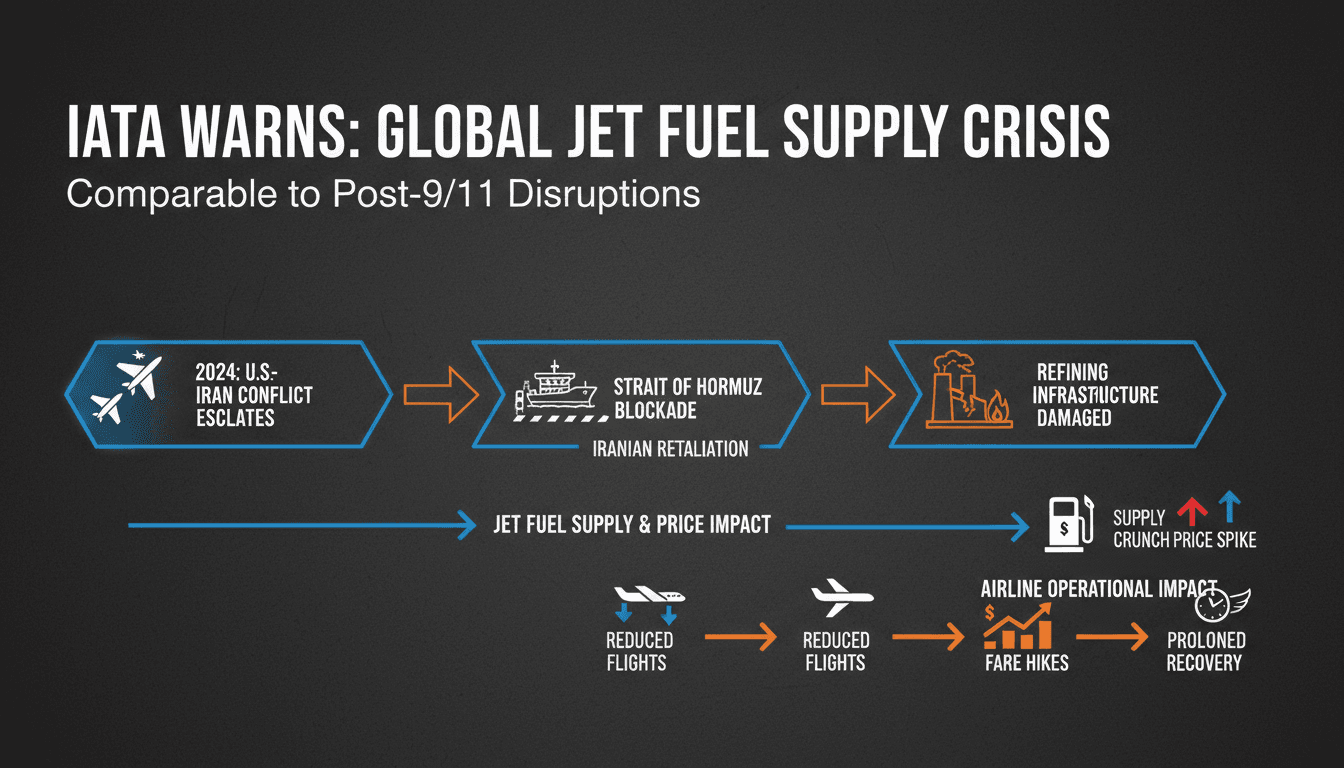
- IATA warns that jet fuel supply disruptions from the U.S.-Iran conflict are comparable to the post-9/11 crisis, with recovery expected to take months.
- Iran's blockade of the Strait of Hormuz has severely damaged Middle Eastern refining infrastructure, reducing global refining capacity by 10-12%.
- Airlines are responding with fare hikes, capacity cuts, and operational changes, affecting millions of travelers worldwide.
The context you actually need
- The Strait of Hormuz is a critical chokepoint for 20% of global seaborne oil trade, making its closure a significant threat to energy supplies.
- Jet fuel lacks strategic reserves, unlike crude oil, making the aviation sector particularly vulnerable to supply shocks.
- Airline operating costs have surged, with some airlines reporting cost increases of up to $400 million, leading to fare hikes of up to 40%.
What's really happening
The current crisis stems from an escalation in the U.S.-Iran conflict, which intensified into open warfare on February 28, 2026. In retaliation for U.S. military actions, Iran closed the Strait of Hormuz, a vital maritime route for oil and refined products. This blockade has led to significant disruptions in the supply chain, particularly affecting jet fuel, which is critical for airlines.
As military operations have damaged Middle Eastern refineries, global refining capacity has contracted by 10-12%, halting over 2 million barrels per day of processing. Unlike crude oil, which can be stockpiled, jet fuel is produced and consumed in real-time, leaving airlines exposed to immediate supply shortages. The International Air Transport Association (IATA) has indicated that recovery from this disruption could take months, drawing parallels to the post-9/11 aviation crisis when the industry faced a prolonged period of adjustment.
Airlines are already feeling the pinch, with fare increases and operational changes becoming the norm. For instance, AirAsia has raised fares by up to 40%, and United Airlines has implemented baggage fee hikes as part of their response to soaring fuel costs. The situation is exacerbated by the fact that many airlines are now carrying extra fuel or making refueling stops to mitigate the impact of jet fuel shortages.
The economic implications extend beyond just the airlines. In regions like Dubai, which serves as a major aviation hub, residents are facing increased airfares, reduced flight availability, and broader economic pressures due to the city's reliance on tourism and air travel. Local carriers, including Emirates, are grappling with acute supply constraints, which could lead to a ripple effect throughout the economy.
As the conflict continues, the potential for further escalations remains high, and the aviation sector must navigate these turbulent waters carefully. The tentative ceasefire announced on April 7-8, 2026, has brought some optimism, reflected in a slight decline in Brent crude prices. However, the persistent jet fuel premiums indicate that the crisis is far from over.
Who feels it first (and how)
- Frequent travelers: Higher ticket prices and fewer flight options.
- Airlines: Increased operational costs leading to fare hikes and capacity cuts.
- Tourism-dependent economies: Regions like Dubai may see reduced tourist inflows and economic strain.
- Cargo sectors: Increased freight costs and potential delays in shipments.
What to watch next
- Ceasefire stability: Continued U.S.-Iran negotiations will be crucial in determining if the Strait of Hormuz remains open and if jet fuel supply can stabilize.
- Airline financial reports: Monitor how airlines report their financial health in the coming quarters, as rising costs may impact profitability.
- Fuel price trends: Keep an eye on Brent crude and jet fuel prices; sustained high prices could lead to further fare increases and operational adjustments.
The jet fuel supply disruptions are significant and comparable to past crises like post-9/11.
Airlines will continue to raise fares and cut capacity in response to ongoing fuel shortages.
The long-term implications for the aviation sector and global travel patterns remain uncertain as the situation evolves.
Frequently Asked Questions
- Why it matters?
- The ongoing jet fuel supply disruptions threaten to inflate airline operating costs globally, impacting ticket prices and travel plans.
- What happened (in 30 seconds)?
- IATA warns that jet fuel supply disruptions from the U.S.-Iran conflict are comparable to the post-9/11 crisis, with recovery expected to take months. Iran's blockade of the Strait of Hormuz has severely damaged Middle Eastern refining infrastructure, reducing global refining capacity by 10-12%. Airlines are responding with fare hikes, capacity cuts, and operational changes, affecting millions of travelers worldwide.
- What's really happening?
- The current crisis stems from an escalation in the U.S.-Iran conflict, which intensified into open warfare on February 28, 2026. In retaliation for U.S. military actions, Iran closed the Strait of Hormuz, a vital maritime route for oil and refined products. This blockade has led to significant disruptions in the supply chain, particularly affecting jet fuel, which is critical for airlines. As military operations have damaged Middle Eastern refineries, global refining capacity has contracted by
- Who feels it first (and how)?
- Frequent travelers: Higher ticket prices and fewer flight options. Airlines: Increased operational costs leading to fare hikes and capacity cuts. Tourism-dependent economies: Regions like Dubai may see reduced tourist inflows and economic strain. Cargo sectors: Increased freight costs and potential delays in shipments.
- What to watch next?
- Ceasefire stability: Continued U.S.-Iran negotiations will be crucial in determining if the Strait of Hormuz remains open and if jet fuel supply can stabilize. Airline financial reports: Monitor how airlines report their financial health in the coming quarters, as rising costs may impact profitability. Fuel price trends: Keep an eye on Brent crude and jet fuel prices; sustained high prices could lead to further fare increases and operational adjustments.
Corporate leadership, finance, technology, and market trends.
"Fortune covers financial trends, leadership, and innovation with a pragmatic editorial approach."
— A47 Editor
Jet fuel supply disruptions are comparable to 9/11 and could take months to replenish even if Hormuz Strait is reopening, airline trade group warns
The International Air Transport Association (IATA) has warned that disruptions in jet fuel supply due to the ongoing conflict in Iran are comparable to the aftermath of the 9/11 attacks, with potential replenishment taking months even if the Strait o...
Regional and international reporting focused on Middle Eastern politics, diplomacy, and economics.
"Asharq Al-Awsat is a Saudi-owned international newspaper reflecting mainstream Gulf political perspectives."
— A47 Editor
IATA Chief: Jet Fuel Supply Could Take Months to Recover after Hormuz Reopening
The International Air Transport Association (IATA) has indicated that the jet fuel supply could take months to recover following the reopening of the Strait of Hormuz, a vital maritime route for global oil transport. This statement comes amid ongoing...
Business, markets, economy, and corporate news with strong UAE and regional relevance.
"Emirates 24|7 business coverage tends to center UAE markets, property, regulation, and regional economic developments."
— A47 Editor
IATA chief says jet fuel supply could take months to recover after Hormuz reopening IATA chief says jet fuel supply could take months to recover after Hormuz reopening
The head of the International Air Transport Association (IATA), Willie Walsh, stated that even with the reopening of the Strait of Hormuz by Iran, it could take months for jet fuel supply to recover due to disruptions in Middle East refining capacity...