
Ethereum Foundation Identifies 100 DPRK-Linked IT Workers in Web3 Projects
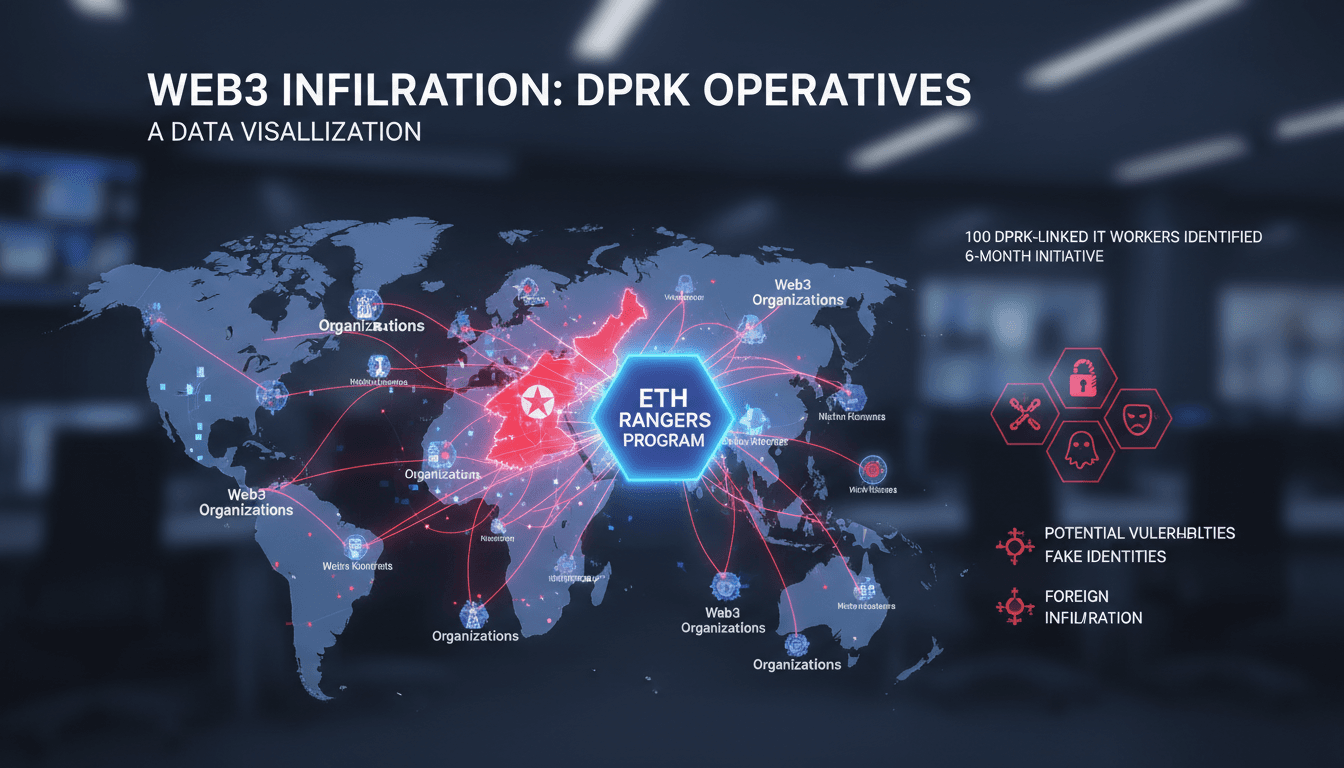
Here's what it means for you.
As a participant in the Web3 ecosystem, understanding the implications of this identification can help you safeguard your projects against potential infiltration.
Why it matters
The identification of DPRK-linked operatives highlights significant cybersecurity vulnerabilities within the rapidly evolving Web3 landscape.
What happened (in 30 seconds)
- On April 16, 2026, the Ethereum Foundation revealed findings from its ETH Rangers program, identifying approximately 100 DPRK-linked IT workers in Web3 projects.
- The initiative, launched in late 2024, funded independent research that uncovered operatives using fake identities to infiltrate the ecosystem.
- 53 projects were notified of potential threats, and open-source tools were released to enhance security measures.
The context you actually need
- DPRK's history of cryptocurrency theft and infiltration has been well-documented, with groups like Lazarus linked to billions in stolen assets.
- The ETH Rangers program was initiated to address vulnerabilities and state-sponsored threats in the Ethereum ecosystem, reflecting a proactive approach to cybersecurity.
- The Ketman Project, a key component of the initiative, utilized behavioral analysis and metadata examination to identify operatives, showcasing the importance of advanced security research.
What's really happening
The Ethereum Foundation's ETH Rangers program represents a critical response to the ongoing threat posed by state-sponsored cyber actors, particularly from the Democratic People's Republic of Korea (DPRK). Launched in late 2024, this initiative aimed to bolster the security of the Ethereum ecosystem by funding independent research into vulnerabilities and potential infiltration tactics employed by malicious actors.
Over six months, the program provided stipends to 17 independent researchers, one of whom led the Ketman Project. This project focused on identifying DPRK-linked IT workers who were using fake identities and GitHub profiles to embed themselves within Web3 organizations. By analyzing behavioral patterns, metadata anomalies, and profile reuse, the researchers successfully identified approximately 100 operatives. This intelligence was crucial, as it allowed the Ethereum Foundation to notify 53 projects about the potential risks they faced.
The findings, published on April 16, 2026, included not only the identification of these operatives but also the recovery or freezing of $5.8 million in assets and the reporting of over 785 vulnerabilities. The outputs of the program included the open-source tool gh-fake-analyzer and a co-authored identification framework with the Security Alliance (SEAL), which aims to enhance the overall security posture of the Ethereum ecosystem.
This initiative underscores the importance of decentralized security research in combating state-sponsored threats. As the cryptocurrency landscape continues to evolve, the need for robust cybersecurity measures becomes increasingly critical. The Ethereum Foundation's proactive approach serves as a model for other organizations within the Web3 space, emphasizing the necessity of vigilance and due diligence in hiring practices, especially in remote work environments.
The implications of these findings extend beyond just the Ethereum ecosystem; they signal a broader need for enhanced security protocols across all Web3 projects. As the threat landscape evolves, organizations must remain vigilant and proactive in their security measures to protect against potential infiltration and exploitation by malicious actors.
Who feels it first (and how)
- Web3 Developers: Increased scrutiny on hiring practices and identity verification processes.
- Crypto Organizations: Potential reputational risks and financial losses due to infiltration.
- Investors: Heightened awareness of cybersecurity risks may influence investment decisions in Web3 projects.
What to watch next
- Increased Security Measures: Look for Web3 organizations to adopt more stringent vetting processes for remote workers, which could reshape hiring practices.
- Emergence of New Tools: The development and adoption of open-source security tools like gh-fake-analyzer may become standard in the industry, enhancing overall cybersecurity.
- Regulatory Responses: Monitor for potential regulatory changes aimed at improving cybersecurity standards in the cryptocurrency sector, which could impact operational protocols.
Approximately 100 DPRK-linked IT workers were identified in Web3 organizations.
Web3 organizations will implement stricter hiring and security protocols in response to these findings.
The long-term impact on the cryptocurrency market and investor confidence remains to be seen.
Frequently Asked Questions
- Why it matters?
- The identification of DPRK-linked operatives highlights significant cybersecurity vulnerabilities within the rapidly evolving Web3 landscape.
- What happened (in 30 seconds)?
- On April 16, 2026, the Ethereum Foundation revealed findings from its ETH Rangers program, identifying approximately 100 DPRK-linked IT workers in Web3 projects. The initiative, launched in late 2024, funded independent research that uncovered operatives using fake identities to infiltrate the ecosystem. 53 projects were notified of potential threats, and open-source tools were released to enhance security measures.
- What's really happening?
- The Ethereum Foundation's ETH Rangers program represents a critical response to the ongoing threat posed by state-sponsored cyber actors, particularly from the Democratic People's Republic of Korea (DPRK). Launched in late 2024, this initiative aimed to bolster the security of the Ethereum ecosystem by funding independent research into vulnerabilities and potential infiltration tactics employed by malicious actors. Over six months, the program provided stipends to 17 independent researchers, on
- Who feels it first (and how)?
- Web3 Developers: Increased scrutiny on hiring practices and identity verification processes. Crypto Organizations: Potential reputational risks and financial losses due to infiltration. Investors: Heightened awareness of cybersecurity risks may influence investment decisions in Web3 projects.
- What to watch next?
- Increased Security Measures: Look for Web3 organizations to adopt more stringent vetting processes for remote workers, which could reshape hiring practices. Emergence of New Tools: The development and adoption of open-source security tools like gh-fake-analyzer may become standard in the industry, enhancing overall cybersecurity. Regulatory Responses: Monitor for potential regulatory changes aimed at improving cybersecurity standards in the cryptocurrency sector, which could impact operation
News and analysis on Bitcoin, altcoins, and blockchain innovation.
"Bitcoinist delivers news and analysis on Bitcoin, altcoins, and blockchain innovation with a focus on market trends and industry updates."
— A47 Editor
Ethereum Foundation Program Identifies 100 DPRK-Linked Crypto Workers
The Ethereum Foundation has identified 100 cryptocurrency workers linked to the Democratic People's Republic of Korea (DPRK) through a program called ETH Rangers, which utilized an open-source detection tool and an identification framework developed ...
Real-time updates, analysis, and reports on the blockchain and cryptocurrency sectors.
"Crypto News delivers real-time updates, analysis, and reports on the blockchain and cryptocurrency sectors."
— A47 Editor
Ethereum Foundation-funded project exposes 100 DPRK developers operating in crypto
A six-month investigation funded by the Ethereum Foundation has revealed that 100 North Korean developers were operating under false identities within various Web3 teams, raising significant security concerns in the cryptocurrency sector.
Covers blockchain, cryptocurrency news, project analysis, and market insights.
"Cointelegraph is a leading crypto-focused media outlet known for timely news, analysis, and educational content related to blockchain and digital assets."
— A47 Editor
Ethereum Foundation-funded program exposes 100 DPRK workers in crypto
The Ketman Project, supported by funding from the Ethereum Foundation, has uncovered 100 North Korean IT workers and identified 53 projects employing operatives from the Democratic People's Republic of Korea (DPRK). This initiative highlights the ong...