
Trump Claims Xi Jinping Delighted by Reopening of Strait of Hormuz
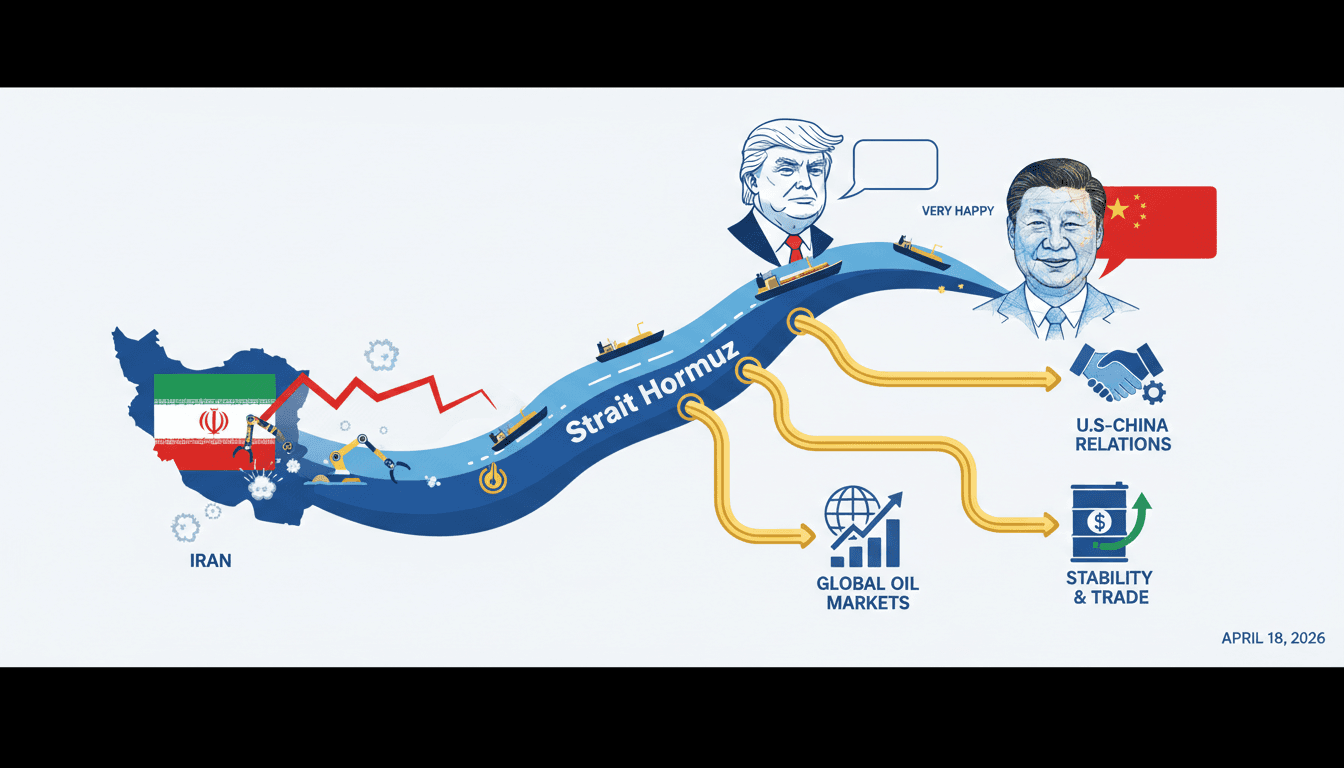
Here's what it means for you.
The reopening of the Strait of Hormuz could lead to lower fuel prices and increased trade stability, impacting your daily expenses and business operations.
Why it matters
The Strait of Hormuz is a critical chokepoint for global oil trade, with 21% of petroleum liquids consumption transiting through it.
What happened (in 30 seconds)
- On April 18, 2026, President Donald Trump announced that Chinese President Xi Jinping was "very happy" about the reopening of the Strait of Hormuz.
- Iran agreed to open the strait during a ceasefire period, with U.S. assistance in mine removal, while a blockade on Iranian ports remains in place.
- Oil prices fell sharply following the announcement, easing global energy costs and impacting exporters.
The context you actually need
- The Strait of Hormuz is vital for global oil supply, making its stability crucial for energy markets worldwide.
- U.S.-Iran tensions had previously threatened the strait's closure, prompting a naval blockade and escalating regional hostilities.
- China's role as a major oil importer means that its diplomatic stance on navigation freedoms directly influences global oil prices and trade dynamics.
What's really happening
The recent announcement regarding the reopening of the Strait of Hormuz is a significant diplomatic development amid ongoing U.S.-Iran negotiations. The strait, which facilitates the transit of approximately 21% of the world's petroleum liquids, has been a focal point of geopolitical tensions, particularly between the U.S. and Iran. In early 2026, the U.S. imposed a blockade on Iranian ports in response to threats of closure from Iran, which escalated hostilities in the region.
The ceasefire agreement, which allows Iran to open the strait with U.S. support for mine removal, marks a critical turning point. Chinese Foreign Minister Wang Yi's discussions with Iranian officials emphasized the importance of navigation safety and the need to maintain the momentum of the ceasefire. Trump's assertion that Xi is "very happy" about the reopening reflects a broader strategy to stabilize oil flows and reduce volatility in energy markets, which is beneficial for both the U.S. and China.
The implications of this reopening extend beyond immediate diplomatic relations. For the UAE, particularly Dubai, the reopening stabilizes oil flows through nearby ports like Jebel Ali, enhancing trade logistics and reducing fuel price volatility for residents. As oil prices fell sharply following the announcement, this could lead to lower energy costs for consumers and businesses alike, fostering economic stability in the region.
Moreover, the ongoing U.S. blockade on Iranian ports remains a critical factor. While the strait's reopening is a positive development, the blockade continues to exert pressure on Iran and complicates the broader geopolitical landscape. The anticipated Trump-Xi summit could further shape future relations and trade agreements, with potential ripple effects across global markets.
In summary, the reopening of the Strait of Hormuz is not just a localized event; it has far-reaching implications for global oil markets, trade stability, and economic conditions in regions heavily reliant on oil imports.
Who feels it first (and how)
- Consumers: Lower fuel prices could lead to reduced transportation and energy costs.
- Businesses: Companies relying on oil imports may benefit from stabilized prices and improved logistics.
- Investors: Energy sector investors may see fluctuations in stock prices based on oil market responses.
- UAE residents: Increased trade stability could enhance economic conditions and reduce living costs.
What to watch next
- Oil price trends: Monitor fluctuations in oil prices as the market reacts to the reopening and ongoing geopolitical developments.
- U.S.-Iran negotiations: Watch for updates on the ceasefire and any changes to the blockade, which could impact regional stability.
- China's diplomatic moves: Observe how China engages with both the U.S. and Iran in the wake of this announcement, as it could influence future trade agreements.
The Strait of Hormuz is crucial for global oil trade, with 21% of petroleum liquids transiting through it.
Oil prices will experience volatility as markets react to the reopening and ongoing geopolitical tensions.
The long-term effects of the U.S. blockade on Iranian ports and its impact on regional stability remain uncertain.
Frequently Asked Questions
- Why it matters?
- The Strait of Hormuz is a critical chokepoint for global oil trade, with 21% of petroleum liquids consumption transiting through it.
- What happened (in 30 seconds)?
- On April 18, 2026, President Donald Trump announced that Chinese President Xi Jinping was "very happy" about the reopening of the Strait of Hormuz. Iran agreed to open the strait during a ceasefire period, with U.S. assistance in mine removal, while a blockade on Iranian ports remains in place. Oil prices fell sharply following the announcement, easing global energy costs and impacting exporters.
- What's really happening?
- The recent announcement regarding the reopening of the Strait of Hormuz is a significant diplomatic development amid ongoing U.S.-Iran negotiations. The strait, which facilitates the transit of approximately 21% of the world's petroleum liquids, has been a focal point of geopolitical tensions, particularly between the U.S. and Iran. In early 2026, the U.S. imposed a blockade on Iranian ports in response to threats of closure from Iran, which escalated hostilities in the region. The ceasefire ag
- Who feels it first (and how)?
- Consumers: Lower fuel prices could lead to reduced transportation and energy costs. Businesses: Companies relying on oil imports may benefit from stabilized prices and improved logistics. Investors: Energy sector investors may see fluctuations in stock prices based on oil market responses. UAE residents: Increased trade stability could enhance economic conditions and reduce living costs.
- What to watch next?
- Oil price trends: Monitor fluctuations in oil prices as the market reacts to the reopening and ongoing geopolitical developments. U.S.-Iran negotiations: Watch for updates on the ceasefire and any changes to the blockade, which could impact regional stability. China's diplomatic moves: Observe how China engages with both the U.S. and Iran in the wake of this announcement, as it could influence future trade agreements.
Arabic-language UAE newspaper coverage focused on domestic affairs, public institutions, business, society, and regional developments.
"Al Khaleej coverage generally reflects a mainstream UAE editorial lens with strong attention to public affairs, institutions, and regional developments."
— A47 Editor
ترامب: الرئيس الصيني سعيد للغاية بفتح مضيق هرمز
U.S. President Donald Trump stated that Chinese President Xi Jinping is very pleased with the opening of the Strait of Hormuz and looks forward to their upcoming meeting in China. Trump expressed optimism about their collaboration, emphasizing the si...
Arabic-language coverage of international news and geopolitics.
"RT Arabic is a Russian state-funded outlet often criticized for promoting Kremlin-aligned narratives."
— A47 Editor
ترامب: شي سعيد بفتح مضيق هرمز ولقاؤنا سيكون تاريخيا
On Saturday, U.S. President Donald Trump stated that Chinese President Xi Jinping is very pleased that the Strait of Hormuz is open or will be opened soon, indicating that their upcoming meeting in China will be historic.
Oil, metals, and agriculture: supply/demand headlines, OPEC chatter, inventories, and price action.
"Solid tape for energy and metals traders tracking macro and micro catalysts."
— A47 Editor
Trump says China’s Xi is ’very happy’ about Strait of Hormuz reopening
Former President Donald Trump stated that Chinese President Xi Jinping is 'very happy' about the reopening of the Strait of Hormuz, a crucial maritime route for global oil shipments. This announcement comes amid ongoing geopolitical tensions and effo...