
IRGC Navy Warns Military Vessels of Ceasefire Violations in Strait of Hormuz
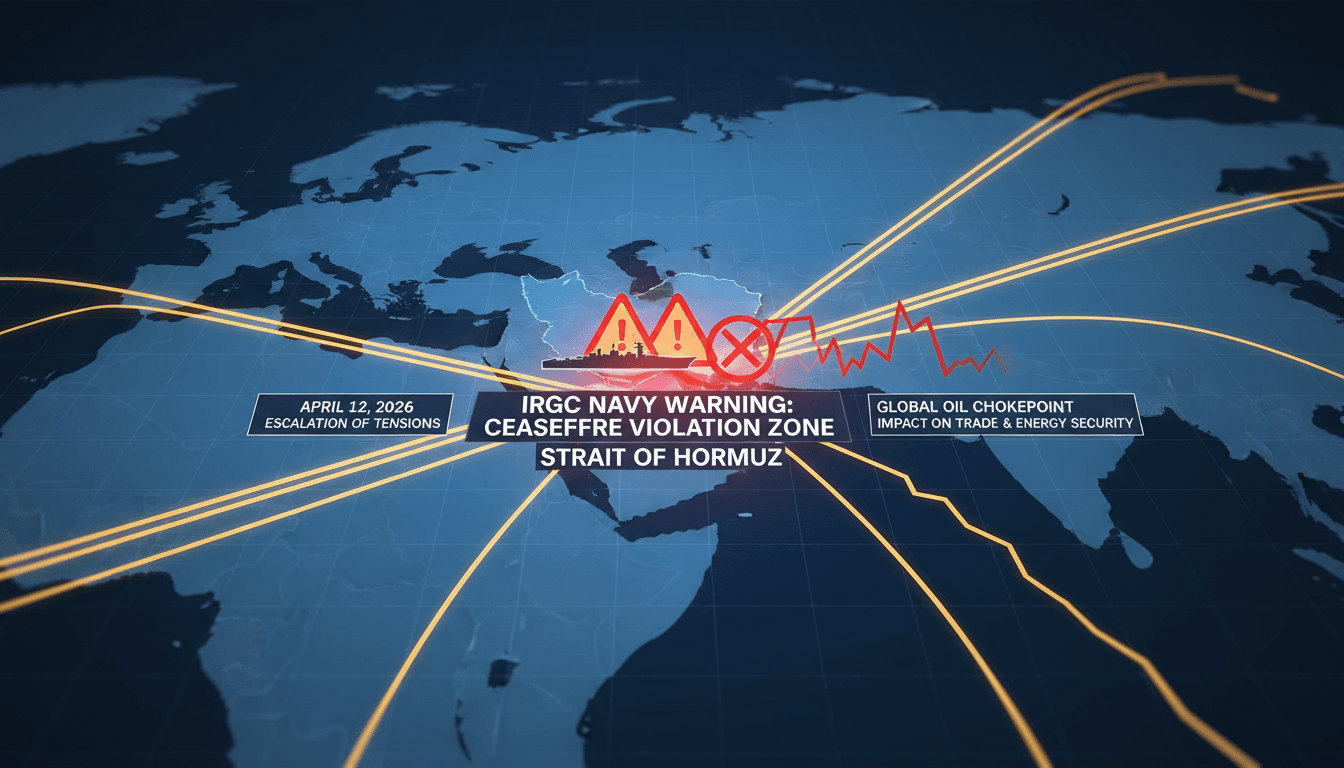
Here's what it means for you.
If you rely on global energy markets, the IRGC's warning could lead to increased fuel prices and supply chain disruptions.
Why it matters
The Strait of Hormuz is a critical chokepoint for global oil shipments, with 20% of the world's oil and LNG passing through annually.
What happened (in 30 seconds)
- On April 12, 2026, the IRGC Navy warned that military vessels approaching the Strait of Hormuz would be considered a ceasefire violation.
- This warning follows U.S. Navy destroyer transits and threats of a blockade by President Trump, escalating tensions in the region.
- Shipping traffic has dwindled, with vessels adhering to IRGC-designated routes to avoid confrontation.
The context you actually need
- The Strait of Hormuz is vital for global energy, with 20% of oil and LNG shipments transiting through it annually.
- U.S.-Iran relations have deteriorated following a fragile ceasefire, with stalled negotiations in Islamabad and ongoing military posturing.
- Iran's control over the strait has tightened, with new protocols and passage fees imposed since early 2026, further complicating maritime operations.
What's really happening
The IRGC Navy's warning is a direct response to heightened military activity in the Strait of Hormuz, particularly the recent transits of U.S. Navy destroyers. These destroyers were reportedly engaged in mine-clearing operations, which Iran perceives as a threat to its sovereignty and control over the strait. The IRGC's statement emphasizes that while non-military vessels can pass through, any military approach will be met with decisive action, indicating a zero-tolerance policy for perceived violations of Iranian territorial waters.
This situation is exacerbated by the backdrop of failed negotiations in Islamabad, where the U.S. and Iran attempted to reach a more stable agreement following a series of conflicts. The U.S. has threatened a naval blockade to compel Iranian concessions, including the dismantling of fast-attack vessels, which Iran has firmly rejected. As a result, the IRGC has adopted a more aggressive stance, asserting its authority over maritime traffic and imposing selective controls and passage fees.
The economic implications are significant. With 20% of global oil and LNG shipments passing through the Strait of Hormuz, any disruption can lead to increased fuel prices and supply chain delays. The IRGC's warning has already resulted in a near standstill of shipping traffic, as vessels are now required to navigate through designated routes to avoid 'danger zones.' This has led to a reduction in daily vessel transits from 11 to 5, impacting not only shipping companies but also consumers who may face higher prices at the pump.
Moreover, the geopolitical landscape is shifting. The U.S. Central Command has enforced blockades on Iranian vessels, while Israel has heightened its military alerts. Russia has offered to mediate, indicating that the situation is drawing in multiple international players, each with their own interests in the region. The potential for miscalculation or accidental confrontation remains high, as both sides maintain a military presence in the strait.
Who feels it first (and how)
- Shipping companies: Facing increased operational costs and delays due to restricted routes.
- Energy consumers: Likely to see rising fuel prices as supply chain disruptions affect market dynamics.
- Local businesses in Dubai: Experiencing elevated fuel prices and insurance costs due to increased risks in the region.
- Geopolitical analysts: Monitoring the evolving military postures and potential for conflict escalation.
What to watch next
- U.S. military movements: Any further naval deployments or changes in strategy could escalate tensions or lead to new negotiations.
- Iran's response: Look for potential retaliatory actions or adjustments in maritime protocols that could affect shipping traffic.
- Global oil prices: Fluctuations in oil prices will indicate market reactions to the ongoing situation and potential supply chain impacts.
The Strait of Hormuz is critical for global oil and LNG shipments, with 20% of the world's supply transiting through it.
Increased fuel prices and supply chain disruptions as shipping traffic is affected by IRGC protocols.
The long-term implications of U.S.-Iran relations and whether negotiations will resume or further deteriorate.
Frequently Asked Questions
- Why it matters?
- The Strait of Hormuz is a critical chokepoint for global oil shipments, with 20% of the world's oil and LNG passing through annually.
- What happened (in 30 seconds)?
- On April 12, 2026, the IRGC Navy warned that military vessels approaching the Strait of Hormuz would be considered a ceasefire violation. This warning follows U.S. Navy destroyer transits and threats of a blockade by President Trump, escalating tensions in the region. Shipping traffic has dwindled, with vessels adhering to IRGC-designated routes to avoid confrontation.
- What's really happening?
- The IRGC Navy's warning is a direct response to heightened military activity in the Strait of Hormuz, particularly the recent transits of U.S. Navy destroyers. These destroyers were reportedly engaged in mine-clearing operations, which Iran perceives as a threat to its sovereignty and control over the strait. The IRGC's statement emphasizes that while non-military vessels can pass through, any military approach will be met with decisive action, indicating a zero-tolerance policy for perceived vi
- Who feels it first (and how)?
- Shipping companies: Facing increased operational costs and delays due to restricted routes. Energy consumers: Likely to see rising fuel prices as supply chain disruptions affect market dynamics. Local businesses in Dubai: Experiencing elevated fuel prices and insurance costs due to increased risks in the region. Geopolitical analysts: Monitoring the evolving military postures and potential for conflict escalation.
- What to watch next?
- U.S. military movements: Any further naval deployments or changes in strategy could escalate tensions or lead to new negotiations. Iran's response: Look for potential retaliatory actions or adjustments in maritime protocols that could affect shipping traffic. Global oil prices: Fluctuations in oil prices will indicate market reactions to the ongoing situation and potential supply chain impacts.
Arabic-language coverage of international news and geopolitics.
"RT Arabic is a Russian state-funded outlet often criticized for promoting Kremlin-aligned narratives."
— A47 Editor
بيان تحذيري جديد من الحرس الثوري حول مضيق هرمز ومرور السفن فيه
The Iranian Revolutionary Guard Corps issued a warning stating that the approach of military vessels to the Strait of Hormuz constitutes a violation of the ceasefire. This statement highlights ongoing tensions in the region, particularly concerning m...
Arabic-language coverage of international news and geopolitics.
"RT Arabic is a Russian state-funded outlet often criticized for promoting Kremlin-aligned narratives."
— A47 Editor
الحرس الثوري يحذر: أي محاولة لعبور مضيق هرمز ستواجه برد فعل قاس
The Islamic Revolutionary Guard Corps issued an official statement asserting its control over the Strait of Hormuz, firmly denying reports of U.S. warships crossing the waterway. The statement emphasizes the readiness of the Iranian naval forces to r...
Pan-Arab political news and analysis.
"Al-Quds Al-Arabi is a London-based Arabic newspaper known for political coverage."
— A47 Editor
الحرس الثوري الإيراني يحذر بأنه سيتعامل “بحزم” مع السفن الحربية التي تعبر مضيق هرمز
The Iranian Revolutionary Guard Corps has issued a warning that it will respond 'firmly' to any military vessels crossing the Strait of Hormuz, following the announcement by the U.S. Central Command regarding the passage of two of its warships throug...
Pan-Arab news coverage spanning politics, business, sports, and regional affairs.
"Asharq Al-Awsat reflects a broad Arab editorial perspective with strong attention to regional geopolitics."
— A47 Editor
«الحرس الثوري» يحذّر السفن الحربية من عبور مضيق هرمز
The Iranian Revolutionary Guard has issued a warning that any attempts by warships to cross the Strait of Hormuz will face a strong response. This statement underscores the heightened tensions in the region, particularly concerning maritime security ...