
Pope Leo XIV Endorses Two-Week Ceasefire in US-Israel-Iran Conflict
Here's what it means for you.
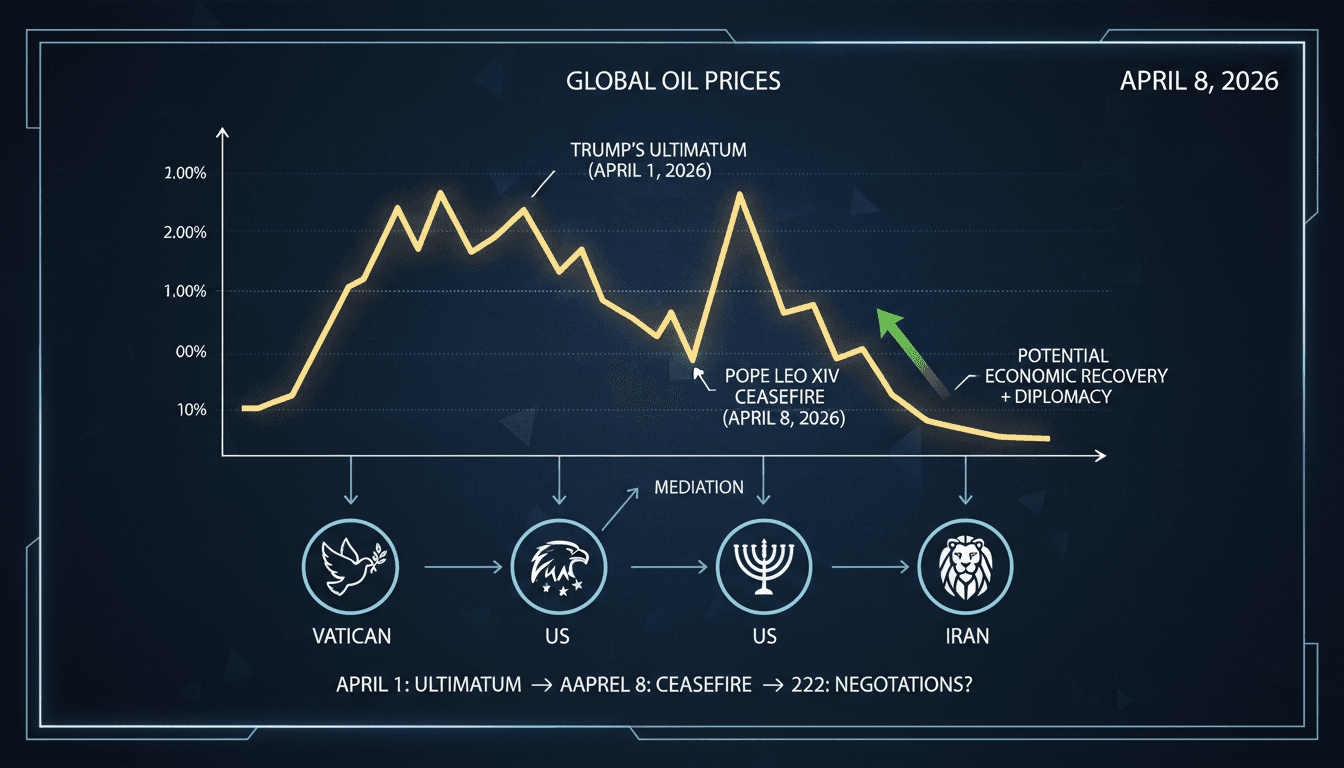
If you’re in the global market, the recent ceasefire could stabilize oil prices and improve economic conditions.
Why it matters
This ceasefire signals a potential shift in geopolitical tensions that could impact global markets and energy prices.
What happened (in 30 seconds)
- Pope Leo XIV welcomed a two-week ceasefire in the US-Israel-Iran war, expressing satisfaction at the truce announced by President Trump.
- Trump's ultimatum threatened Iranian civilization unless a truce was accepted, prompting Pope Leo to condemn the rhetoric as unacceptable.
- Negotiations are set to resume on Iran's 10-point peace plan, with the reopening of the Strait of Hormuz anticipated.
The context you actually need
- The US-Israel-Iran war began on February 28, 2026, with coordinated airstrikes leading to significant casualties and economic disruption.
- Reported fatalities in Iran from the initial strikes reached 2,076, exacerbating humanitarian concerns and international scrutiny.
- Pope Leo XIV has positioned himself as a key diplomatic figure, advocating for peace amid escalating violence and economic fallout.
What's really happening
The recent ceasefire in the US-Israel-Iran conflict represents a critical juncture in a war that has already claimed thousands of lives and disrupted global markets. The conflict began with coordinated airstrikes by US and Israeli forces targeting Iranian military infrastructure, which included the assassination of Supreme Leader Ali Khamenei. This aggressive military action prompted a swift and severe response from Iran, including the closure of the Strait of Hormuz, a vital shipping route for global oil supplies. As a result, oil prices surged above $100 per barrel, causing economic strain not only in the Middle East but also in regions heavily reliant on oil imports.
Pope Leo XIV's intervention came at a pivotal moment. His condemnation of President Trump's threats—specifically the assertion that "a whole civilization will die" if Iran did not comply—highlighted the moral and ethical dimensions of the conflict. By advocating for a ceasefire and a return to negotiations, the Pope has positioned himself as a mediator in a situation fraught with tension. His call for diplomacy resonates with a global audience increasingly weary of conflict and its repercussions.
The ceasefire, mediated partly through Pakistan, has immediate implications for the geopolitical landscape. It halts military operations for two weeks, providing a window for negotiations on Iran's proposed peace plan. This plan includes ten points aimed at de-escalating tensions and establishing a framework for long-term peace. The reopening of the Strait of Hormuz is particularly significant, as it will alleviate some of the economic pressures caused by the conflict, especially in oil-dependent economies.
As the ceasefire unfolds, global markets have reacted positively, with oil prices beginning to decline. This relief is crucial for economies that have suffered from the volatility caused by the war. In the UAE, for instance, residents faced missile alerts and evacuations, with the conflict wiping out approximately $120 billion in market value. The potential stabilization of oil prices could lead to a rebound in tourism and economic activity in the region.
However, the path forward remains complex. The ceasefire is contingent upon verification measures set by Trump, and the exclusion of certain fronts, such as Lebanon, from negotiations raises questions about the comprehensiveness of the peace efforts. The cautious optimism expressed by Gulf states indicates a desire for stability, but the underlying tensions remain unresolved.
Who feels it first (and how)
- Oil markets: Fluctuations in oil prices directly impact global economies and consumer costs.
- Middle Eastern residents: Those living in conflict zones face immediate safety concerns and economic instability.
- Tourism sectors: Regions like the UAE may see a rebound in tourism as stability returns, impacting local businesses.
What to watch next
- Negotiation outcomes: The success of the peace talks scheduled for April 10 will determine the longevity of the ceasefire and its impact on regional stability.
- Oil price trends: Continued monitoring of oil prices will reveal market reactions to the ceasefire and any subsequent developments.
- Geopolitical responses: Watch for reactions from other regional players, particularly in relation to Iran's peace plan and its implications for broader Middle Eastern dynamics.
The ceasefire has been officially announced and is set for two weeks.
Oil prices will stabilize or decline further if negotiations progress positively.
The long-term effectiveness of the ceasefire and whether it will lead to a permanent resolution of the conflict.
Frequently Asked Questions
- Why it matters?
- This ceasefire signals a potential shift in geopolitical tensions that could impact global markets and energy prices.
- What happened (in 30 seconds)?
- Pope Leo XIV welcomed a two-week ceasefire in the US-Israel-Iran war, expressing satisfaction at the truce announced by President Trump. Trump's ultimatum threatened Iranian civilization unless a truce was accepted, prompting Pope Leo to condemn the rhetoric as unacceptable. Negotiations are set to resume on Iran's 10-point peace plan, with the reopening of the Strait of Hormuz anticipated.
- What's really happening?
- The recent ceasefire in the US-Israel-Iran conflict represents a critical juncture in a war that has already claimed thousands of lives and disrupted global markets. The conflict began with coordinated airstrikes by US and Israeli forces targeting Iranian military infrastructure, which included the assassination of Supreme Leader Ali Khamenei. This aggressive military action prompted a swift and severe response from Iran, including the closure of the Strait of Hormuz, a vital shipping route for
- Who feels it first (and how)?
- Oil markets: Fluctuations in oil prices directly impact global economies and consumer costs. Middle Eastern residents: Those living in conflict zones face immediate safety concerns and economic instability. Tourism sectors: Regions like the UAE may see a rebound in tourism as stability returns, impacting local businesses.
- What to watch next?
- Negotiation outcomes: The success of the peace talks scheduled for April 10 will determine the longevity of the ceasefire and its impact on regional stability. Oil price trends: Continued monitoring of oil prices will reveal market reactions to the ceasefire and any subsequent developments. Geopolitical responses: Watch for reactions from other regional players, particularly in relation to Iran's peace plan and its implications for broader Middle Eastern dynamics.
Capitol Hill news, legislation, and policy insight.
"The Hill specializes in U.S. politics and policy, with a focus on Capitol Hill developments and a reputation for insider reporting."
— A47 Editor
Pope welcomes US-Iran ceasefire deal as 'sign of deep hope'
Pope Leo XIV expressed satisfaction over the announcement of a two-week ceasefire agreement between the U.S. and Iran, describing it as a 'sign of deep hope' during his address in St. Peter’s Square. This ceasefire, effective immediately, includes Ir...
Regional and international reporting focused on Middle Eastern politics, diplomacy, and economics.
"Asharq Al-Awsat is a Saudi-owned international newspaper reflecting mainstream Gulf political perspectives."
— A47 Editor
Pope Leo Praises Iran War Ceasefire After Criticizing Trump Threat
Pope Leo praised the recent two-week ceasefire in the Iran war, which was facilitated by Pakistan, following a period of escalating tensions and military actions. This ceasefire comes amid a rare clash between Pope Leo and President Trump, who had is...
Macro commentary, policy analysis, growth/inflation themes, and global outlooks.
"Contextual macro coverage that complements day-to-day market headlines."
— A47 Editor
Pope Leo praises Iran war ceasefire after criticizing Trump threat
Pope Leo has praised the recent ceasefire agreement between the United States and Iran, which follows former President Donald Trump's decision to suspend military operations against Iran for two weeks. This ceasefire aims to de-escalate tensions in t...
English-language reporting on Saudi politics, policy, and society.
"Saudi Gazette reflects mainstream Saudi institutional perspectives."
— A47 Editor
Pope Leo slams Trump’s threat to destroy Iran's civilization
Pope Leo XIV condemned U.S. President Donald Trump's threats to destroy Iran's civilization, calling them 'truly unacceptable' just hours before a two-week ceasefire was announced between the U.S. and Iran. The Pope urged Americans to advocate for pe...