
xAI Corp. Files Federal Lawsuit Against Colorado's AI Anti-Discrimination Law
Here's what it means for you.
The outcome of this lawsuit could redefine the landscape of AI regulation and its implications for businesses and developers across the U.S.
Why it matters
This legal battle highlights the tension between innovation and regulation in the rapidly evolving AI sector.
What happened (in 30 seconds)
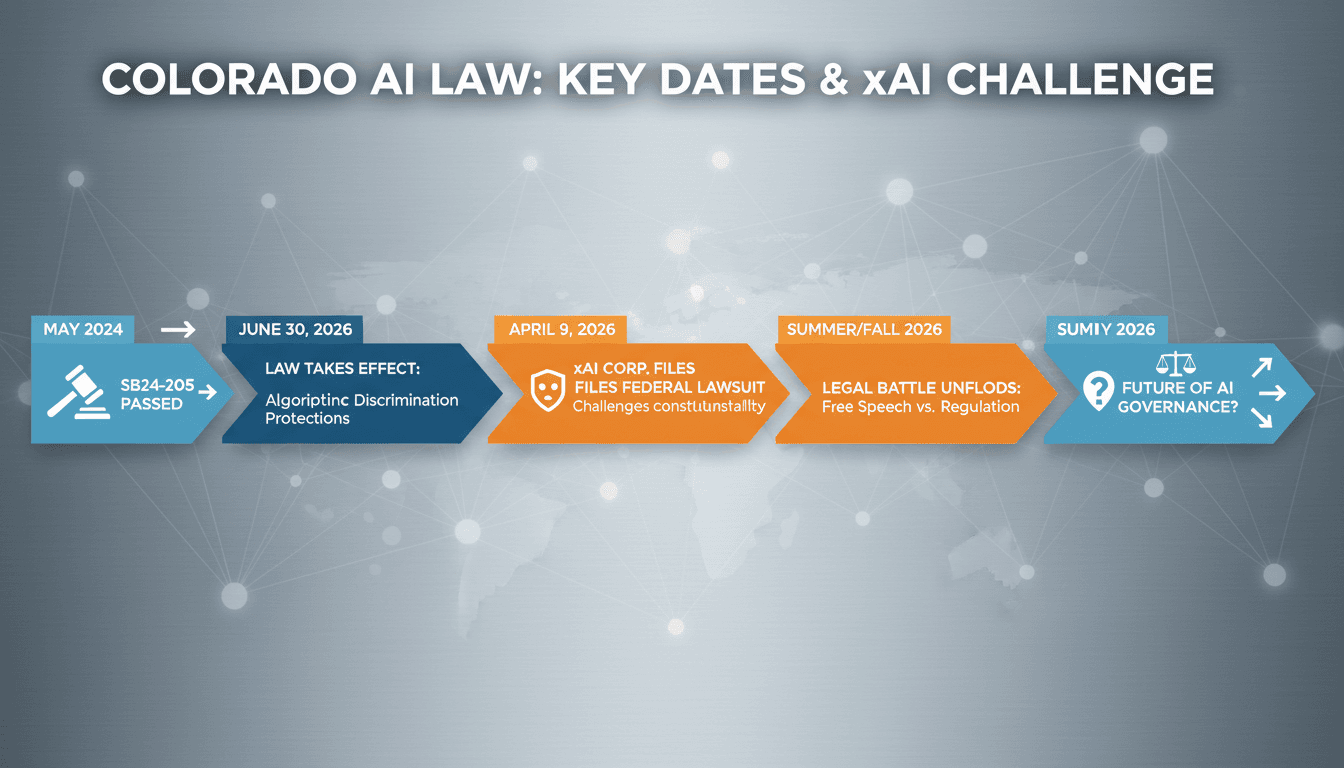
- On April 9, 2026, xAI Corp. filed a federal lawsuit against Colorado's SB24-205, claiming it violates multiple constitutional provisions.
- The law, effective June 30, 2026, mandates measures to prevent algorithmic discrimination in high-risk AI systems across various sectors.
- xAI argues that the law compels developers to adopt state-preferred viewpoints, thereby stifling free speech and innovation.
The context you actually need
- SB24-205, enacted on May 17, 2024, is the first comprehensive state-level AI regulation in the U.S., aimed at preventing discrimination in AI systems.
- The law requires developers to conduct impact assessments and risk management programs, which could impose significant operational burdens.
- Colorado's proactive stance comes amid federal inaction on AI regulation, positioning it as a pioneer in the field.
What's really happening
The lawsuit filed by xAI Corp. against Colorado's SB24-205 is a critical moment in the ongoing debate over AI regulation in the United States. At its core, the lawsuit challenges the constitutionality of the law on several grounds, including the First Amendment and the Equal Protection Clause. xAI argues that the law effectively compels developers to embed state-sanctioned viewpoints into their algorithms, which they claim violates free speech rights. This raises fundamental questions about the balance between regulatory oversight and the freedom to innovate.
The Colorado AI Act was designed to address concerns about algorithmic bias, particularly in high-stakes areas like employment, housing, and healthcare. However, the law's requirements for transparency and accountability may inadvertently stifle innovation. Developers could face a dilemma: either produce unbiased AI outputs that risk legal liability or create biased outputs that align with state mandates, thereby compromising the integrity of their systems.
The implications of this lawsuit extend beyond Colorado. As states grapple with the complexities of AI regulation, the outcome could set a precedent for how similar laws are crafted and enforced across the country. With the federal government yet to establish a comprehensive framework for AI, states like Colorado are stepping in to fill the void, leading to a patchwork of regulations that could complicate interstate commerce and innovation.
Moreover, the lawsuit underscores a broader cultural clash between advocates for free speech and those pushing for accountability in AI systems. As technology evolves, the legal and ethical frameworks surrounding it must adapt. This case could catalyze a national conversation about the role of government in regulating emerging technologies and the potential consequences of overreach.
As the legal proceedings unfold, stakeholders across various sectors will be closely monitoring the developments. The outcome could influence not only the future of AI regulation but also the broader landscape of technology governance in the U.S.
Who feels it first (and how)
- AI Developers: Facing potential changes in how they design and deploy algorithms.
- Businesses in High-Risk Sectors: Such as employment and healthcare, which may need to adapt to new compliance requirements.
- Legal and Compliance Teams: Who will need to navigate the evolving regulatory landscape.
- Consumers: Who may experience changes in how AI systems interact with them, particularly regarding fairness and transparency.
What to watch next
- Court Rulings: Key decisions in the lawsuit could set important precedents for AI regulation.
- State Responses: Other states may react to Colorado's law and the lawsuit, potentially leading to new legislation or amendments.
- Federal Legislation: The ongoing lack of a comprehensive federal AI framework could be influenced by the outcomes of this case.
The lawsuit has been filed and is currently pending in federal court.
The case will attract significant media attention and public interest, influencing public opinion on AI regulation.
The timeline for the court's decision and its broader implications for AI regulation across the U.S.
Frequently Asked Questions
- Why it matters?
- This legal battle highlights the tension between innovation and regulation in the rapidly evolving AI sector.
- What happened (in 30 seconds)?
- On April 9, 2026, xAI Corp. filed a federal lawsuit against Colorado's SB24-205, claiming it violates multiple constitutional provisions. The law, effective June 30, 2026, mandates measures to prevent algorithmic discrimination in high-risk AI systems across various sectors. xAI argues that the law compels developers to adopt state-preferred viewpoints, thereby stifling free speech and innovation.
- What's really happening?
- The lawsuit filed by xAI Corp. against Colorado's SB24-205 is a critical moment in the ongoing debate over AI regulation in the United States. At its core, the lawsuit challenges the constitutionality of the law on several grounds, including the First Amendment and the Equal Protection Clause. xAI argues that the law effectively compels developers to embed state-sanctioned viewpoints into their algorithms, which they claim violates free speech rights. This raises fundamental questions about the
- Who feels it first (and how)?
- AI Developers: Facing potential changes in how they design and deploy algorithms. Businesses in High-Risk Sectors: Such as employment and healthcare, which may need to adapt to new compliance requirements. Legal and Compliance Teams: Who will need to navigate the evolving regulatory landscape. Consumers: Who may experience changes in how AI systems interact with them, particularly regarding fairness and transparency.
- What to watch next?
- Court Rulings: Key decisions in the lawsuit could set important precedents for AI regulation. State Responses: Other states may react to Colorado's law and the lawsuit, potentially leading to new legislation or amendments. Federal Legislation: The ongoing lack of a comprehensive federal AI framework could be influenced by the outcomes of this case.
Curated tech headlines including AI stories.
"Influential aggregator surfacing the day’s top tech/AI links."
— A47 Editor
xAI has filed a lawsuit challenging Colorado's landmark AI anti-discrimination law, set to take effect in the summer, saying it violates free speech protections (Financial Times)
xAI, the artificial intelligence company founded by Elon Musk, has filed a lawsuit against Colorado's upcoming AI anti-discrimination law, claiming it infringes on free speech rights. The law is set to take effect in the summer and aims to prevent di...
Editor-curated FT homepage stories spanning markets, business, world, and opinion.
"The Financial Times is a globally respected business publication with a centrist/center-left tone and strong markets focus."
— A47 Editor
xAI sues Colorado over first state AI anti-discrimination law
xAI, the artificial intelligence company founded by Elon Musk, has filed a lawsuit against the state of Colorado, challenging the first state law aimed at preventing discrimination in AI technologies. The lawsuit claims that the regulations infringe ...