
Hezbollah's Exclusion from US-Iran Ceasefire Complicates Middle East Peace Efforts
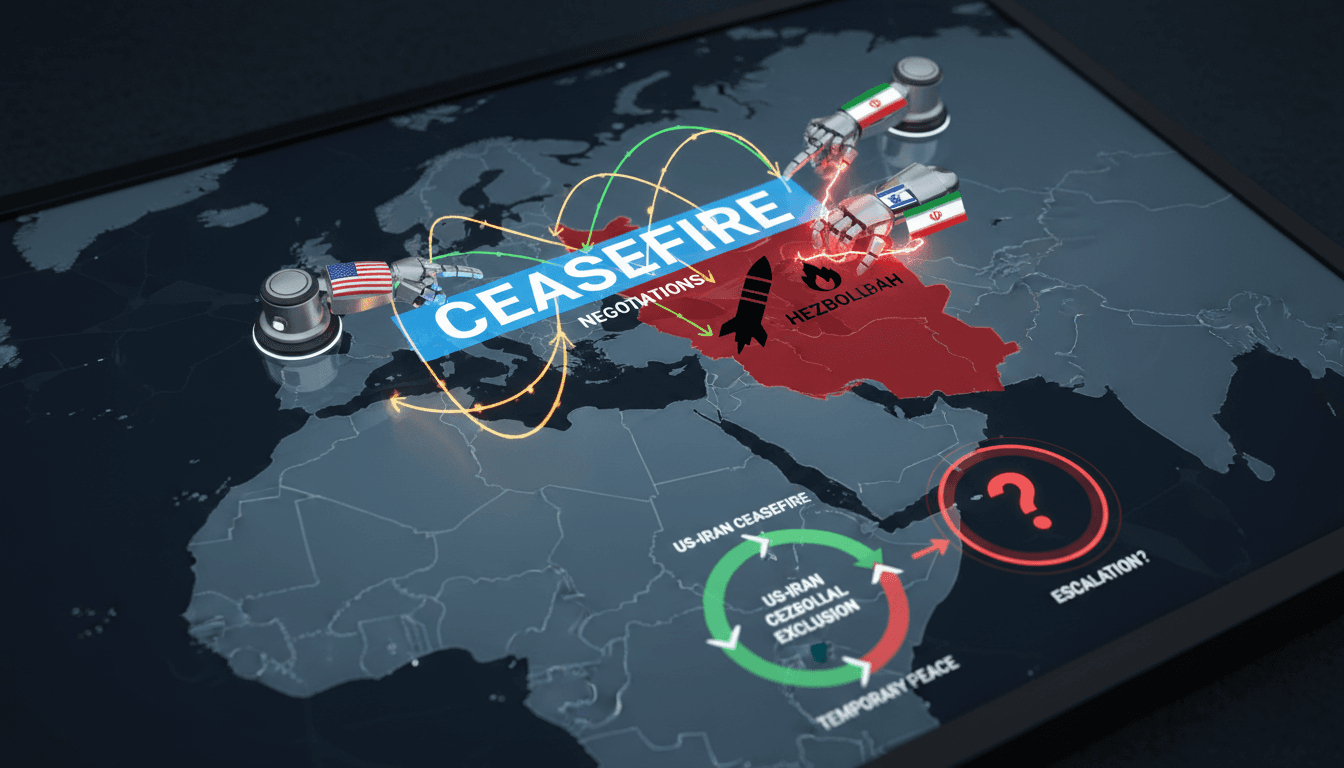
Here's what it means for you.
Market volatility and potential fuel price surges are on the horizon as geopolitical tensions escalate in the Middle East.
Why it matters
The ongoing conflict and ceasefire negotiations directly impact global oil markets and regional stability, affecting prices and supply chains.
What happened (in 30 seconds)
- On April 8, 2026, the US and Iran agreed to a two-week ceasefire in the Iran war, excluding Lebanon from the terms.
- Israel continued airstrikes on Hezbollah targets, resulting in over 300 casualties, despite the ceasefire announcement.
- Iran retaliated by partially closing the Strait of Hormuz, escalating tensions and threatening the ceasefire's viability.
The context you actually need
- Proxy conflicts between Israel and Iran-backed groups, including Hezbollah, have intensified, leading to direct military exchanges.
- The United States, under President Trump's administration, is seeking de-escalation, while Iran uses proxies to maintain regional influence without direct confrontation.
- Pakistan's mediation role highlights the complexities of international diplomacy in the region, as various stakeholders vie for control and influence.
What's really happening
The ceasefire agreement between the United States and Iran was intended to provide a temporary pause in hostilities amid the ongoing Iran war, which has seen increased clashes between Israel and Iran-backed groups like Hezbollah. However, the exclusion of Lebanon from this ceasefire has emerged as a critical sticking point. Israel's immediate military response—continuing airstrikes on Hezbollah—has resulted in significant casualties, with over 300 individuals reported killed in the aftermath of the ceasefire announcement. This aggressive posture from Israel underscores its commitment to neutralizing Hezbollah as a threat, which it views as integral to Iran's regional strategy.
Iran's response to these airstrikes has been to partially close the Strait of Hormuz, a strategic chokepoint for global oil shipments, thereby raising concerns about potential disruptions in oil supply and price volatility. The Strait is crucial for international trade, and any restrictions could have far-reaching implications for global markets, particularly in regions heavily reliant on oil imports.
The situation is further complicated by the geopolitical dynamics at play. The Trump administration's push for a ceasefire reflects a desire to stabilize the region and prevent further escalation into a broader conflict. However, Iran's insistence on including Hezbollah in the ceasefire discussions indicates its reliance on proxy forces to exert influence and project power in the region. This reliance creates a paradox where Iran seeks peace while simultaneously supporting militant groups that provoke conflict.
As discussions continue, the Israeli government has initiated direct negotiations with Lebanon, aiming for Hezbollah's disarmament. Israeli Prime Minister Netanyahu's declaration that the ceasefire does not apply to Lebanon suggests a strategic maneuver to isolate Hezbollah and apply pressure on Iran. This dynamic raises the stakes for all parties involved, as Hezbollah remains a pivotal player in Iran's regional strategy, complicating any potential resolution.
The ongoing airstrikes, Iranian threats, and the fragile nature of the ceasefire highlight the precarious balance of power in the region. The failure to address Hezbollah's role could lead to a collapse of the ceasefire, reigniting hostilities and further destabilizing the Middle East.
Who feels it first (and how)
- Oil markets: Traders and investors will react to fluctuations in oil prices due to potential disruptions in the Strait of Hormuz.
- Middle Eastern governments: Regional stability is at risk, impacting diplomatic relations and security policies.
- Global consumers: Rising fuel prices may affect transportation costs and consumer goods, leading to increased prices worldwide.
What to watch next
- Israeli military operations: Continued airstrikes on Hezbollah will indicate Israel's commitment to its military strategy and could provoke further Iranian retaliation.
- Iran's response: Monitoring Iran's actions in the Strait of Hormuz will reveal its willingness to escalate or de-escalate tensions based on the ceasefire's stability.
- Negotiation outcomes: The effectiveness of direct negotiations between Israel and Lebanon regarding Hezbollah's disarmament will be crucial in determining the ceasefire's longevity.
The ceasefire is fragile, with ongoing military actions from Israel against Hezbollah.
Continued volatility in oil markets and potential price increases as tensions escalate.
The long-term implications of Hezbollah's role in the ceasefire negotiations and its impact on regional stability.
Frequently Asked Questions
- Why it matters?
- The ongoing conflict and ceasefire negotiations directly impact global oil markets and regional stability, affecting prices and supply chains.
- What happened (in 30 seconds)?
- On April 8, 2026, the US and Iran agreed to a two-week ceasefire in the Iran war, excluding Lebanon from the terms. Israel continued airstrikes on Hezbollah targets, resulting in over 300 casualties, despite the ceasefire announcement. Iran retaliated by partially closing the Strait of Hormuz, escalating tensions and threatening the ceasefire's viability.
- What's really happening?
- The ceasefire agreement between the United States and Iran was intended to provide a temporary pause in hostilities amid the ongoing Iran war, which has seen increased clashes between Israel and Iran-backed groups like Hezbollah. However, the exclusion of Lebanon from this ceasefire has emerged as a critical sticking point. Israel's immediate military response—continuing airstrikes on Hezbollah—has resulted in significant casualties, with over 300 individuals reported killed in the aftermath of
- Who feels it first (and how)?
- Oil markets: Traders and investors will react to fluctuations in oil prices due to potential disruptions in the Strait of Hormuz. Middle Eastern governments: Regional stability is at risk, impacting diplomatic relations and security policies. Global consumers: Rising fuel prices may affect transportation costs and consumer goods, leading to increased prices worldwide.
- What to watch next?
- Israeli military operations: Continued airstrikes on Hezbollah will indicate Israel's commitment to its military strategy and could provoke further Iranian retaliation. Iran's response: Monitoring Iran's actions in the Strait of Hormuz will reveal its willingness to escalate or de-escalate tensions based on the ceasefire's stability. Negotiation outcomes: The effectiveness of direct negotiations between Israel and Lebanon regarding Hezbollah's disarmament will be crucial in determining the c
Comprehensive coverage of Middle Eastern and global issues.
"Al Jazeera is a prominent voice from the Global South, especially the Middle East, with an emphasis on underreported stories."
— A47 Editor
Why is Hezbollah a sticking point in the Iran ceasefire?
The ongoing conflict in Lebanon has escalated as Israel intensifies its military operations against Hezbollah, despite a recent ceasefire agreement between the United States and Iran. This situation has led to significant casualties and has raised co...
Global news coverage with extensive reporting on Middle Eastern conflicts and geopolitics.
"Al Jazeera is a Qatar-based broadcaster known for wide regional coverage and alternative perspectives."
— A47 Editor
Why is Hezbollah a sticking point in the Iran ceasefire?
The ongoing conflict in Lebanon has escalated as Israel intensifies its military operations against Hezbollah, despite a recent ceasefire agreement between the United States and Iran. This situation has led to significant casualties and has raised co...
News from the United States including domestic politics, society, and culture.
"The Guardian is known for its progressive editorial stance and in-depth analysis, often advocating for social justice, environmental issues, and liberal values."
— A47 Editor
Will deadly Israeli attacks in Lebanon shatter US-Iran ceasefire? | The Latest
Israel has escalated its bombing campaign in Lebanon, leading to significant casualties and prompting Iran to threaten a withdrawal from the recently established ceasefire with the United States. The strikes, targeting Hezbollah, have resulted in hun...
Top international stories selected by The Guardian editors.
"The Guardian is known for its progressive editorial stance and in-depth analysis."
— A47 Editor
Will deadly Israeli attacks in Lebanon shatter US-Iran ceasefire? | The Latest
Israel has escalated its bombing campaign in Lebanon, leading to significant casualties and prompting Iran to threaten a withdrawal from the recently established ceasefire with the United States. The strikes, targeting Hezbollah, have resulted in hun...
24/7 international news from a French perspective in multiple languages.
"France 24 is viewed as a globally focused outlet with balanced coverage and a European perspective."
— A47 Editor
Israel dismisses calls to add Lebanon to US-Iran ceasefire
Israel has dismissed international calls to extend the recent US-Iran ceasefire to include Lebanon, vowing to continue military strikes against Hezbollah. The Lebanese health ministry reported at least 203 fatalities and 1,000 injuries from the lates...
English-language reporting on Saudi politics, policy, and society.
"Saudi Gazette reflects mainstream Saudi institutional perspectives."
— A47 Editor
Israel launches fresh strikes on Lebanon further straining Iran ceasefire
Israel has intensified its military operations in Lebanon, conducting airstrikes that resulted in at least 17 fatalities and numerous injuries, further complicating the fragile ceasefire between Iran and the United States. The strikes targeted variou...
Global markets, investing, and macroeconomics from a premier financial newsroom.
"Bloomberg is respected for in-depth financial reporting and data-driven analysis."
— A47 Editor
Iran-US Truce in Doubt as Israel Strikes Lebanon
Israel has intensified its military operations against Hezbollah in Lebanon, marking its largest assault since the onset of the invasion, which raises significant concerns regarding the stability of the recent US-Iran ceasefire. This escalation follo...
European coverage of Middle East politics and security issues.
"France 24 offers international reporting with a European editorial perspective."
— A47 Editor
Iran-US truce on brink as Israel pounds Lebanon, Tehran warns of escalation
A fragile two-week truce between Iran and the United States is at risk as Tehran threatens renewed hostilities amid heavy Israeli airstrikes on Lebanon, which have resulted in at least 182 fatalities and nearly 900 injuries according to Lebanese auth...
Coverage of current events and conflicts in the Middle East.
"France 24 is viewed as a globally focused outlet with balanced coverage and a European perspective."
— A47 Editor
Iran-US truce on brink as Israel pounds Lebanon, Tehran warns of escalation
A fragile two-week truce between Iran and the United States is at risk as Israel intensifies airstrikes on Lebanon, resulting in at least 182 fatalities and nearly 900 injuries, according to Lebanese authorities. This escalation comes despite the cea...