
California Attorney General Charges 21 in $267 Million Medi-Cal Hospice Fraud Scheme
Here's what it means for you.
If you’re a taxpayer in California, this fraud case highlights the importance of vigilance in healthcare spending and the potential for increased scrutiny on services you rely on.
Why it matters
This case underscores systemic vulnerabilities in Medi-Cal, California's Medicaid program, and the ongoing battle against healthcare fraud.
What happened (in 30 seconds)
- On April 9, 2026, California Attorney General Rob Bonta announced charges against 21 individuals involved in a $267 million hospice fraud scheme.
- Five arrests were made, and over $757,000 in cash was seized as part of the operation.
- The scheme involved fraudulent enrollment of non-residents in Medi-Cal and billing for fictitious hospice services.
The context you actually need
- Medi-Cal vulnerabilities: The state's Medicaid program has been susceptible to fraud, prompting increased scrutiny and enforcement actions.
- Previous cases: Under AG Rob Bonta, California has pursued 119 hospice-related criminal cases, resulting in 51 convictions, indicating a pattern of abuse.
- Federal initiatives: This case aligns with federal anti-fraud efforts, including a task force targeting Medicare abuses, particularly in California.
What's really happening
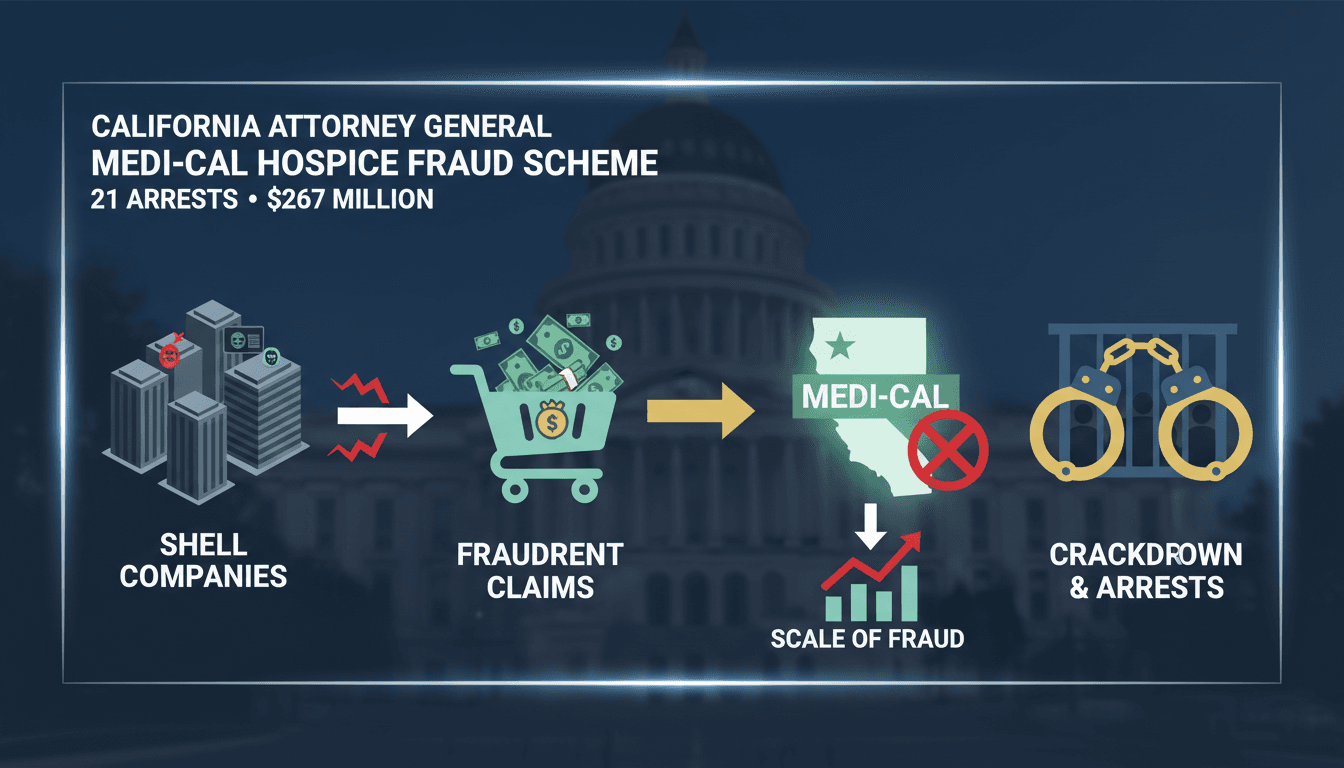
The recent charges against 21 individuals in California reveal a sophisticated and alarming fraud scheme that exploited the Medi-Cal system. The operation involved acquiring stolen identities of non-California residents from the dark web, which were then used to enroll these individuals in Medi-Cal fraudulently. This enrollment allowed the suspects to establish 14 shell hospice companies that billed the state for services that were never rendered. The total fraudulent billings reached an astounding $267 million, highlighting significant gaps in oversight within the Medi-Cal program.
The California Department of Health Care Services flagged suspicious billing patterns, prompting an investigation that unveiled the depth of the fraud. The suspects not only engaged in healthcare fraud but also committed identity theft and money laundering, with felony charges reflecting the severity of their actions. The arrests and asset seizures are part of a broader initiative to combat healthcare fraud, which has been a growing concern in California.
Governor Gavin Newsom and Attorney General Rob Bonta have emphasized the importance of holding accountable those who exploit taxpayer funds, particularly in a system designed to support vulnerable populations. This case is not just about the immediate financial losses; it represents a systemic issue that affects the integrity of healthcare services in California. The ongoing investigation, dubbed Operation Skip Trace, is likely to reveal further connections and possibly more arrests as authorities continue to scrutinize the healthcare landscape.
The implications of this case extend beyond California. As states grapple with rising healthcare costs and fraud, the need for robust systems to protect taxpayer dollars becomes increasingly critical. This incident may prompt other states to reevaluate their own Medicaid programs and the measures in place to prevent similar abuses.
Who feels it first (and how)
- Taxpayers: Increased scrutiny on healthcare spending may lead to more rigorous audits and potential changes in funding allocations.
- Healthcare providers: Legitimate providers may face stricter regulations and oversight as authorities tighten controls to prevent fraud.
- Vulnerable populations: Individuals relying on Medi-Cal may experience changes in service availability or access due to heightened enforcement measures.
What to watch next
- Increased enforcement actions: Watch for more arrests and prosecutions as investigations continue into Medi-Cal fraud, which could impact healthcare providers across California.
- Policy changes: Monitor potential legislative changes aimed at strengthening fraud prevention measures within Medi-Cal and similar programs nationwide.
- Public awareness campaigns: Expect initiatives aimed at educating the public about healthcare fraud and how to report suspicious activities, which could lead to greater community involvement in safeguarding taxpayer dollars.
The total fraudulent billings amount to $267 million, and five individuals have been arrested.
More arrests and prosecutions will follow as investigations into the fraud scheme continue.
The long-term impact on Medi-Cal funding and service availability for vulnerable populations remains uncertain.
Frequently Asked Questions
- Why it matters?
- This case underscores systemic vulnerabilities in Medi-Cal, California's Medicaid program, and the ongoing battle against healthcare fraud.
- What happened (in 30 seconds)?
- On April 9, 2026, California Attorney General Rob Bonta announced charges against 21 individuals involved in a $267 million hospice fraud scheme. Five arrests were made, and over $757,000 in cash was seized as part of the operation. The scheme involved fraudulent enrollment of non-residents in Medi-Cal and billing for fictitious hospice services.
- What's really happening?
- The recent charges against 21 individuals in California reveal a sophisticated and alarming fraud scheme that exploited the Medi-Cal system. The operation involved acquiring stolen identities of non-California residents from the dark web, which were then used to enroll these individuals in Medi-Cal fraudulently. This enrollment allowed the suspects to establish 14 shell hospice companies that billed the state for services that were never rendered. The total fraudulent billings reached an astound
- Who feels it first (and how)?
- Taxpayers: Increased scrutiny on healthcare spending may lead to more rigorous audits and potential changes in funding allocations. Healthcare providers: Legitimate providers may face stricter regulations and oversight as authorities tighten controls to prevent fraud. Vulnerable populations: Individuals relying on Medi-Cal may experience changes in service availability or access due to heightened enforcement measures.
- What to watch next?
- Increased enforcement actions: Watch for more arrests and prosecutions as investigations continue into Medi-Cal fraud, which could impact healthcare providers across California. Policy changes: Monitor potential legislative changes aimed at strengthening fraud prevention measures within Medi-Cal and similar programs nationwide. Public awareness campaigns: Expect initiatives aimed at educating the public about healthcare fraud and how to report suspicious activities, which could lead to great
Conservative-leaning political and national coverage.
"The Washington Times is a conservative-leaning newspaper known for its political coverage and advocacy of right-of-center viewpoints."
— A47 Editor
California officials charge 21 people in hospice fraud exceeding $250 million
California officials have charged 21 individuals in connection with a fraudulent scheme that exploited stolen identities to bill for hospice services, resulting in losses exceeding $250 million through a government insurance program. This operation h...
International coverage from The Guardian's global desks.
"The Guardian is known for its progressive editorial stance and in-depth analysis."
— A47 Editor
California files felony charges against 21 people in alleged $267m hospice fraud scheme
California authorities have filed felony charges against 21 individuals accused of orchestrating a fraudulent hospice scheme that allegedly cost the state $267 million. The suspects reportedly acquired personal identifying information to bill the sta...
Conservative-leaning coverage of current events.
"Fox News is a highly influential conservative news outlet known for right-leaning political commentary and coverage."
— A47 Editor
Five arrested in alleged $267M hospice fraud scheme that exploited California's Medi-Cal system
Five individuals have been arrested in connection with an alleged $267 million hospice fraud scheme in California, where stolen identities and shell companies were reportedly used to bill the Medi-Cal system for non-existent patient care. This operat...