
Starmer and Trump Discuss Reopening of Strait of Hormuz Following US-Iran Ceasefire
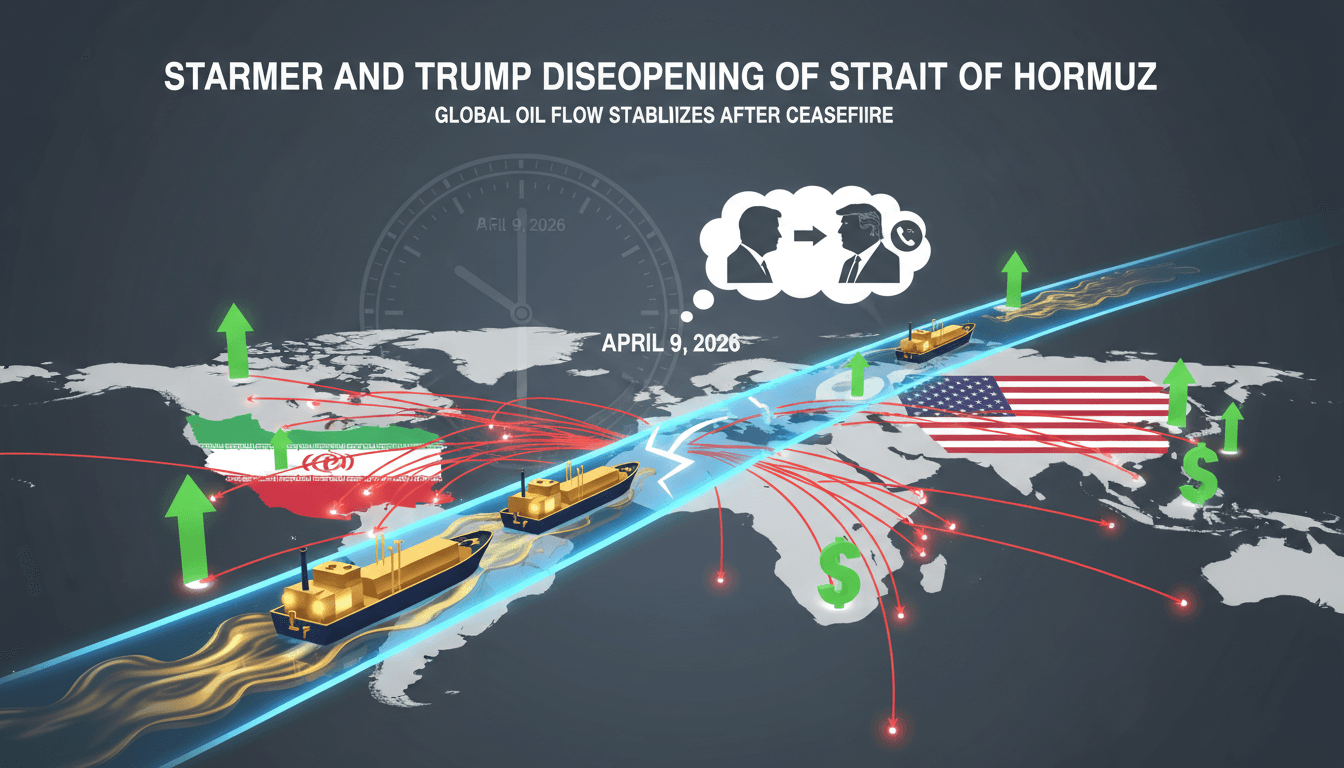
Here's what it means for you.
Rising tensions in the Strait of Hormuz could directly impact your fuel prices and the cost of goods.
Why it matters
The Strait of Hormuz is a critical chokepoint for global oil supply, with approximately 20 million barrels per day transiting in 2025.
What happened (in 30 seconds)
- UK Prime Minister Keir Starmer and US President Donald Trump held a telephone call on 9 April 2026 to discuss reopening the Strait of Hormuz.
- Gulf leaders agreed that the recent US-Iran ceasefire allows for a practical plan to restore maritime traffic.
- Follow-up discussions are planned to ensure swift resumption of shipping in the region.
The context you actually need
- The 2026 Strait of Hormuz crisis began with US-Iran military escalations, halting nearly all maritime traffic since early March 2026.
- A ceasefire was activated around 8 April 2026, but Iran has imposed new protocols that complicate navigation.
- Dubai residents are already feeling the effects, facing elevated fuel prices and inflationary pressures due to import delays.
What's really happening
The telephone call between Keir Starmer and Donald Trump represents a significant diplomatic effort to stabilize a volatile region that is crucial for global oil supply. The Strait of Hormuz is a narrow waterway through which approximately 20 million barrels of crude oil and petroleum products transit daily, making it one of the most critical chokepoints in the world. The recent military escalation between the US and Iran had led to a near-total halt in maritime traffic, causing a ripple effect on global oil markets and local economies, particularly in regions like Dubai.
The ceasefire agreement reached on 8 April 2026 has opened a window for diplomatic discussions aimed at restoring freedom of navigation in the strait. Both leaders emphasized the need for practical measures to facilitate the rapid resumption of shipping, which is vital not only for oil markets but also for global trade. The commitment to a follow-up conversation indicates that both the UK and the US are keen on maintaining momentum in these discussions, which could lead to a more stable maritime environment.
However, the situation remains precarious. Iran's new protocols near Larak Island and warnings about mines in the area signal that while a ceasefire is in place, tensions are far from resolved. The Iranian government has indicated a desire to maintain control over the strait, which could lead to further complications in negotiations. The US has warned against potential shipping fees, which could exacerbate market volatility and impact global oil prices.
For Dubai, the implications are immediate and significant. Residents are already grappling with fuel prices exceeding $120 per barrel, and any disruption in the Strait of Hormuz could lead to further inflationary pressures on transport and goods. The UAE government is closely monitoring the situation, activating alternative routes to safeguard consumer supplies. As a major global transit hub, Dubai's economy is particularly sensitive to fluctuations in oil prices and shipping disruptions.
In summary, while the diplomatic efforts between Starmer and Trump may pave the way for a resolution, the underlying tensions and complexities of the situation in the Strait of Hormuz mean that the path to stability is fraught with challenges.
Who feels it first (and how)
- Consumers in Dubai: Facing higher fuel prices and inflation on goods due to supply chain disruptions.
- Oil and gas companies: Experiencing volatility in oil prices and potential changes in shipping costs.
- Global traders: Adjusting strategies based on the stability of maritime routes and potential tolls imposed by Iran.
What to watch next
- Follow-up diplomatic calls: The outcomes of future discussions between Starmer and Trump will indicate the likelihood of a stable reopening of the Strait.
- Iran's response to US negotiations: Iran's actions in the coming weeks will reveal its willingness to cooperate or escalate tensions further.
- Market reactions: Watch for fluctuations in oil prices and shipping costs as news develops, which will directly impact consumer prices.
The Strait of Hormuz is a critical chokepoint for global oil supply.
Continued diplomatic efforts will be made to stabilize the situation, but tensions may persist.
The long-term impact on oil prices and global markets remains uncertain as negotiations unfold.
Frequently Asked Questions
- Why it matters?
- The Strait of Hormuz is a critical chokepoint for global oil supply, with approximately 20 million barrels per day transiting in 2025.
- What happened (in 30 seconds)?
- UK Prime Minister Keir Starmer and US President Donald Trump held a telephone call on 9 April 2026 to discuss reopening the Strait of Hormuz. Gulf leaders agreed that the recent US-Iran ceasefire allows for a practical plan to restore maritime traffic. Follow-up discussions are planned to ensure swift resumption of shipping in the region.
- What's really happening?
- The telephone call between Keir Starmer and Donald Trump represents a significant diplomatic effort to stabilize a volatile region that is crucial for global oil supply. The Strait of Hormuz is a narrow waterway through which approximately 20 million barrels of crude oil and petroleum products transit daily, making it one of the most critical chokepoints in the world. The recent military escalation between the US and Iran had led to a near-total halt in maritime traffic, causing a ripple effect
- Who feels it first (and how)?
- Consumers in Dubai: Facing higher fuel prices and inflation on goods due to supply chain disruptions. Oil and gas companies: Experiencing volatility in oil prices and potential changes in shipping costs. Global traders: Adjusting strategies based on the stability of maritime routes and potential tolls imposed by Iran.
- What to watch next?
- Follow-up diplomatic calls: The outcomes of future discussions between Starmer and Trump will indicate the likelihood of a stable reopening of the Strait. Iran's response to US negotiations: Iran's actions in the coming weeks will reveal its willingness to cooperate or escalate tensions further. Market reactions: Watch for fluctuations in oil prices and shipping costs as news develops, which will directly impact consumer prices.
Pan-Arab news coverage spanning politics, business, sports, and regional affairs.
"Asharq Al-Awsat reflects a broad Arab editorial perspective with strong attention to regional geopolitics."
— A47 Editor
مكتب رئيس وزراء بريطانيا: ستارمر وترمب ناقشا فتح مضيق هرمز
British Prime Minister Keir Starmer discussed with U.S. President Donald Trump the urgent need to devise a plan for reopening the Strait of Hormuz as soon as possible. This conversation took place on Thursday and highlights the ongoing geopolitical c...
Regional coverage and analysis focused on politics, diplomacy, and business across the Middle East.
"Al-Monitor is known for analytical reporting on Middle East politics and policy developments."
— A47 Editor
Starmer, Trump discussed opening Strait of Hormuz, Downing Street says
British Prime Minister Keir Starmer and U.S. President Donald Trump discussed the urgent need to restore shipping through the Strait of Hormuz following a ceasefire agreement with Iran. The conversation emphasized the importance of a viable plan to e...