
UK Proposes Ukrainian Drone Technology for Strait of Hormuz Security Amid Iranian Blockade
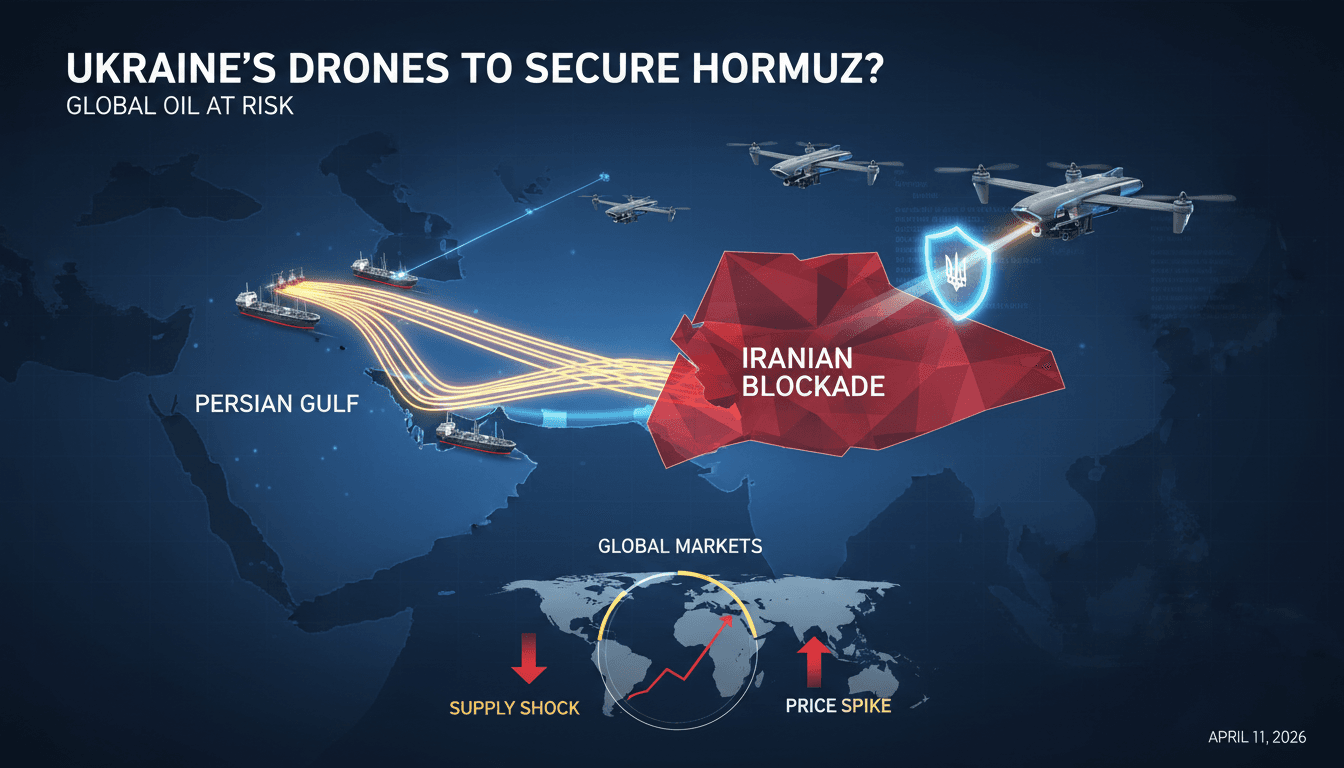
Here's what it means for you.
If you rely on global oil markets, the ongoing tensions in the Strait of Hormuz could impact fuel prices and supply chains.
Why it matters
The Strait of Hormuz is a critical chokepoint for global oil trade, with 20% of seaborne oil passing through, making stability in the region essential for energy prices worldwide.
What happened (in 30 seconds)
- On April 11, 2026, UK Armed Services Minister Al Carns proposed that Ukraine's advanced drone technology could help secure the Strait of Hormuz amid an Iranian blockade.
- Ukraine has deployed over 200 military experts to the Middle East to counter Iranian drone threats, showcasing its military capabilities beyond its borders.
- The UK is leading a coalition of over 40 nations to address the crisis, which erupted following U.S. and Israeli airstrikes on Iran, leading to Iranian retaliation and significant disruptions in maritime navigation.
The context you actually need
- The 2026 Strait of Hormuz crisis began on February 28, 2026, after U.S. and Israeli airstrikes killed Iran's Supreme Leader, prompting Iranian military responses that included a blockade of the strait.
- Iran's blockade has resulted in soaring oil prices, with Brent crude reaching $126 per barrel, significantly impacting global markets and economies reliant on oil imports.
- Ukraine's involvement is rooted in its recent military experience against Russian forces, providing it with unique expertise in drone warfare and maritime security, which it is now offering to the international coalition.
What's really happening
The proposal by Al Carns to utilize Ukrainian drone technology in the Strait of Hormuz is a strategic move that reflects the shifting dynamics of international military cooperation and the urgent need for security in a volatile region. The Iranian blockade, which has imposed severe restrictions on maritime navigation and disrupted the flow of oil, has created a crisis that resonates far beyond the immediate geographical area. With 10 million barrels per day of oil exports affected, global markets are feeling the pinch, leading to price surges and potential inflationary pressures.
Ukraine's military expertise, honed through its ongoing conflict with Russia, positions it as a valuable ally in this scenario. The deployment of over 200 Ukrainian military experts to the Middle East highlights a proactive approach to international security, where nations are leveraging specialized skills developed in recent conflicts. This not only enhances Ukraine's standing on the global stage but also provides the UK-led coalition with a tactical advantage in countering Iranian drone threats.
The UK’s coalition of over 40 nations is a significant diplomatic effort aimed at restoring stability in the Strait of Hormuz. The coalition's focus on military planning, including demining operations and the potential for direct military intervention, underscores the seriousness of the situation. The discussions between UK Prime Minister Starmer and former President Trump indicate a high level of international engagement and concern regarding the implications of the Iranian blockade.
As the situation evolves, the economic ramifications are likely to be felt in various sectors, particularly in energy and agriculture. The UAE, for instance, has already seen increased fuel costs and disruptions in fertilizer supplies, which could impact food prices in a region heavily reliant on imports. The interconnectedness of global supply chains means that any sustained instability in the Strait of Hormuz could have ripple effects across multiple economies, particularly those dependent on oil imports.
Who feels it first (and how)
- Energy sector professionals: Rising oil prices directly affect profitability and operational costs.
- Agricultural businesses: Increased fertilizer prices can lead to higher food costs, impacting margins and consumer prices.
- Consumers in oil-importing countries: Higher fuel prices translate to increased costs for transportation and goods.
- Military and defense contractors: Opportunities for contracts and collaborations may arise from increased military activity and security needs in the region.
What to watch next
- Oil price fluctuations: Monitor Brent crude prices for signs of volatility that could indicate further geopolitical tensions or market adjustments.
- Military developments: Keep an eye on the UK-led coalition's military planning and any potential interventions in the Strait of Hormuz, which could escalate the situation.
- UAE economic indicators: Watch for changes in fuel costs and agricultural prices in the UAE, as they may reflect broader market trends influenced by the crisis.
The Strait of Hormuz is a critical chokepoint for global oil trade, with significant economic implications.
Continued military cooperation between Ukraine and the UK-led coalition will evolve as the situation develops.
The long-term impact of the Iranian blockade on global oil prices and supply chains remains uncertain.
Frequently Asked Questions
- Why it matters?
- The Strait of Hormuz is a critical chokepoint for global oil trade, with 20% of seaborne oil passing through, making stability in the region essential for energy prices worldwide.
- What happened (in 30 seconds)?
- On April 11, 2026, UK Armed Services Minister Al Carns proposed that Ukraine's advanced drone technology could help secure the Strait of Hormuz amid an Iranian blockade. Ukraine has deployed over 200 military experts to the Middle East to counter Iranian drone threats, showcasing its military capabilities beyond its borders. The UK is leading a coalition of over 40 nations to address the crisis, which erupted following U.S. and Israeli airstrikes on Iran, leading to Iranian retaliation and signi
- What's really happening?
- The proposal by Al Carns to utilize Ukrainian drone technology in the Strait of Hormuz is a strategic move that reflects the shifting dynamics of international military cooperation and the urgent need for security in a volatile region. The Iranian blockade, which has imposed severe restrictions on maritime navigation and disrupted the flow of oil, has created a crisis that resonates far beyond the immediate geographical area. With 10 million barrels per day of oil exports affected, global market
- Who feels it first (and how)?
- Energy sector professionals: Rising oil prices directly affect profitability and operational costs. Agricultural businesses: Increased fertilizer prices can lead to higher food costs, impacting margins and consumer prices. Consumers in oil-importing countries: Higher fuel prices translate to increased costs for transportation and goods. Military and defense contractors: Opportunities for contracts and collaborations may arise from increased military activity and security needs in the region.
- What to watch next?
- Oil price fluctuations: Monitor Brent crude prices for signs of volatility that could indicate further geopolitical tensions or market adjustments. Military developments: Keep an eye on the UK-led coalition's military planning and any potential interventions in the Strait of Hormuz, which could escalate the situation. UAE economic indicators: Watch for changes in fuel costs and agricultural prices in the UAE, as they may reflect broader market trends influenced by the crisis.
Regional coverage and analysis focused on politics, diplomacy, and business across the Middle East.
"Al-Monitor is known for analytical reporting on Middle East politics and policy developments."
— A47 Editor
Ukraine can play useful role in Strait of Hormuz, Britain says
Britain's armed services minister has stated that Ukraine can play a significant role in international efforts to secure the Strait of Hormuz, highlighting its advanced drone technology. This statement comes amid ongoing discussions among over 30 nat...
Regional and international reporting focused on Middle Eastern politics, diplomacy, and economics.
"Asharq Al-Awsat is a Saudi-owned international newspaper reflecting mainstream Gulf political perspectives."
— A47 Editor
Ukraine Can Play Useful Role in Strait of Hormuz, Britain Says
Britain's armed services minister has stated that Ukraine can play a significant role in securing the Strait of Hormuz, leveraging its advanced drone technology amid ongoing international discussions involving over 30 nations.